By Pacific Heating & Cooling | NATE-Certified Service Technicians | Updated September 2026
If you’ve been researching heat pumps online, you’ve probably left more confused than when you started. Scroll through any HVAC forum or local Nextdoor thread and you’ll find neighbors arguing about brands, contractors pushing different systems, and enough acronyms to fill a textbook. The things that actually matter before you buy are how the system is sized for your home, whether it runs on a single-stage, two-stage, or variable-speed compressor, what SEER and HSPF ratings mean for your bill, and what a properly installed system costs in Western Washington, typically $15,000 to $34,000 depending on the home. Here’s how each of those pieces fits together, and how to spot an installer who will get it right.
A heat pump is a significant investment for most homeowners. Getting it right means knowing what questions to ask, what specs to pay attention to, and what to ignore.
It Heats and Cools Your Home, Not Just One or the Other
A heat pump doesn’t generate heat the way a furnace does. It moves it. In winter it pulls warmth from outside air into your home. In summer it reverses and works like an air conditioner. That means one heat pump system can replace both your furnace and your AC.
Will a Heat Pump Actually Work in Western Washington Winters?
This is the most common question on local Reddit and Nextdoor threads, and it’s a fair one. The short answer: yes, modern heat pumps are well suited to Western Washington’s climate, and in many ways our climate is ideal for them.
Older heat pump technology lost efficiency in cold weather, which gave them a mixed reputation in the Pacific Northwest. Today’s variable-speed heat pumps maintain strong performance well below freezing. Trane’s TruComfort variable-speed systems run on a compressor that adjusts in hundreds of small increments rather than switching on and off at full blast. That means steady temperatures, lower energy use, and reliable heating even on cold January nights in Tacoma or Gig Harbor.
Western Washington winters are cold, but they’re rarely extreme. The mild, damp climate here is actually a sweet spot for heat pump efficiency. Most homeowners in Pierce, Thurston, and South King Counties will find that a properly sized heat pump handles the full heating season without needing a backup heat source, though there are cases where adding one makes sense, which we’ll cover below.
One more thing worth knowing before your first winter: heat pump air feels different from a gas furnace. A furnace blasts hot air in short bursts. A heat pump circulates warmer air continuously at a lower temperature. It’s a steady, even warmth rather than a rush of heat. The house stays comfortable, but if you put your hand in front of a vent expecting furnace-level heat, it won’t feel that way. That’s normal.
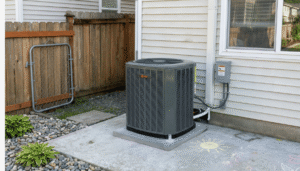
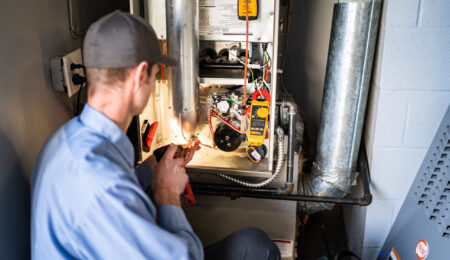
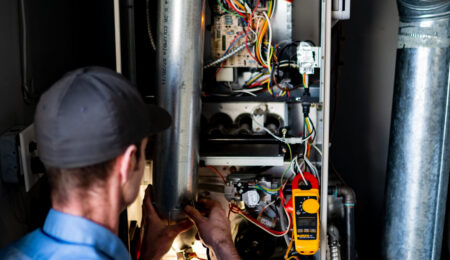
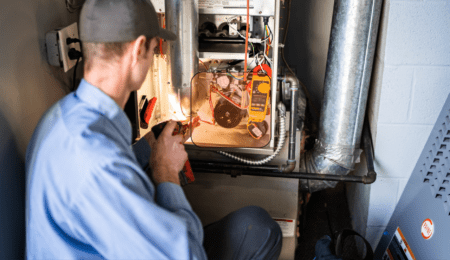
Pacific replaced an aging Carrier system in a Puyallup attic with a matched Trane furnace and air conditioner, completed March 2026.
What Size Do You Actually Need?
This is where a lot of mistakes happen. Heat pump sizing is measured in tons, a measure of heating and cooling capacity, not weight, and getting it wrong creates real problems.
An oversized system will short-cycle, turning on and off repeatedly without completing a full run. This leads to uneven temperatures, higher humidity, and more wear on the equipment. An undersized system will run constantly and still struggle to keep up on the hottest or coldest days.
Proper sizing requires a load calculation, sometimes called a Manual J, which factors in your home’s square footage, insulation levels, window area, ceiling height, local climate data, and how the home is oriented. A contractor who looks at your old equipment’s size and says “we’ll just match it” is skipping this step. That’s a red flag.
Pacific Heating & Cooling completed more than 200 heat pump installs across Tacoma, Puyallup, Gig Harbor, Lakewood, and surrounding Western Washington communities last summer alone, in homes ranging from compact utility-closet setups to full two-system properties. System sizes ranged from 2 to 5 tons depending on the home. There is no universal answer, which is exactly why the in-home evaluation matters.
Variable Speed, Two-Stage, Single Stage: What Actually Matters
You’ll see these terms in almost every quote you receive. Here’s a plain-language breakdown.
Single-stage systems operate at one speed: full blast. They run until the thermostat is satisfied, then shut off. They’re typically the least expensive option upfront, but they tend to create temperature swings and use more energy over time.
Two-stage systems run at high speed when needed and drop to a lower speed during normal conditions. This produces better comfort, quieter operation, and more efficient energy use than single-stage.
Variable-speed systems adjust in dozens or hundreds of increments. They run longer at lower speeds to maintain even temperatures, remove more humidity from the air, and consume less energy per hour of operation. Trane’s TruComfort 20 SEER variable-speed heat pump operates with up to 750 stages of output. It finds the lowest speed that keeps your home comfortable rather than constantly cycling on and off.
For most homeowners who plan to stay in their home for 10 or more years, variable-speed systems typically pay for the efficiency premium over time. Your advisor should walk you through both options with honest trade-offs rather than steering you toward one before understanding your situation.
What SEER Means (and When It Stops Mattering)
SEER stands for Seasonal Energy Efficiency Ratio, a measure of how efficiently the system cools your home over a season. Higher SEER means lower operating costs. Current minimum standards in Washington State require 14 SEER2.
Systems Pacific installs in Western Washington typically range from 16 to 20 SEER depending on the model. A 20 SEER variable-speed system will cost more upfront but use meaningfully less electricity month over month compared to a 16 SEER single-stage unit.
One important note: SEER ratings represent a maximum under ideal conditions. Real-world performance depends on installation quality, equipment matching, ductwork condition, and system configuration. A 20 SEER system installed incorrectly will underperform a properly installed 16 SEER system. This is why installation quality matters as much as the equipment spec sheet.
For heating efficiency, you’ll also see HSPF (Heating Seasonal Performance Factor). A higher HSPF means better heating efficiency. For Western Washington homeowners, both ratings matter since a heat pump handles heating as often as it handles cooling here.
Do You Need a Backup Heating Source?
Most homes in Western Washington don’t need a backup heat source. A properly sized, modern heat pump handles the full season on its own. Some homeowners still add one, either electric heat strips or a paired gas furnace, usually because of colder inland conditions or an existing furnace worth keeping in service. If you’re weighing that decision, see our full dual fuel vs. all-electric guide for the cost and performance breakdown.
What If Your Home Doesn’t Have Ductwork?
Homes without existing ductwork, including older homes throughout Western Washington that were heated by radiators, baseboards, or wall heaters, are strong candidates for ductless mini-split heat pumps.
A ductless system uses wall-mounted indoor units in each room or zone, connected to an outdoor compressor. Installation doesn’t require running ductwork through the walls, which makes it significantly less disruptive. Mitsubishi is a leading ductless brand that Pacific installs alongside Trane for homes where ductless is the right solution.
Mini-splits also work well for additions, finished garages, bonus rooms, and other spaces that are hard to reach with existing ductwork.
What the Installation Actually Involves
For a standard ducted heat pump replacement in an existing forced-air home, a full install typically takes one day for a prepared and experienced crew. The installation includes removing the old outdoor unit and air handler or furnace, setting the new outdoor unit, connecting refrigerant lines, installing the new air handler or coil, making electrical connections, testing the system through a full cycle, and walking you through thermostat operation.
Becky in Auburn put it this way:
“We decided it was time to replace our 20yr old system, furnace and AC. We met with 4 different contractors representing different equipment brands. After careful consideration, we chose Trane and Pacific Heating. What a fantastic job the team did! We are very pleased with every aspect of the experience: the professionalism, knowledge, service and walk-through after install. The crew was first-rate! We’re confident we made the best decision for our home.”
Becky in Auburn
Here is what Olivia in Tacoma had to say:
“Jared and Dillan did a great job with our heat pump and furnace install. They were able to work without any disruption to our family and were polite and well informed of the product they installed. Justin, our advisor, was very knowledgeable and provided guidance to help us make an informed decision to suit our needs. The back office team was very communicative and easy to work with. Would highly recommend.”
Olivia in Tacoma
Pacific handles permits, inspections, and equipment registration as part of every install, details that matter for warranty validity and local compliance but that some contractors leave to the homeowner to sort out after the fact.
Also worth setting up correctly from day one: treat the thermostat differently than you would with a gas furnace. Heat pumps are designed to run at a consistent temperature for long periods rather than cycle on and off in response to big setpoint swings. Set it to your target temperature and leave it there. Cranking it up by several degrees at once forces the system to use the backup heat strips, which are less efficient and will show up on your energy bill.
What Does a Heat Pump System Actually Cost in Western Washington?
Installed heat pump systems in Western Washington typically range from about $15,000 to $34,000 depending on system size, equipment tier, and scope of work. Based on more than 200 installs Pacific completed in the Tacoma area last summer, the average completed job came in around $20,000 for a full ducted system installation.
What drives cost:
- System size (tons of capacity needed)
- Equipment tier: single-stage, two-stage, or variable-speed
- Whether it’s a replacement, add-on, or new installation
- Indoor unit type (air handler vs. coil vs. ductless)
- Electrical panel upgrades if needed
- Ductwork condition and any sealing or repair work
The best approach is to get a detailed, written quote that itemizes equipment, labor, and any additional work. Upfront pricing, where you know the full cost before work begins, is the standard Pacific holds every install to. See financing options if you’d like to spread the cost over time.
Rebates and Incentives Available Right Now
Qualifying installations may be eligible for rebates through Puget Sound Energy or Tacoma Power, and income-qualified households may qualify for Washington’s HEAR program. For a full breakdown of current amounts and eligibility, see our heat pump rebates guide for the Tacoma area.
How to Choose an Installer
The equipment choice matters, but the installer matters just as much. A good installer will do a proper load calculation before recommending a system size. They will explain options clearly without pushing a single solution before they understand your home. They will provide a written, itemized quote with no-surprise pricing. They will pull permits and handle inspections. And they will be reachable after the install if you have questions.
Warning signs to watch for: contractors who size the system based only on your old unit, quotes that arrive without visiting your home, pressure to sign same-day, or vague pricing that grows after work begins.
Pacific Heating & Cooling has been serving Western Washington homeowners since 1984. All technicians are background-checked and trained, and the company holds a 4.9-star average rating across more than 6,000 Google reviews.
Still not sure which system is right for your home?
Tell us what your system is doing and we’ll help you figure out the right next step. Pacific Heating & Cooling has been diagnosing heating and cooling problems across Tacoma and the South Sound since 1984. NATE-certified technicians, 2-hour arrival windows, and upfront pricing before any work begins.
Frequently Asked Questions
-
-
The only reliable way is a load calculation, often called a Manual J, which factors in your home’s square footage, insulation, window area, and layout. A contractor who sizes your system by simply matching your old equipment is skipping a step that affects comfort, efficiency, and equipment wear for the life of the system.
-
-
Single-stage systems run at one speed until the thermostat is satisfied. Two-stage systems step down to a lower speed during normal conditions for better comfort and efficiency. Variable-speed systems adjust across dozens or hundreds of increments, running longer at lower output to hold a steady temperature and remove more humidity. Variable-speed costs more upfront but typically pays off over a decade or more of ownership.
-
-
A higher SEER rating lowers your operating costs, but the number on the spec sheet is a best-case figure. Installation quality, ductwork condition, and proper equipment matching affect real-world performance as much as the rating itself. A correctly installed 16 SEER system will often outperform a poorly installed 20 SEER one.
-
-
Yes. Homes without existing ductwork, including many older homes heated by radiators, baseboards, or wall heaters, are strong candidates for ductless mini-split systems, which use wall-mounted indoor units instead of ducts. They also work well for additions, bonus rooms, and finished garages that are hard to reach with existing ductwork.
-
-
Most homes in Western Washington don’t require one — a properly sized, modern variable-speed heat pump typically handles the full heating season on its own. Some homeowners still add electric heat strips or pair the system with an existing gas furnace.
-
-
A standard ducted heat pump replacement typically takes one day for a prepared crew, including removing the old equipment, setting the new outdoor unit, making electrical and refrigerant connections, and testing the system through a full cycle.
-
-
Qualifying installations may be eligible for rebates through Puget Sound Energy or Tacoma Power, and income-qualified households may qualify for Washington’s HEAR program
Ready to find out what your home actually needs?
Pacific Heating & Cooling has been helping Western Washington homeowners make smart heating and cooling decisions since 1984. NATE-certified technicians, 2-hour arrival windows, and upfront pricing before any work begins.