Your air conditioner may have run fine last summer. But if it hasn’t been looked at since, there’s a good chance it has a problem you don’t know about yet. An AC tune-up isn’t just a filter swap and a quick look around. Done right, it’s a systematic inspection of every part of your cooling system — the kind that finds small issues before they become expensive ones, and confirms your system is ready to handle whatever summer brings.
This post walks through exactly what our technicians check during a Precision Tune-Up at Pacific Heating & Cooling, what we commonly find, and why each part of the process matters for your home.
Why an AC tune-up matters more than most homeowners realize
Your air conditioner sits idle for most of the year. Then, usually on the first warm day of spring, you flip it on and expect it to perform without missing a beat. That’s a lot to ask of a system that hasn’t run in months.
A few things happen during that off-season. Dust settles on coils and inside the cabinet. Refrigerant levels that were slightly low last fall are still slightly low now. A capacitor that was showing early signs of wear in September hasn’t fixed itself. A tune-up gives your technician a chance to catch those things before your system is under load on a 90-degree day in July.
The goal of Pacific’s Precision Tune-Up is simple: Maintain your system’s efficiency, Prevent breakdowns before they happen, and Extend the life of your equipment. That’s the standard every technician follows on every visit.
Pacific has been serving Western Washington homeowners since 1984. Our technicians are NATE-certified and background-checked, and every tune-up comes with our No-Worry, No-Breakdown Guarantee. Here’s exactly what that visit looks like.
What we check during an AC tune-up
Our technicians follow the same structured checklist on every visit. Every part of your system gets checked and rated — Good, Fair, or Poor — so you know exactly where things stand when we’re done.
Your thermostat
We confirm your settings, check that it’s communicating correctly with your system, and make sure the temperature you’ve set is actually what your equipment is delivering. A thermostat that’s misconfigured or losing responsiveness can make a perfectly good system feel like it’s failing.
Your duct system
Think of this as a blood pressure reading for your home’s airflow. We measure total system static pressure, take temperatures at your return and supply registers, and check for blocked or dirty vents. If your ducts are leaking or undersized, your system works harder and delivers less — and this test is how we know.
Your filter
We check the size, MERV rating, and condition, and measure the pressure drop across it. A filter that’s too restrictive creates the same problem as a dirty duct: airflow restriction that strains your equipment. Standard 1” filters are replaced as part of every tune-up.
Your blower
The blower moves air through your entire system. We check the bearings, belts, and pulleys, and test start amps, run amps, and capacitor readings. A blower pulling too many amps is one headed toward failure.
Your condensate system
Your AC pulls moisture out of the air, and that water needs a clear path out of your home. We run a 2-gallon flow test on the condensate pump and drain line. A blocked drain is one of the most common causes of water damage and unexpected system shutdowns — and one of the easiest things to catch on a tune-up.
Your control board
We inspect the brain of your indoor unit for hot spots, burn marks, and cracking. Catching a degrading control board early costs far less than dealing with a system that quits on a hot afternoon with no warning.
Your evaporator coil
This is where refrigerant absorbs heat from your indoor air. We check for dirt buildup, blockage, and leak evidence. A dirty evaporator coil often shows up as weak airflow or a system that cools fine for 30 minutes and then stops.
Your outdoor unit
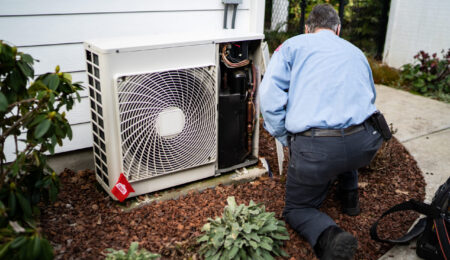
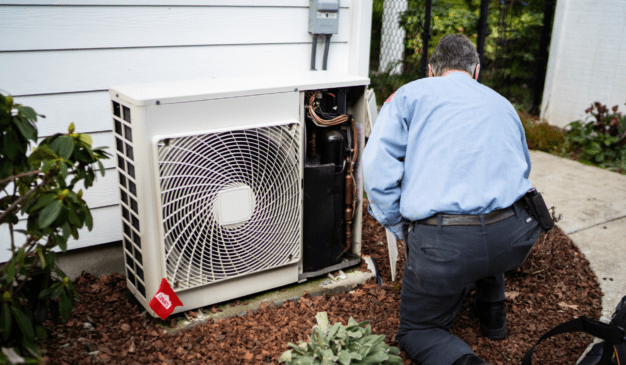
We check the condenser cabinet, contactor, condenser fan, and compressor — testing amps, volts, and capacitor readings on each. The contactor is what tells your compressor to turn on; the compressor is the most expensive part in the system ($1,000 to $2,500 or more to replace). We also wash the condenser coil on every visit. In Western Washington, cottonwood, yard debris, and outdoor pets make that a regular necessity.
Your refrigerant
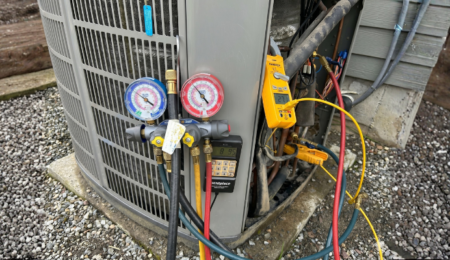
We measure liquid line and suction line temperatures and pressures, superheat, and subcooling. Together, these readings tell us whether refrigerant levels are correct and whether your system is actually transferring heat the way it should. Low refrigerant doesn’t always feel like “the AC isn’t cooling” — it often shows up as longer run times, higher energy bills, or ice on the indoor coil.
Your temperatures
We take indoor and outdoor dry bulb and wet bulb readings and measure your system’s delta T — the difference between the air going into your system and the air coming out. This is the real-world performance check that confirms everything else we’ve measured is actually showing up in your home’s comfort.
What we commonly find
Most systems we tune up aren’t in crisis. But very few come through a thorough inspection without something worth noting. Here’s what our technicians find most often on cooling tune-up visits across the South Sound.
Some things get handled right then, included in the visit:
- Filters that need replacing. Standard 1” filters are included with every tune-up. We carry a wide range of sizes and MERV ratings on the truck, because the variety of systems we service across Tacoma, Puyallup, Lakewood, and Gig Harbor makes that necessary.
- Capacitors that are reading weak but haven’t failed yet. Run capacitors are one of the most common findings on cooling tune-ups. When a capacitor is flagged during a tune-up, it can often be replaced right then at no additional charge through Club coverage or an active warranty. Waiting until it fails usually means a compressor hard-starting under load on the hottest day of the year.
- Condensate components that need attention. Overflow switches and P-traps come up regularly and get addressed as part of the visit. The condensate system is easy to overlook and one of the more common causes of water damage and unexpected shutdowns.
- Condenser coils that need washing. We wash the outdoor unit on every tune-up. In Western Washington, cottonwood season, yard debris, and outdoor pets are all regular contributors to a coil that can’t release heat the way it should.
Some things require a separate conversation:
- Refrigerant that’s low. Most systems with low refrigerant are still cooling — just running longer cycles and working harder than they need to. A recharge isn’t a small cost, but it’s considerably less than what deferred refrigerant loss eventually does to a compressor.
- Blower motors that need a pull-and-clean. A blower coated in buildup moves less air, forces the system to run longer, and puts steady strain on the motor. It’s not an emergency, but it’s the kind of thing that compounds quietly over time.
- Condensate pumps that are failing. When a pump is near the end of its life, we’ll show you what we’re seeing and walk through your options before any additional work begins.
None of these are emergencies on their own. But each one affects how hard your system works, how efficiently it cools, and how likely it is to fail at the worst possible time. That’s exactly the kind of thing a tune-up exists to find — before summer makes it urgent.
What “certified” means at the end of a tune-up
At the end of every Pacific tune-up, your technician will note whether your system has been certified. Certification means the system was cycled and confirmed to be running within acceptable performance ranges across all the checks above.
Systems that are certified are covered by Pacific’s No-Worry, No-Breakdown Guarantee. If a covered system breaks down after a tune-up, we’ll come back and make it right.
If something is found during the inspection that prevents certification, your technician will walk you through what was found, what it means, and what your options are — before any additional work is done. No pressure. No surprises. Just a clear explanation of where things stand.
When to schedule a tune-up vs. call for a repair
If your system is running but hasn’t been maintained in a year or more, a tune-up is the right place to start. It gives you a current picture of your system’s health and lets you address anything proactively before the cooling season.
If your system is actively struggling — not cooling, cycling on and off, making unusual sounds, or showing error codes — that’s a diagnostic call, not a tune-up. Our technicians can tell the difference when you call, and they’ll make sure you get the right visit.
Not sure which situation you’re in? Our AC repair page walks through the most common symptoms and what they usually mean. And if you’re thinking about whether maintenance is worth it year over year, our AC maintenance service page has more detail on what’s included and how the No-Worry, No-Breakdown Guarantee works.
Ready to schedule your AC tune-up?
Pacific Heating & Cooling has been serving Tacoma, Lakewood, Puyallup, Gig Harbor, Olympia, and surrounding Western Washington communities since 1984. NATE-certified technicians. 2-hour arrival windows. Upfront pricing. And more than 6,000 Google reviews at a 4.9 average rating.
Tell us what you’re working with and we’ll get you on the schedule.
What us to contact you? Fill out the form below and we will contact you.
Contact Us