Common Electrical Problems With Heat Pumps
If your heat pump suddenly stops working, the thermostat goes blank, a fuse blows, or the breaker trips, it can be hard to tell what’s actually wrong. The good news is most heat pump electrical problems fall into a small set of common causes, and the symptoms usually point you in the right direction. A service diagnositc can identify these issues and in many cases fix the issue same day.
This guide keeps it simple. Below are the most common heat pump electrical problems we see, the most common solutions, and the signs it’s time to call a professional.
The most common heat pump electrical problems and common solutions
1) Thermostat is blank or the system will not power on
Common causes
-
Blown low voltage fuse on the indoor control board
-
Low voltage short in thermostat wiring
-
Tripped breaker or service switch off
Common solutions
-
Restore control power and confirm the fuse is intact
-
Trace and repair the short, often damaged thermostat wiring
-
Verify the system runs through multiple cycles after the fix
2) Fuse on the control board keeps blowing
A low voltage fuse is there to protect your system. If it blows again immediately after replacement, replacing fuses repeatedly is not the fix. The goal is to find what is shorting the circuit.
Common causes
-
Damaged low voltage wire touching metal
-
Miswired thermostat
-
Damaged low voltage wire to the outdoor unit
-
Failed control component, less common but possible
Common solutions
-
Isolate the circuit to locate the short (thermostat wiring vs outdoor wiring vs internal wiring)
-
Repair the damaged wire or correct wiring
-
Replace any failed control component only after the short is confirmed
Example From a Recent Service Visit
A homeowner kept blowing the low voltage fuse, which cut power to the thermostat and shut the system down, a sign the control circuit was shorting somewhere. We traced a repeated blown fuse back to a nicked 24V wire inside the cabinet that was intermittently touching the metal frame. After repairing and repositioning the wire, the system ran through multiple cycles without blowing the fuse again.
Solution: We confirmed the fuse was blowing due to an intermittent short and tracked it to a nicked 24V wire inside the cabinet contacting the metal frame. We repaired the wire, secured it away from the cabinet edge, and ran the system through multiple cycles to verify stable operation with no further blown fuses.
3) Breaker trips when the heat pump turns on
Breaker trips are often caused by a component failing under load or an electrical fault that shows up when the system tries to start.
Common causes
-
Weak capacitor or failing start components
-
Worn contactor
-
Loose connection at breaker, disconnect, or equipment lugs
-
Compressor drawing excessive current or electrically failed
Common solutions
-
Test and replace capacitor if out of tolerance
-
Replace a worn contactor if it is pitted or not pulling in consistently
-
Correct loose connections and confirm proper voltage under load
-
If the breaker trips when the compressor energizes, test compressor condition and discuss repair vs replacement options
Example From a Recent Service Visit
A homeowner had a breaker replaced, but it still tripped whenever the disconnect was inserted or the compressor tried to start. Testing showed the fan motor was fine, and the breaker tripped specifically when the compressor energized, pointing to an electrical compressor failure.
Solution: W replaced the compressor and capacitor, and addressed the leak on that short section of pipe at the same time, then we tested the system once the new compressor was installed.
4) Outdoor unit hums but does not start
Common causes
-
Capacitor failing
-
Contactor not engaging consistently
-
Motor or compressor struggling to start
Common solutions
-
Test capacitor and replace if needed
-
Confirm contactor operation and control voltage
-
Confirm startup amp draw and correct the underlying failure
5) System runs in one mode but not the other
This is common after thermostat changes or wiring adjustments.
Common causes
-
Thermostat wiring mistakes during a thermostat swap
-
Control settings or staging configuration issues
-
Defrost or control problems, less common
Common solutions
-
Verify thermostat wiring is correct for the system type
-
Confirm proper configuration and operation in heating and cooling
-
Test the system through normal operation and confirm stable performance
Common solutions, homeowner actions vs technician actions
When it comes to heat pump electrical issues, the best approach is a mix.
Homeowner actions should be very short and safety-first.
These are the only steps we recommend before scheduling service:
-
Confirm the thermostat is set correctly and calling for heating or cooling
-
Check for a tripped breaker and reset it one time
-
If the thermostat is blank, confirm the breaker and any nearby service switch are on
If the breaker trips again, the thermostat goes blank again, or a fuse blows again, stop and schedule service.
Technician actions are the real fixes.
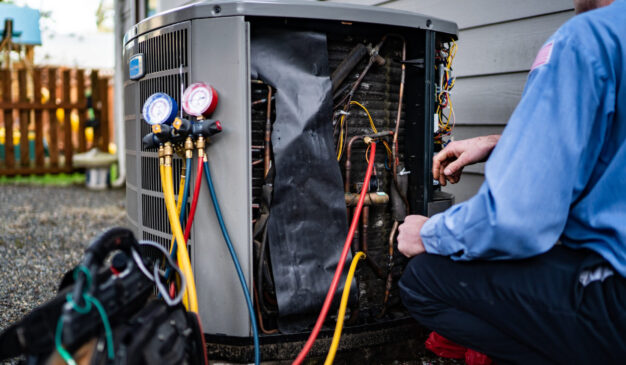
This is where proper diagnosis matters, like isolating wiring, testing components under load, inspecting connections for heat damage, and verifying stable operation through multiple cycles.
What a Proper Electrical Diagnosis Looks Like
Electrical problems are not solved by guessing or swapping parts until something works. A proper diagnosis isolates the cause first, then verifies the system is stable after the repair.
Here is what that looks like:
-
Confirm the thermostat call and what the system is doing (or not doing)
-
Verify control power, fuse status, and breaker status
-
Isolate the problem by testing one section at a time (thermostat wiring, indoor unit, outdoor unit)
-
Inspect wiring and connections for damage, rubbing, heat, or loose terminals
-
Test components under load, not just visually
-
Run the system through multiple cycles to confirm the issue is resolved
Signs You Should Call for Heat Pump Electrical Service
Call for service if you notice any of these:
-
The thermostat is blank and the fuse keeps blowing
-
The breaker trips more than once
-
The breaker trips specifically when the outdoor unit tries to start
-
You smell burning or see heat damage near the panel, disconnect, or unit
-
You hear buzzing at the panel or disconnect
-
The outdoor unit hums but will not run
-
The system works sometimes and fails other times
Safety note: resetting a tripped breaker once is reasonable. If it trips again, stop and schedule service. Repeated resets can damage equipment and create safety risks.
FAQs
-
-
In many homes, the low voltage fuse is located on the indoor unit’s control board inside the air handler or furnace cabinet. Some systems also have inline fuses in the low voltage circuit.
-
-
A fuse usually blows because the low voltage circuit is shorting. Common causes include damaged thermostat wiring, miswiring at the thermostat, damaged low voltage wiring to the outdoor unit, or a failing control component. Replacing the fuse without finding the cause often leads to the fuse blowing again.
-
-
Yes. Incorrect wiring, incompatible thermostat setups, or damaged thermostat wiring can short the low voltage circuit and blow the fuse, especially after a homeowner installed thermostat swap.
-
-
Many systems use a small low voltage blade fuse on the control board, often 3A or 5A, but it varies by manufacturer and equipment. Confirm the correct rating for your system before replacing it.
-
-
A blank thermostat usually means the low voltage control circuit lost power. This can happen from a blown fuse, a short in low voltage wiring, a transformer issue, or a control board problem.
-
-
Breaker trips are usually caused by a high voltage issue such as a weak capacitor, worn contactor, loose electrical connection, or a compressor drawing too much current. If it trips more than once, stop resetting it and schedule service.
-
-
The defrost board controls how the outdoor unit manages frost in heating mode. If it fails, it can contribute to erratic behavior, resets, intermittent shutdowns, or other electrical symptoms that require troubleshooting.
-
-
Breaker and compressor-related problems can look like a simple “bad breaker,” but that is not always the real issue.
A common scenario we see is a breaker gets replaced, power appears restored, but the breaker trips again as soon as the disconnect is reinserted or the compressor tries to start. That pattern often means the breaker is doing its job because there is a true electrical fault.
In one recent second-opinion visit, testing showed the fan motor was fine, but the breaker tripped specifically when the compressor was energized, pointing to an electrical compressor failure.
This is why proper testing matters. It prevents repeated trips, repeated part swaps, and bigger equipment damage.
-
-
If you are trained and can fully power down the equipment safely, fuse replacement can be straightforward. The bigger issue is that a blown fuse is usually a symptom of a short. If the fuse blows again, continued replacement can lead to bigger damage. When in doubt, schedule service so the cause is traced and corrected.
A Lasting Fix Starts With the Right Diagnosis
If your thermostat is blank, your fuse keeps blowing, or your breaker is tripping, the system is protecting itself. These are common heat pump electrical problems that our team of experts fixes regularly. The fastest path to a lasting fix is a proper diagnosis that identifies the electrical cause and verifies stable operation after repair.