If you’ve been reading about heat pumps and landed here, you’re probably at a specific fork: you know you want a heat pump, but you’re not sure whether to pair it with your existing gas furnace or replace everything with an all-electric setup. It’s a practical question, and the right answer depends on your home — not a generic recommendation.
This page is designed to give you a clear side-by-side explanation of both options so you can walk into a consultation knowing what you’re looking at. For a broader overview of what to consider before buying, see the first-time buyer guide.
How Both Systems Work
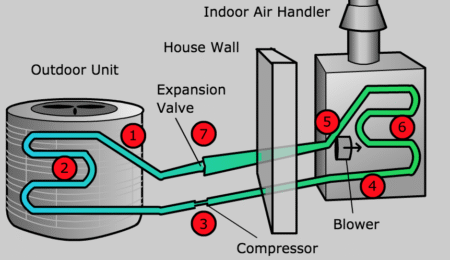
Both setups center on a heat pump — a system that moves heat rather than burning fuel to generate it. In summer it works like an air conditioner, pulling warmth out of your home. In winter it works in reverse, extracting heat from outdoor air and moving it inside. A heat pump handles both heating and cooling in a single system.
Mechanically, this happens through a four-stage refrigeration cycle: evaporation, compression, condensation, and expansion. In heating mode, refrigerant absorbs heat from outdoor air and evaporates into a low-temperature vapor, then travels indoors as a hot, high-pressure gas. It releases that heat into your home’s air while condensing back to a liquid, and the air handler distributes the now-heated air. In cooling mode, the cycle runs in reverse — indoor air passes across the evaporator coil, the refrigerant absorbs heat and cools the air, and the cooled refrigerant returns to repeat the cycle.
What separates the two configurations is what happens on the coldest days, when even a high-efficiency heat pump benefits from a boost.
All-electric systems use electric resistance heat strips — built into the air handler — as a backup when outdoor temperatures drop significantly. The heat pump handles almost all of the work across a typical Western Washington winter, and the heat strips serve as insurance for the coldest days.
Dual fuel systems pair the heat pump with a gas furnace. The heat pump runs most of the year, when it operates more efficiently than the furnace. When temperatures drop to a set threshold — usually in the low 30s — the system automatically switches to the gas furnace, which performs more reliably and cost-effectively in extreme cold.
Side-by-Side Comparison
| Feature | Dual Fuel (Heat Pump + Gas Furnace) | All-Electric (Heat Pump + Air Handler) |
|---|---|---|
| Primary heat source | Heat pump | Heat pump |
| Backup heat source | Gas furnace | Electric heat strips |
| Best fit | Homes with existing gas lines; colder inland areas | Homes without gas; mild coastal climates; electrification goals |
| Cold weather performance | Excellent — furnace handles extreme cold efficiently | Very good in Western WA climate; heat strips cover edge cases |
| Upfront cost | Higher — two systems, gas connections, permits | Lower — single system, no gas infrastructure needed |
| Operating cost | Depends on gas vs. electric rates | Depends on electric rates; benefits from cleaner grid energy |
| Environmental impact | Lower than gas-only; heat pump reduces gas use significantly | Lowest — no combustion, especially with renewable electricity |
| Installation complexity | Higher — furnace + heat pump + controls integration | Simpler — air handler and heat pump, no gas line work |
| Rebates & incentives | Heat pump component qualifies for PSE rebates + IRA credits | Qualifies for PSE rebates + IRA credits |
Which One Makes More Sense in Western Washington?
Western Washington’s climate is one of the best in the country for all-electric heat pump performance. Our winters are wet and cool, but sustained extreme cold is uncommon in most of Pierce, Thurston, and South King Counties. A properly sized variable-speed heat pump handles the full heating season comfortably for most homes in Tacoma, Lakewood, University Place, and Gig Harbor.
That said, dual fuel setups make strong sense in several situations common to this region.
You already have a gas furnace in good condition. If your furnace has years of life left, adding a heat pump to it — rather than replacing the whole system — is often the most cost-effective path. Pacific completed 56 HP add-on jobs last summer across Tacoma, Puyallup, Gig Harbor, and surrounding communities, most pairing a new Trane heat pump with an existing or newly installed gas furnace. Average job cost for these add-on installs was around $18,700.
You’re in an area with colder winters. Inland areas, higher elevations, and homes exposed to extended cold snaps will see more value from the gas furnace backup. If your home gets more than a week or two below freezing each winter, the dual fuel setup earns its keep.
Your home runs on a high-capacity gas line. If you’re already paying for a gas connection and your utility rates favor gas for heating on the coldest days, dual fuel can lower your annual energy costs compared to relying solely on heat strips.
All-electric makes the most sense when:
- Your home doesn’t have a gas line and adding one isn’t practical or desirable
- You’re prioritizing lower carbon emissions and plan to pair the system with solar or a clean electricity plan
- You’re replacing both an old furnace and air conditioner at the same time and want a single, simplified system
- You’re in a location where electric rates make year-round heat pump operation cost-competitive
Can You Add a Heat Pump to Your Existing Gas Furnace?
Yes — and it’s one of the most popular configurations Pacific installs. The setup is called a heat pump add-on or hybrid system. Your existing furnace keeps its role as the backup heat source for extreme cold, and the new heat pump takes over for most of the heating season, plus all of the cooling.
For most homes, this means the furnace runs far less than it did before, which reduces gas consumption and extends the furnace’s useful life at the same time.
The key is compatibility. Not every furnace can be integrated with a heat pump without modifications, and the controls need to be configured correctly so both systems communicate and hand off to each other properly. Pacific’s advisors assess your existing equipment during the in-home consultation to confirm whether an add-on is viable — and to catch any issues before installation day rather than during it.
Olivia Cosio, a Tacoma homeowner, had exactly this type of install — a heat pump and furnace combination. She noted that her advisor was very knowledgeable and provided guidance to help her family make an informed decision, and that the installation team worked without any disruption to daily life.
What About Converting from Oil or Electric Forced Air?
Western Washington has a meaningful number of homes that still heat with fuel oil or older electric forced-air systems. Both are strong candidates for heat pump upgrades.
Oil to heat pump: Replacing an oil-fired system with a heat pump and air handler eliminates the fuel delivery dependency, removes combustion from the home, and typically reduces operating costs substantially. Pacific completed oil-to-heat-pump conversions last summer in Fircrest, SeaTac, Tacoma, and Gig Harbor, with completed jobs ranging from around $17,000 to $23,000 depending on scope.
Electric forced air to heat pump: Homes with older electric furnaces or baseboard heat can upgrade to a heat pump with an air handler — using the same electrical infrastructure — and see significant efficiency gains. Electric resistance heat generates one unit of heat per unit of electricity consumed. A heat pump generates two to four units of heat per unit of electricity, depending on outdoor conditions. That’s a direct reduction in your heating bill without touching your gas line.
What Does a System Cost in Western Washington?
Installed system costs depend on size, equipment tier, and scope of work. Based on Pacific’s installs last summer across Tacoma, Puyallup, Gig Harbor, and surrounding communities:
- HP add-on / dual fuel installs: Average approximately $18,700, ranging from about $11,000 for a straightforward add-on to $35,000+ for larger homes with full duct replacement.
- Full all-electric HP systems: Average approximately $19,900, ranging from about $9,400 to $32,000 depending on system size and configuration.
The main cost drivers include system size, equipment tier (single-stage, two-stage, or variable-speed), whether you’re doing a replacement or add-on, electrical panel capacity for all-electric setups, and ductwork condition.
Pacific provides itemized, no-surprise pricing before any work begins. The quote you receive is the price you pay — no revisions after the crew arrives. See financing options if you’d like to spread the cost over time.
Rebates and Incentives Apply to Both Configurations
Qualifying heat pump installations may be eligible for rebates through Puget Sound Energy (PSE) and federal tax credits, regardless of whether you choose dual fuel or all-electric. The heat pump component of a dual fuel system typically qualifies for the same incentives as a standalone all-electric system.
For current PSE rebate amounts and federal credit details, see the heat pump rebates guide for the Tacoma area. Pacific’s team can confirm which systems in your quote are rebate-eligible during the consultation.
What to Expect From the Installation
A standard heat pump add-on or full replacement is typically completed in one day for a prepared crew. Pacific handles permits, utility rebate paperwork, equipment registration, and post-installation testing as part of every job — details that protect your warranty and ensure the system is running correctly from day one.
Shelby Macomber, a Tacoma homeowner who had an electric-to-heat-pump conversion, described the process: the advisor came out first to evaluate the family’s needs, and the install team had everything done in a single day. David Chalker, a Milton homeowner who had a heat pump and air handler added to his existing system, noted the crew was courteous and attentive to every detail.
Pacific Heating & Cooling has served Western Washington homeowners since 1984. All technicians are background-checked and trained, and Pacific holds a 4.9-star average rating across more than 6,000 Google reviews.
Read more about our heat pump installation
Frequently Asked Questions
-
-
A dual fuel system pairs an electric heat pump with a gas furnace. The heat pump handles heating and cooling most of the year, when it runs most efficiently. When outdoor temperatures drop below a set point, the system automatically switches to the gas furnace. You get the efficiency of a heat pump for the majority of the year, with the reliability of gas backup on the coldest days.
-
-
For most homes in Pierce, Thurston, and South King Counties, yes. Modern variable-speed heat pumps maintain strong efficiency well below freezing, and Western Washington winters rarely produce sustained extreme cold. Electric heat strips built into the air handler serve as backup on the coldest days. Homes in colder inland areas or at higher elevations may see more value from a dual fuel setup.
-
-
In many cases, yes. This is called a heat pump add-on or hybrid system. Pacific completed 56 of these installs last summer across the Tacoma area. Compatibility depends on your furnace model, age, and condition. A Pacific advisor will assess your existing equipment during the in-home consultation before recommending an add-on.
-
-
They’re comparable in most cases. Based on Pacific’s installs last summer, dual fuel add-on jobs averaged around $18,700 and full all-electric heat pump systems averaged around $19,900. Dual fuel installs may cost more when a new furnace is included. All-electric installs may require an electrical panel upgrade if your current panel doesn’t support the load.
-
-
The system gives you flexibility. The switchover point between heat pump and furnace operation can be adjusted based on relative utility costs. If gas rates rise, you can set the threshold lower so the heat pump handles more of the heating load. If electric rates rise, you can shift more work to the furnace. That adjustability is one of the practical advantages of dual fuel.
-
-
The right answer depends on whether you have an existing gas line, the age and condition of your current equipment, your local utility rates, and your long-term energy goals. A Pacific comfort advisor will walk through all of these factors during a free in-home consultation — no pressure, no single-option pitch.
-
-
Yes. Pacific handles all permits, inspections, equipment registration, and gas line connections as part of the installation. These are included in your upfront quote — there are no surprise additions after work begins.
Not sure which setup is right for your home
Pacific Heating & Cooling has been helping Western Washington homeowners choose the right heating and cooling systems since 1984. We’ll walk you through both options with honest trade-offs and upfront pricing before any work begins.