By Pacific Heating & Cooling | NATE-Certified Service Technicians | Updated April 2026
If your air conditioner is running but your home is not getting any cooler, a refrigerant leak is one of the most common causes. The main signs are warm air blowing from your vents despite the system running, ice or frost on the refrigerant lines or indoor coil, and higher utility bills with no other clear explanation. Here is what causes leaks, what repairs cost across Western Washington based on real job data, and how to know whether the situation calls for a simple fix or something more involved.
Signs Your AC May Have a Refrigerant Leak
Refrigerant leaks do not always announce themselves clearly. Most homeowners notice the effects long before they know the cause. These are the signs most worth paying attention to.
Your Home Is Not Cooling Down
This is the most common symptom. Your system runs, the outdoor unit hums, the vents blow air, but the house stays warm. Low refrigerant reduces the system’s ability to absorb heat, so even if everything else is working, the result is the same: your home does not cool down no matter how long the system runs.
Ice or Frost on the Refrigerant Lines or Indoor Coil
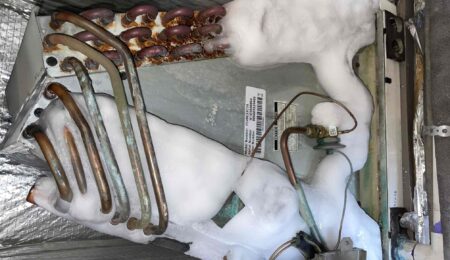
When refrigerant pressure drops too low, the evaporator coil gets colder than it should. Moisture in the air freezes on the coil and sometimes on the copper lines running to the outdoor unit. Western Washington’s marine climate means there is already significant humidity in the air year-round. When a coil temperature drops below freezing, that moisture freezes fast. Ice buildup here can happen more quickly than in drier inland climates, which is part of why refrigerant issues sometimes surface during the first real heat stretch of summer rather than building up gradually.
If you see ice or frost on your indoor unit or the copper lines, shut the system off and call for a diagnostic. Running the system on a frozen coil puts serious stress on the compressor.
Warm Air From Vents Even When the System Is Running
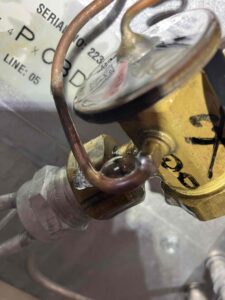
A soap bubble test revealing an active refrigerant leak at a flare fitting. The bubble forms where refrigerant is escaping, making an otherwise invisible leak easy to pinpoint.
If your system cycles on normally but the air coming from your vents is not noticeably cooler than the room temperature, refrigerant loss is one of the first things a technician will check. This symptom is easy to miss early in the season when outdoor temperatures are mild and the house eventually cools anyway.
Higher Utility Bills Without a Clear Reason
A system low on refrigerant has to work harder and run longer to produce the same result. That extra run time shows up on your electric bill before it shows up as a breakdown. Western Washington summers are shorter than inland markets, which means homeowners often do not notice gradual refrigerant loss until the first real heat event hits. The system runs hard for the first time all season, and that is when the efficiency drop from low refrigerant becomes obvious.
A Hissing or Bubbling Sound Near the Outdoor Unit
Refrigerant leaks sometimes produce an audible hiss or gurgling sound near fittings or coils. This is less common than the cooling symptoms above, but if you hear it while the system is running, note it when you call. It helps the technician narrow down the likely leak location before they arrive.
Quick Summary: Refrigerant Leak Warning Signs
- Home not cooling despite system running normally
- Ice or frost on indoor coil or refrigerant lines
- Warm air from vents when system is active
- Higher electric bills with no other obvious cause
- Hissing or bubbling near the outdoor unit
If you are seeing two or more of these, a refrigerant diagnostic is the right next step. Learn about Pacific’s AC repair services.
Why a Refrigerant Leak Does Not Fix Itself
Refrigerant operates in a closed loop. Unlike oil in a car engine, it is not consumed over time. A properly sealed system that left the factory with the correct charge should hold that charge for the life of the system.
If your system is low on refrigerant, there is a leak somewhere. Adding refrigerant without finding and fixing the source just delays the same problem. The leak continues, the refrigerant level drops again, and your compressor ends up working under abnormal pressure conditions for extended periods. Over time, that stress causes compressor damage, which is the most expensive repair on any AC system.
This is why a good technician does not just top off the charge and leave. The source of the leak matters. Pacific Heating & Cooling has completed over 501 refrigerant service jobs across Western Washington, and finding the source is always part of the work.
How Pacific Diagnoses a Refrigerant Leak
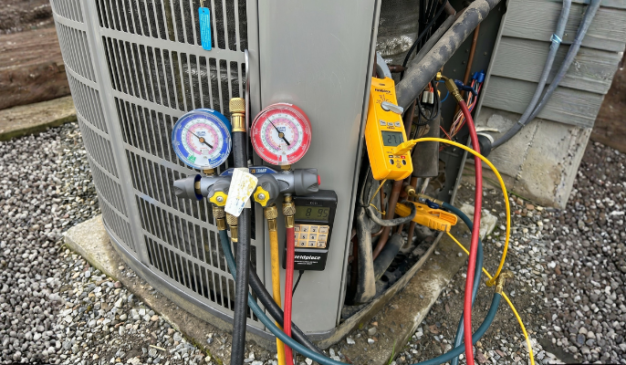
When a Pacific technician arrives for a cooling repair diagnostic, they check the full system, not just the refrigerant level. Pressure readings on both the high and low sides tell a clear story about what is happening inside the system.
If refrigerant is low, the next step is locating the source. Some leaks are obvious from visual inspection: oily residue near fittings or a damaged line set. Others require a nitrogen pressure test or electronic leak detector to find. Leak searches take more time and are part of what drives the cost spread on refrigerant repairs.
Once the leak is located, the technician will walk you through the options, including what the repair involves, whether the system is worth repairing given its age and condition, and what to expect from the fix. You will see what we are seeing and know what it means before any work begins. Upfront pricing is confirmed before the technician starts.
What a Refrigerant Service Visit Actually Looks Like
Example From a Recent Service Visit
A homeowner in Tacoma’s North End called because the system was running constantly but the indoor temperature kept climbing above the thermostat setting. The home is a 1990s construction with the original condenser still in service.
Solution:
When the technician checked pressures on both sides of the system, refrigerant levels were well below spec. A visual inspection of the line set and fittings at the outdoor unit revealed oily residue near a Schrader valve fitting, a clear sign of a slow leak that had been occurring over time. We recovered the remaining refrigerant, repaired the fitting, pressure-tested the system with nitrogen to confirm no additional leak points, reintroduced refrigerant to the correct charge for the unit, and verified system performance with temperature split testing at the vents. The repair was completed the same day.
What AC Refrigerant Leak Repair Costs in Western Washington
Based on over 500 refrigerant service jobs in Pacific’s service records, costs range from $1200-$4000+ based on the complexity of the leak and additional damage caused.
| Cost Factor | What It Means for Your Repair |
|---|---|
| Refrigerant type | R-410A is the current standard and more available. R-22 (older systems, typically pre-2010) is significantly more expensive and increasingly scarce. |
| How much refrigerant is needed | The amount needed drives material cost directly. A small top-off costs far less than a full recharge after a significant loss. |
| Leak search complexity | When the leak source is not obvious, a nitrogen pressure test is needed to find it. This adds to the labor time but ensures the repair addresses the actual source. |
| What the leak damaged | If a prolonged leak caused compressor damage, the repair scope and cost increase substantially. Catching the leak early protects the compressor. |
| Where the leak is located | A leak at an accessible fitting is straightforward. A leak inside the evaporator coil may require coil replacement, which is a more involved repair. |
Refrigerant balance only: When the system is slightly low and the leak is minor or the source is already known, the cost is at the lower end of the range. The technician adds refrigerant to the correct charge and confirms system performance.
Leak search and full repair: When the leak source is not obvious, finding it is a separate step. A proper leak search, which may involve nitrogen pressure testing or an electronic leak detector, starts at $1,295 for Peace of Mind Club members and $1,522 for non-members. That fee covers the diagnostic work to locate the leak. The actual repair and recharge are additional, with full repair costs typically running from $1,295 up to $4,300 or more depending on the location of the leak, the amount of refrigerant needed, and whether any downstream damage needs to be addressed.
Complex repairs and compressor damage: If a prolonged low-charge condition has damaged the compressor, or if the leak is at a coil that requires significant labor to access, costs can run considerably higher. In the most involved cases we see across Western Washington, that means repairs in the range of several thousand dollars, which is typically the point where a repair-versus-replace conversation makes sense.
Pacific gives you upfront pricing before any work begins, so there are no surprises on the invoice.
A Note on R-22 Systems in the South Sound
If your system was installed before 2010, it likely uses R-22 refrigerant, which is now phased out of production. Tacoma and the surrounding South Sound have a significant amount of older housing stock. Many homes built before 2000 in Puyallup, Lakewood, Gig Harbor, and Olympia still have the original HVAC system, and a good portion of those run on R-22.
Pacific’s technicians still service R-22 systems, but the refrigerant itself is increasingly scarce and expensive. For homeowners with older R-22 systems that need significant refrigerant work, replacement is often the more cost-effective long-term path. A technician can walk through that comparison with you honestly during the diagnostic visit. Financing options are available if replacement makes sense.
What Drives the Cost
The biggest cost variables on refrigerant service jobs are the amount of refrigerant needed, whether a leak search is required, the type of refrigerant (R-410A vs. R-22), and whether the leak caused downstream damage to the compressor. Pacific gives you upfront pricing before any work begins, so there are no surprises on the invoice.
Phil in Puyallup put it this way:
“Stephan and Brian were very knowledgeable and quick to assist with our AC unit leaking. They identified and solved the problem and made recommendations that did not feel like I was being hard pressed to purchase anything. Always recommend Pacific Heating and Cooling because of their staff like these.”
Phil in Puyallup
R-410A vs. R-22: What Type of Refrigerant Does Your System Use?
Most systems installed after 2010 use R-410A, the current industry standard. Systems installed before 2010 typically use R-22. You can usually find which refrigerant your system uses on the data plate on your outdoor condenser unit.
The distinction matters for both cost and for your long-term decision. R-410A is readily available. R-22 is not. If you have an older R-22 system with a significant leak, the repair cost may be high enough that replacement deserves a serious look.
If you are not sure which refrigerant your system uses, a technician can confirm it during the diagnostic visit. Our NATE-certified technicians are trained to show you exactly what they are seeing and give you clear options, not pressure.
How Urgent Is a Refrigerant Leak?
If your system is low on refrigerant, you should address it before the cooling season is fully underway, not during a heat wave when every HVAC company in the South Sound is booked out. Every summer, we see a surge in refrigerant calls from homeowners who had gradual symptoms all spring and called the moment temperatures spiked in July. Booking earlier means a faster appointment and less stress.
More importantly, running a system that is low on refrigerant puts continuous stress on the compressor. Compressors are not designed to run under low-charge conditions. Over time, that stress causes premature failure. A refrigerant repair done promptly is far less expensive than a compressor replacement done later.
If you are also noticing ice on the indoor unit or the system short-cycling, those are signs the situation may be more urgent. Our technicians are available with 2-hour arrival windows and upfront pricing before any work starts. See our full guide on why your AC might not be cooling.
Can You Add Refrigerant Yourself?
No. Refrigerant handling requires an EPA Section 608 certification. It is illegal for uncertified individuals to purchase or handle refrigerants like R-410A or R-22. Beyond the legal issue, adding refrigerant without diagnosing the leak source and confirming the correct charge level can cause more harm than good, including overcharging the system, which puts a different kind of stress on the compressor.
A certified technician has the tools to check both high and low side pressures, calculate the correct charge for your specific unit, find the leak source, and verify the repair with a post-service performance test. That complete process is what protects your system long-term.
Should You Repair or Replace After a Refrigerant Leak?
Not every refrigerant leak means replacement is on the table. Many leaks are simple repairs on otherwise healthy systems. The question of repair vs. replace becomes more relevant when:
- The system is 12 or more years old and the leak is at the coil or compressor
- The system uses R-22 and needs a significant refrigerant recharge
- A compressor replacement is being recommended alongside the refrigerant work
- The system has had repeated refrigerant issues over the past few years
If any of those describe your situation, Pacific’s technicians will walk you through both options honestly. The goal is a decision that makes sense for your home and your budget, not a sale.
Pacific Heating & Cooling has been serving Western Washington homeowners since 1984, with over 6,000 Google reviews and a 4.9 average rating. Every technician is background-checked and NATE-certified. Our No Worry, No Breakdown Guarantee backs every repair we complete.
If you are a Peace of Mind Club Member, your diagnostic visit includes a reduced fee and priority scheduling during peak season. If you are not yet a member, ask your technician about it during the visit.
Frequently Asked Questions
-
-
Based on 501 refrigerant service jobs in Pacific Heating & Cooling’s service records across Western Washington, costs range from $700 to $4000+. The wide range reflects how different the work can be: a simple refrigerant balance on a minor leak costs far less than a job requiring a nitrogen leak search, large refrigerant recharge, or compressor-related damage. You will receive upfront pricing before any work begins.
-
-
The most common signs are a home that is not cooling down despite the system running, ice or frost on the indoor coil or refrigerant lines, warm air coming from vents, and higher utility bills without another clear cause. A hissing or bubbling sound near the outdoor unit sometimes indicates a leak as well. If you notice two or more of these, a refrigerant diagnostic is the right next step.
-
-
No. Refrigerant handling requires an EPA Section 608 certification, and it is illegal for uncertified individuals to purchase or handle refrigerants like R-410A or R-22. Beyond the legal issue, adding refrigerant without finding the leak source and verifying the correct charge level can cause additional damage, including overcharging, which stresses the compressor differently. A certified technician has the tools to diagnose, locate the leak, and verify the repair properly.
-
-
Fairly urgent. A refrigerant leak does not fix itself and gets worse over time. Running your system while it is low on refrigerant puts continuous stress on the compressor. Compressor replacement is the most expensive repair on any AC system, and it is often the downstream result of ignoring a refrigerant issue too long. Getting the repair done before peak cooling season also avoids the scheduling crunch that happens every summer across the South Sound.
-
-
R-22 is phased out of production and increasingly scarce, which makes it significantly more expensive per pound than R-410A. For older R-22 systems with a significant leak, the cost of refrigerant alone can make repair less economical than replacing the system with a modern R-410A unit. A Pacific technician will walk you through both options honestly during the diagnostic visit so you can make an informed decision.
-
-
Not if there is an active leak. Refrigerant operates in a closed loop and should not decrease over time on a properly sealed system. Adding refrigerant without finding and repairing the leak source just delays the same problem. The level will drop again, and the compressor continues to operate under low-charge stress in the meantime. A proper repair finds the source, fixes it, pressure-tests the system, and then recharges to the correct level.
-
-
Not necessarily. Many refrigerant leaks are straightforward repairs on otherwise healthy systems. Replacement becomes a more serious conversation when the system is over 12 years old, the leak is at the coil or compressor, the system uses R-22 and needs a large recharge, or a compressor replacement is also being recommended. If that is your situation, a technician can give you an honest side-by-side comparison of repair cost versus replacement cost.
Still not sure what's causing the problem?
Tell us what your system is doing and we’ll help you figure out the right next step. Pacific Heating & Cooling has been diagnosing heating and cooling problems across Tacoma and the South Sound since 1984. NATE-certified technicians, 2-hour arrival windows, and upfront pricing before any work begins.
Or contact us using the form below.