By Pacific Heating & Cooling | NATE-Certified Service Technicians | Updated October 2026
The first cold morning has arrived, and you are about to switch your thermostat to heat for the first time since spring. Before you do, put in a fresh air filter (as for how often to change furnace filter, plan on every 1 to 3 months for a standard 1-inch filter and every 6 to 12 months for a 4-inch media filter), clear the area around the furnace and your vents, test your carbon monoxide detectors, and check that the thermostat has fresh batteries. Below, we walk you through each step, what is normal when the heat first kicks on, and when a professional tune-up makes sense.
How often to change furnace filter, and what else to check before turning on the heat
Before turning on your heater for the first time in winter, replace the filter, clear 3 feet around the furnace, open supply vents and uncover return grilles, test carbon monoxide detectors, and confirm the thermostat is set to heat with fresh batteries. Expect a light dusty smell for the first few minutes. A gas smell or a smell that does not fade is a reason to shut the system off.
If you are wondering what to do before turning on heat for the season, these steps take about 20 minutes and need no tools beyond a step stool. Here is how to prepare your furnace for winter in the order we recommend. Preparing your heater for winter this way makes the first cold night a non-event.
1. Replace the air filter
The filter is the single most important DIY furnace maintenance task. A clogged filter forces the blower to work harder and can make the furnace overheat and shut itself off. Check the size printed on the frame of your current filter and buy the same size.
Our technicians replaced a filter on more than half of the non-member heating tune-ups we sampled from our service records. In their visit notes, the guidance is consistent: 1-inch pleated filters every 1 to 3 months, and 4-inch media filters every 6 to 12 months. Homes with pets, recent remodels, or dusty ductwork land on the shorter end.
2. Clear the area around the furnace
Furnaces in South Sound homes often share space with storage in garages, closets, and crawl spaces. Move boxes, paint cans, laundry, and anything flammable at least 3 feet away. Make sure the furnace door panel is closed and seated, because many furnaces will not run with the door off.
3. Open vents and uncover returns
Walk the house and open supply vents in every room. Check that furniture and rugs are not blocking the larger return grilles. Closing vents in unused rooms does not save energy in most homes. It restricts airflow, which is the same problem a dirty filter causes.
4. Test your carbon monoxide detectors
Any home with a gas furnace, gas water heater, or attached garage should have a working carbon monoxide detector on every level and near sleeping areas. Press the test button on each one and replace batteries. If a detector is more than 7 to 10 years old, check the date on the back, since most have a built-in replacement date.
5. Check the thermostat and power
Put fresh batteries in the thermostat if it uses them. Switch it from cool or off to heat, then set it 3 to 5 degrees above the current room temperature. If nothing happens after a few minutes, check that the furnace service switch (it looks like a light switch on or near the unit) is on and the breaker has not tripped.
What to expect the first time the heat comes on
A light burning smell is normal the first time your furnace runs each fall. It is dust that settled on the burners and heat exchanger over the summer, burning off. The smell should fade within 15 to 30 minutes, and opening a window helps clear it faster.
A few things are not normal. If you smell rotten eggs, which is the odor added to natural gas, leave the house and call your gas utility from outside. If you smell burning plastic or electrical odors, or a burning smell that lasts more than an hour, turn the system off at the thermostat and have it checked. These are the furnace safety tips worth taping inside the furnace closet door.
How often to change furnace filter: quick guide
- 1-inch pleated filter: Every 1 to 3 months. Check it monthly during heating season.
- 4-inch media filter (like Aprilaire): Every 6 to 12 months.
- Washable or electronic air cleaner: Clean every 1 to 3 months. Do not skip it. Plugged washable filters are a common finding on our visits.
- Pets, remodeling, or wildfire smoke: Change or check more often than the ranges above.
Thinking about better filtration for allergies or smoke season? See our whole-home air filtration options.
What we commonly find during a heating tune-up, and what it means for your system
A homeowner checklist covers the basics. A professional heating tune-up goes further, using Pacific’s Precision Tune-Up approach: Maintain, Prevent, Extend. Based on our service records, we completed more than 20,000 heating tune-ups across Western Washington in the past two years, in homes from Tacoma and Lakewood to Puyallup, Federal Way, Gig Harbor, and Olympia.
Every visit is done by a NATE-certified, background-checked technician who arrives within a 2-hour window. You’ll see what we’re seeing and know what it means.
Included as part of the tune-up
-
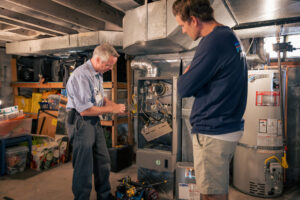
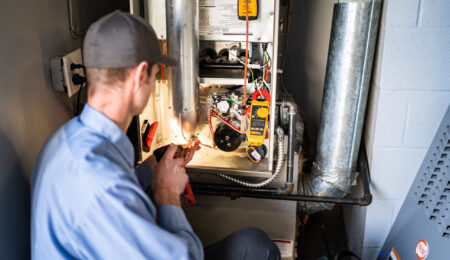
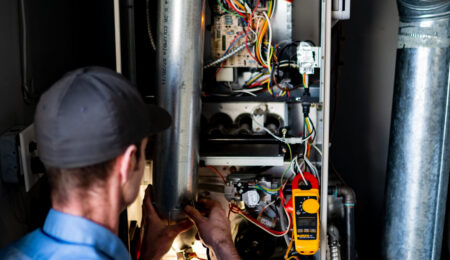
A NATE-certified Pacific Heating & Cooling technician walks a Tacoma homeowner through a furnace safety inspection.
Standard 1-inch filter replacement. On our non-member heating tune-up invoices, standard pleated filters are listed at no added charge.
- Burner and flame sensor cleaning. A dirty flame sensor is a common reason a furnace lights, then shuts off a few seconds later.
- Electrical checks. Technicians test amperage, voltage, and connections on the main components.
- Heat exchanger inspection. We look for cracks, holes, and heavy rust that could affect safe operation.
- Drain and cabinet cleaning. High-efficiency furnaces produce water, so we flush the drain and clean the cabinet.
- Full cycle test. The system is run before and after the service to confirm it heats properly.
Items that become a separate repair conversation
Some findings are worth a separate conversation. We explain each one and give you clear pricing before any extra work begins. In a sample of 300 recent non-member heating tune-ups, the most common follow-up items in technician notes were:
- Dirty or impacted blower wheel. Dust builds up on the fan blades, which cuts airflow and strains the motor. A deeper “pull and clean” is quoted separately.
- Weak capacitor. This part helps the blower motor start. When it tests low, the motor works harder and runs hotter.
- Worn igniter. Igniters wear out over time. Techs often catch one that still works but is close to failing.
- Blower motor leaking oil. This is an early sign the motor is wearing out, common in furnaces over 15 years old.
- Upgraded 4-inch filters. These are billed as a separate item from the tune-up.
About 1 in 4 of those sampled visits ended with the technician noting the furnace could not be certified because of its age or condition. That is not a sales pitch. It is information so you can plan, and you can read more in our guide to furnace repair vs. replacement.
Example From a Recent Service Visit
A homeowner in Graham scheduled a heating tune-up before winter. On arrival, our technician found the washable filter completely plugged, and the homeowner said it had not been cleaned in over 10 years. The blower wheel was also coated in dirt, and the furnace was working much harder than it should.
Solution:
We replaced the plugged washable filter with two standard pleated filters, cleaned the cabinet and coils, and flushed the drain line. We also walked the Graham homeowner through the other findings so they could decide what to address next.
For a closer look at the problems we see most once heating season starts, read our guide to common furnace problems.
Is a heating tune-up worth it before winter?
For most homes, yes. A heating tune-up cleans the parts that cause most early-season shutdowns, like dirty flame sensors and clogged filters, and catches worn parts before they fail on a cold night. Non-member Precision Tune-Ups are $199 plus tax, and most visits total $197 to $392.
Here is what that number means. Across more than 3,300 non-member heating tune-ups in our service records over the past two years, most visits totaled $197 to $392, including tax and anything added during the visit. The typical visit was about $219. Visits on the higher end usually included upgraded filters or a repair the homeowner approved on the spot.
If you would rather not track tune-up dates yourself, our Peace of Mind Club covers annual tune-ups, priority scheduling, 24/7 emergency support, and reduced diagnostic fees. It is one reason Pacific has earned more than 7,000 Google reviews with a 4.9 average rating.
Saleem in Federal Way put it this way:
“My tech showed up on time like they always do and walked me through what signs of concern in our furnace we should have and look out for. Great experience as usual!”
Saleem in Federal Way
When should you prepare your heater for winter?
The best time to prepare your heating system for winter is September through early October, before the first cold snap. In our service records, non-member heating tune-ups peak in October and November, so booking early gets you more appointment choices and a system that is ready before you need it.
Western Washington’s marine climate makes timing tricky. Fall often brings a few chilly mornings followed by mild afternoons, so many homeowners run the heat lightly for weeks before the real cold arrives. That shoulder season is the ideal window to winterize your furnace, because a small issue found in October is easier to schedule than a no-heat call in a December freeze.
A few more winter HVAC tips for South Sound homes:
- Check your filter monthly from October through March, when the furnace runs the most.
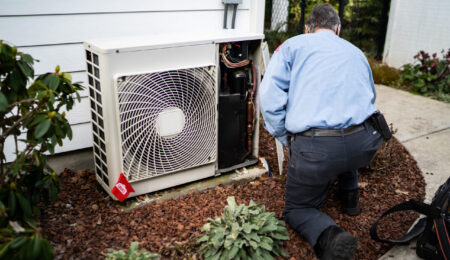
- Keep outdoor heat pump units clear of leaves, branches, and snow.
- Set a steady thermostat schedule instead of large swings. Big jumps make the system run longer.
- If your furnace is over 15 years old, ask your technician about its condition during the tune-up so there are no surprises mid-winter.
Not sure your furnace is ready? We’ll check it top to bottom and give you clear answers. Book a heating tune-up online or call (253) 248-6260, and ask about the Peace of Mind Club. No Surprises. Just Solutions.
Frequently Asked Questions
-
-
Change a standard 1-inch pleated filter every 1 to 3 months, and a 4-inch media filter every 6 to 12 months. Homes with pets, recent remodeling, or wildfire smoke should check more often. During heating season, from October through March, a quick monthly look at the filter is the easiest habit to keep.
-
-
That smell is usually dust that settled on the burners and heat exchanger over the summer burning off. It is normal and should fade within 15 to 30 minutes. If it smells like rotten eggs, leave the house and call your gas utility from outside. If it smells like burning plastic or lasts more than an hour, turn the system off and have it checked.
-
-
A non-member Precision Tune-Up for heating is $199 plus tax. Across more than 3,300 non-member heating tune-ups in our records over the past two years, most visits totaled $197 to $392 including tax and anything added during the visit, such as an upgraded filter. Peace of Mind Club members get annual tune-ups as part of their membership.
-
-
September through early October is the best window, before you rely on the heat every day. Our heating tune-ups peak in October and November, so booking early gives you more appointment times to choose from. If you already turned the heat on and it is working, a tune-up later in the season is still worthwhile.
-
-
You can and should handle the basics yourself: changing the filter, keeping the area clear, and testing your carbon monoxide detectors. What a homeowner cannot easily do is test the igniter, measure the capacitor, check gas pressure, or inspect the heat exchanger for cracks. Those checks are how worn parts get caught before they fail on a cold night, which is where a tune-up earns its cost.
-
-
It is a fair question. On our visits, the technician cleans and tests the system, explains anything they find, and gives you upfront pricing before any extra work. Some tune-ups end with no recommendations at all, and you are never required to approve a repair to complete the service.
-
-
Yes. Any home with a gas furnace, gas water heater, fireplace, or attached garage should have a working carbon monoxide detector on every level and near bedrooms. A new furnace lowers the risk, but a detector is the only way to know if carbon monoxide is present. Test each one when you turn on the heat for the season.
Still not sure if your system is ready for the season?
Tell us what your system is doing and we’ll help you figure out the right next step. Pacific Heating & Cooling has been diagnosing heating and cooling problems across Tacoma and the South Sound since 1984. NATE-certified technicians, 2-hour arrival windows, and upfront pricing before any work begins.