By Pacific Heating & Cooling | NATE-Certified Service Technicians | Updated October 2026
When the forecast drops into the 20s, it is easy to start worrying about the water lines running through your crawl space, garage, and outside walls. Cold weather pipe insulation works best when you cover every exposed pipe in an unheated space with snug foam or fiberglass sleeves, tape the seams and joints, add an insulated cover to each outdoor faucet after disconnecting the hose, and close crawl space vents during a hard freeze. Here is how to insulate pipes for winter step by step, what to watch for in Western Washington homes, and when a plumbing fix makes more sense than more insulation.
How do you insulate pipes for winter? What cold weather pipe insulation covers
To insulate pipes for winter, find every water line in an unheated area, measure its diameter, and fit a matching foam or fiberglass sleeve over it with no gaps. Tape every seam, elbow, and valve. Then protect outdoor faucets with insulated covers. Most homes can finish the job in an afternoon for under $50 in materials.
If you are learning how to insulate a pipe from freezing for the first time, the goal is simple: slow down heat loss so the water inside the pipe does not reach freezing. Insulation does not create heat. It buys time, which is usually enough to get through a short South Sound cold snap.
Crawl space pipes
Crawl spaces are where most Western Washington homes are most exposed. Many houses in Tacoma, Puyallup, and Lakewood were built in the 1960s through 1980s with supply lines running under the floor and very little protection. Based on our service records, our plumbers completed 7 calls involving crawl space piping since May 2026, before the cold season even started.
If you are wondering how to keep crawl space pipes from freezing, start here:
- Sleeve every supply line, especially runs near foundation vents and the outside walls.
- Close or cover foundation vents during a hard freeze, then reopen them when temperatures recover so moisture can escape.
- Check that the crawl space door or hatch closes tightly.
- Look for pipes that sag below the floor insulation. Those are the ones that get coldest.
Insulation for outside pipes and hose bibs
Outdoor faucets are the most common weak spot we see. Based on our service records, we completed 27 outdoor faucet and hose bib calls across Western Washington since May 2026, in cities including Tacoma, Spanaway, Auburn, Federal Way, Puyallup, and Bonney Lake.
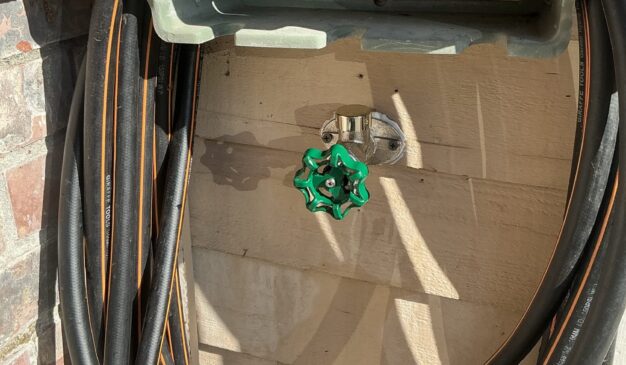
For outside pipes, disconnect and drain every garden hose first. A connected hose traps water in the faucet, and that water can freeze back into the wall. Then add a foam faucet cover.
This applies even if you have a frost-free hose bib. A frost-free faucet only protects itself when it can drain after you shut it off. Leaving the hose attached keeps water trapped inside the valve, so it can freeze and break, often inside the wall where you will not see the leak until you turn the water back on in spring.
If the home has an interior shutoff for the outdoor line, close it and open the outside faucet to drain it.
Garages, attics, and exterior walls
Pipes in an unheated garage or attic need the same full sleeve treatment. For pipes inside exterior walls, open the cabinet doors under kitchen and bathroom sinks on very cold nights so warm room air reaches them.
Choosing the best pipe insulation to prevent freezing
The best pipe insulation to prevent freezing is the one that fits snugly and covers the whole run. When you shop for pipe insulation for winter, here is how the common options compare:
- Foam tube sleeves: Easy to install, inexpensive, and a good fit for most crawl space and garage runs. Choose the size that matches your pipe exactly.
- Fiberglass pipe wrap: Better for tight spots or near heat sources. Wear gloves and wrap it with a vapor barrier on the outside.
- Self-regulating heat cable: Useful for pipes that freeze every year. Use a UL-listed product, follow the instructions exactly, and plug it into a GFCI outlet.
What we commonly find, and what it means for your plumbing
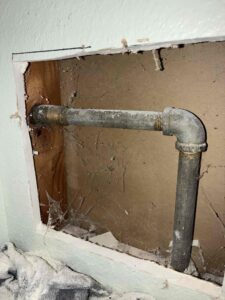
An older galvanized water line with no insulation, found behind the wall during a hose bib replacement in Federal Way.
Most freeze problems we see trace back to a few spots that insulation alone cannot fully solve. It helps to separate what you can handle with insulation from what turns into a separate plumbing repair, so you know what to expect before anyone picks up a tool.
What insulation and simple prep can handle
- Bare supply lines in crawl spaces, garages, and attics
- Gaps where old insulation has slipped, torn, or been chewed by pests
- Exposed pipe near foundation vents
- Outdoor faucets that only need a hose disconnected and a cover added
What turns into a separate plumbing repair (costs extra)
- Leaking or worn outdoor faucets. A faucet that drips or will not shut off fully is holding water where it is most likely to freeze. Insulation will not fix it.
- Standard hose bibs on exposed walls. Older homes often have faucets with the shutoff valve outside. A frost-free hose bib moves that shutoff inside the warm wall.
- Frost-free hose bibs that were installed incorrectly. A frost-free faucet has to be installed so it drains toward the outside after each use. If it sits level or tilts back toward the house, water stays in the valve and it can freeze just like a standard faucet.
- Existing crawl space leaks. A slow leak under the floor needs to be found and repaired before winter, not wrapped over.
Example From a Recent Service Visit
A homeowner in Federal Way called about a leaking outdoor faucet on a house built in the mid-1980s. Our plumber inspected the faucet and the line behind it and recommended replacing it with a freeze-resistant model rather than patching the old one.
Solution:
We returned and installed a frost-free hose bib with a mounting block on the Federal Way home, so the water now shuts off inside the wall where it stays warmer.
Based on 11 frost-free hose bib installations in our service records, most jobs run $1,030 to $1,790. The full range was $963 to $2,570. The difference comes from how many faucets are replaced and whether we need to open the wall to reach the line. We explain what is included and give you upfront pricing before any work begins, so there are no surprises.
Every repair and installation is backed by our 100% Money-Back Guarantee. You’ll see what we’re seeing and know what it means.
Does cold weather pipe insulation prevent freezing?
Pipe insulation greatly lowers the risk of freezing, but it does not guarantee it. Insulation slows heat loss so water stays above 32°F longer. In a short Western Washington cold snap, that is usually enough. In a long freeze or in a home that loses heat, insulation needs help from closed vents, drained outdoor lines, and a working heating system.
So, does pipe insulation prevent freezing on its own? Not always, and that is where the rest of the house comes in. The best way to insulate pipes from freezing is to pair the sleeves with steady indoor heat.
That point matters more than most people realize. The fastest way for pipes to freeze is for the house itself to get cold. A furnace or heat pump that quits on the coldest night of the year puts every pipe at risk. A pre-season heating maintenance visit is a big part of how to keep pipes from freezing, because it keeps the heat on when you need it most. If your system is already struggling, our heating repair team offers 2-hour arrival windows.
Insulation also matters on the hot side of your plumbing. Washington energy code requires insulation on the hot water supply line at the water heater, and inspectors check it. When we install a water heater, we handle the permit, inspection, and registration for you.
When should you insulate pipes for winter?
The best time to insulate pipes for winter is October through early November, before the first hard freeze. Do it on a dry day so crawl spaces are easier to work in. Recheck your winter pipe insulation after any cold snap, since sleeves can shift and outdoor covers can blow off.
Insulating pipes for winter matters here because Western Washington winters are mild most of the time, so freezes catch people off guard. A few nights in the low 20s or teens can be enough to split an exposed line, especially in older homes. Getting ahead of it now is much easier than dealing with a burst pipe at midnight.
If you would rather have help, now is also the time to get leaking outdoor faucets or crawl space leaks fixed. Members of our Peace of Mind Club get priority scheduling, 24/7 emergency support, and reduced diagnostic fees when the weather turns. Pacific has been helping families across the South Sound and beyond since 1984, with more than 7,000 Google reviews and a 4.9 average rating.
Ready to get your home set for the cold? Call (253) 248-6260 and we will walk you through your options with clear answers and upfront pricing. No Surprises. Just Solutions.
Frequently Asked Questions
-
-
The best way to insulate pipes from freezing is to fit snug foam or fiberglass sleeves over every water line in an unheated space, like a crawl space, garage, or attic, and tape every seam and elbow. Then disconnect garden hoses and add insulated covers to outdoor faucets. During a hard freeze, close crawl space vents and keep your heat on.
-
-
Pipe insulation does not make pipes freeze-proof, but it slows heat loss enough to get most homes through a short Western Washington cold snap. It works best when combined with drained outdoor lines, closed crawl space vents, and a heating system that stays on. For a few dollars per run, it is one of the most cost-effective ways to protect your plumbing.
-
-
-
-
-
-
Sleeve every supply line in the crawl space, paying special attention to pipes near foundation vents and outside walls. Close or cover the vents during a hard freeze, then reopen them once temperatures recover so moisture can escape. Make sure the crawl space hatch closes tightly and fix any existing leaks before winter.
-
-
Yes. A frost-free hose bib only works when it can drain after you shut it off, and an attached hose keeps water trapped inside the valve. That water can freeze and break the faucet inside the wall, where the leak often stays hidden until spring. Disconnect the hose before the first freeze, and if a frost-free faucet still freezes, have it checked, because one installed without the right downward slope can hold water too.
-
-
Still not sure if your system is ready for the season?
Tell us what your system is doing and we’ll help you figure out the right next step. Pacific Heating & Cooling has been diagnosing heating and cooling problems across Tacoma and the South Sound since 1984. NATE-certified technicians, 2-hour arrival windows, and upfront pricing before any work begins.