By Pacific Heating & Cooling | Certified Plumbers | Updated September 2026
You are looking at a dripping faucet, a toilet that rocks when you sit down, or a sink that will not stop clogging, and trying to decide if it is worth calling a plumber or if you should just replace the whole thing. As a general rule, if the repair costs less than half of what a full replacement would cost and the fixture is less than 10 to 15 years old, repair is almost always the better choice. Once repair costs climb past that point, or the fixture has more than one problem at a time, replacement usually saves you money and hassle over the long run. Here is what typically drives the cost of faucet, sink, and toilet repairs, what a service visit involves, and how to use that same rule to make a confident decision for your own home.
What drives the cost of faucet and toilet repair or replacement?
The cost of repairing or replacing a faucet or toilet depends mainly on which type of fixture it is, how old the surrounding plumbing is, and whether the job is a straightforward swap or requires extra work to access pipes or supply lines. A lavatory faucet, a kitchen faucet, and a tub or shower faucet are priced differently, since each involves different parts and different access.
Faucet type is the biggest factor. A tub or shower faucet replacement typically costs more than a lavatory or kitchen faucet, since the valve is usually behind tile or a wall and takes more time to access and reseal. Sometimes what looks like a faucet problem is actually just a worn supply line. Replacing a supply line on a kitchen or lavatory faucet can start around $200, and it is worth asking your technician to check this before assuming the whole faucet needs to come out.
Access is another factor homeowners do not always expect. A toilet with a tight shutoff valve, or a faucet valve buried behind a wall, can take longer to work on than a fixture with open access underneath. Pacific quotes the full cost before any work begins, so you know exactly what you are paying and why, with no surprises once the job is underway.
Typical cost ranges for faucet and toilet repair or replacement
Faucet pricing varies more than most homeowners expect, since a lavatory faucet, a kitchen faucet, and a tub or shower faucet each involve different parts and different amounts of access work. Here is Pacific’s typical flat rate pricing for these services in Western Washington.
| Fixture | Typical Repair Cost | Typical Replacement Cost |
|---|---|---|
| Lavatory (bathroom sink) faucet | $429 to $561 | $510 to $700 |
| Kitchen faucet | $429 to $561 | $582 to $1,105 |
| Tub or shower faucet | $422 to $735 | $1,517 to $2,413 |
| Toilet | $198 to $680 | $680 to $1,466 |
Kitchen and lavatory faucet repairs can sometimes cost less than the range above. If the issue turns out to be a worn supply line rather than the faucet itself, that repair can start around $200. Tub and shower faucet replacement costs more than the other faucet types because the valve is typically set inside the wall, which means more time and often some tile or surround work to access it.
Pacific does not currently stock or install standalone sinks, so a full sink replacement is quoted after a technician looks at your specific sink, countertop, and installation type rather than from a set price range. Sink related repairs, such as a slow drain or a loose drain connection, are priced the same straightforward way as the fixtures above. Every plumbing job comes with a 100% Money Back Guarantee, so if a repair or replacement does not perform as stated, we make it right.
What a plumbing fixture evaluation visit looks like
A plumbing evaluation visit starts with a licensed technician checking the fixture, the shutoff valve, and the supply lines underneath, then walking you through what is actually causing the problem before any work begins. Most visits for a single faucet, sink, or toilet take under an hour unless access to the
plumbing is unusually difficult.
You will get a clear, upfront price before the technician starts, not after. That is part of Pacific’s No Surprises Pricing approach, and it applies to plumbing the same way it applies to heating and cooling. If the technician finds something unexpected once the work is underway, such as corroded pipes behind a wall, they will walk you through the options rather than just proceeding and adding it to the bill.
Pacific’s plumbing technicians are licensed and background checked, and every job is backed by the same 100% Money Back Guarantee and Property Protection Guarantee that covers your flooring, walls, and landscaping during the work. You can review the full list of fixture services Pacific offers, including sinks, faucets, toilets, garbage disposals, and shower valves, on the plumbing fixture installation and replacement page.
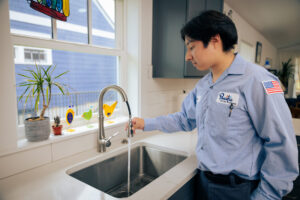
A Pacific technician checks a kitchen faucet during a plumbing evaluation visit.
Repair vs. replace. When does it make sense?
The clearest way to decide is the 50 percent rule. If the repair costs less than half of what a full replacement would cost, repair almost always makes sense. If the repair cost creeps above that line, or the fixture already has other issues, replacement is usually the more cost effective long term solution. Here is how that plays out for each fixture.
Faucets
A faucet with a single worn cartridge or a loose handle is almost always worth repairing, especially if the fixture is less than 10 years old. If the faucet is leaking at the base, corroded, or you have already replaced parts more than once, replacement is usually the better long term solution since it avoids paying for repeated repairs on an aging fixture.
Sinks
A slow drain, a loose drain connection, or a minor leak around the basin is usually a repair, and it is priced the same straightforward way as a faucet or toilet repair. A sink with a large crack or a basin that has reached the end of its useful life is a different situation. Since Pacific does not stock standalone sinks, replacement is quoted after a technician sees the sink, the countertop, and how it is installed, rather than from a set price range.
Toilets
A running toilet, a loose base, or a worn flapper is a quick, affordable repair in most cases. A toilet that rocks even after the bolts are tightened, cracks at the base, or needs frequent clearing no matter what you flush is usually telling you it is time to replace it. Newer water saving models can also lower your water bill enough to help offset the cost over time.
None of these decisions need to feel like guesswork. Pacific’s technicians will walk you through what they find and give you clear options, not a sales pitch, so you can decide what makes sense for your home and your budget. Pacific has served homeowners across Tacoma, Puyallup, Lakewood, Gig Harbor, and Olympia since 1984, and that same No Surprises approach now applies to plumbing.
Frequently Asked Questions
-
-
It depends on the type of faucet. Lavatory and kitchen faucet repairs typically run $429 to $561, while tub or shower faucet repairs run $422 to $735. Replacement runs $510 to $700 for a lavatory faucet, $582 to $1,105 for a kitchen faucet, and $1,517 to $2,413 for a tub or shower faucet, which costs more because the valve sits inside the wall. Sometimes the issue is just a worn supply line, which can be repaired for around $200. Pacific gives you an exact, upfront price before starting any work.
-
-
Most single toilet or sink replacements take under an hour once the technician arrives, assuming there is normal access to the shutoff valve and supply lines. Jobs that involve an outdated valve, a hard to reach connection, or unexpected pipe issues can take longer. You will know the estimated time before the work begins.
-
-
If you are comfortable shutting off the water and working with basic tools, replacing a toilet flapper or a simple faucet cartridge is a reasonable DIY repair for many homeowners. Where it gets risky is when the shutoff valve will not fully close, the part does not match your fixture, or the leak is coming from somewhere you cannot see. In those cases, calling a plumber avoids turning a small fix into water damage.
-
-
Not usually. A slow drain is most often a clog or a buildup issue rather than a problem with the sink itself, and it is typically a repair, not a replacement. Replacement becomes the better option when the sink has a crack, a failing connection, or repeated leaks around the basin that repairs have not resolved.
-
-
A good starting point is the 50 percent rule: if the repair cost is more than half of what a full replacement would cost, replacement usually makes more financial sense, especially on fixtures over 10 to 15 years old. Fixtures with multiple issues happening at once, rather than a single isolated problem, are also usually better candidates for replacement.
-
-
That is a personal choice rather than a repair necessity. If the fixture is functioning well with no leaks, cracks, or recurring issues, replacing it is about style and efficiency rather than fixing a problem. Newer water saving toilets can lower your water bill over time, which is worth factoring in if you are already considering an update.
-
-
No. Pacific’s No Surprises Pricing means the price we quote before starting work is the price you pay. If the technician finds something unexpected, such as a corroded shutoff valve or damaged pipe, they will explain the options and get your approval before doing any additional work or adjusting the price.
Still not sure if the repair is worth it?
Tell us what your system is doing and we’ll help you figure out the right next step. Pacific Heating & Cooling has been diagnosing plumbing, heating, and cooling problems across Tacoma and the South Sound since 1984. Licensed, background-checked plumbers, upfront pricing before any work begins, and a 100% Money Back Guarantee on every job.