By Pacific Heating & Cooling | NATE-Certified Service Technicians | Updated September 2026
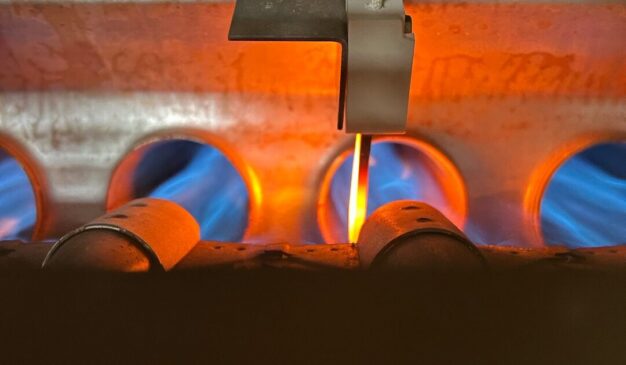
You bend down, look through the furnace’s burner window, and the flame is yellow or orange instead of blue. Or your carbon monoxide detector suddenly starts beeping and you are not sure if it is real. A normal furnace flame burns steady and blue, sometimes with a small yellow tip. A flame that is yellow, orange, flickering, or wavering is a warning sign of incomplete combustion, which can produce carbon monoxide. If your CO detector goes off, get everyone outside first. Call 911 or your gas utility from outside the home, not from inside investigating the furnace. Here is what causes flame color changes, what you can safely check yourself, and what a furnace safety inspection typically costs in Tacoma and the South Sound.
What causes a furnace flame to turn yellow or orange?
A yellow or orange furnace flame almost always means the burners are not getting the right mix of air and gas. The most common causes are dirty burners, a cracked heat exchanger, a blocked flue, or a failing ignition part. Any of these can lead to incomplete combustion, which is where carbon monoxide comes from. Our NATE-certified technicians are trained to trace the flame color back to its actual cause instead of just swapping a part and hoping.
Dirty or clogged burners
Dust, pet hair, and rust flakes can build up on the burner assembly over months of use. When burners are dirty, the gas cannot mix with air the way it is designed to, and the flame turns yellow or orange instead of blue. Homeowners often notice this along with a musty or slightly burnt smell when the furnace first kicks on. The common solution is a burner cleaning and inspection, which restores the correct flame pattern.
Cracked heat exchanger
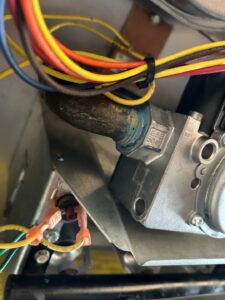
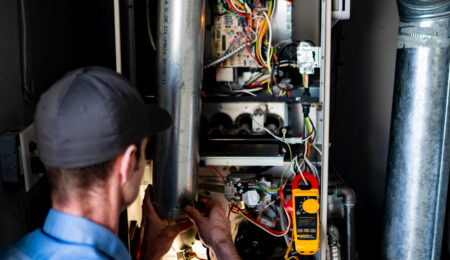
A furnace gas valve and its control wiring. When this part starts to fail, it is one of the more expensive causes of a flame color problem, and one reason gas valve repairs run higher than a routine flame sensor or ignitor fix.
The heat exchanger is the metal chamber that separates the combustion gases from the air that circulates through your home. Over ten or more years of
heating and cooling cycles, metal fatigue can cause it to crack. A crack can distort the flame, causing it to waver or lean to one side, and it can also let carbon monoxide leak into your ductwork. This is one of the few furnace issues where the common solution is not a repair. A cracked heat exchanger typically means the furnace needs to be shut down until it is replaced, since there is no safe way to patch it.
Improper air and gas mixture
Furnaces are set at the factory and again at installation to burn a precise ratio of air to gas. If that mixture drifts, whether from a dirty air filter restricting airflow or a gas pressure issue at the valve, the flame color shifts away from blue. Homeowners usually notice this as a general change in flame appearance without any obvious smell or noise. A technician corrects it by testing combustion with a calibrated analyzer and adjusting airflow or gas pressure to bring the flame back into range.
Failing ignitor, pilot assembly, or flame sensor
Older furnaces use a standing pilot light. Newer furnaces use an electronic ignitor. Both can develop ignition problems that affect flame color and stability. A weak pilot flame or a dirty flame sensor can cause the burner flame to look uneven or shut off shortly after lighting. Homeowners typically notice the furnace short cycling or failing to stay lit. The common solution is cleaning or replacing the flame sensor or ignitor, which is one of the more routine repairs our technicians handle.
Blocked or damaged flue and venting
The flue pipe carries combustion exhaust, including carbon monoxide, safely outside your home. If it is blocked by debris, disconnected, or was installed incorrectly, exhaust gases can back up into the furnace’s burner area and distort the flame. This is one of the more serious causes, because a venting problem is a direct path for carbon monoxide to enter your living space instead of leaving the house.
Example From a Recent Service Visit
A homeowner in Kent called us after a home inspector flagged a possible venting issue on the furnace during a home purchase. Our technician found that the flue was not routing exhaust gases safely to the outside, which is exactly the kind of setup that can allow carbon monoxide to build up indoors.
Solution: We corrected the venting so exhaust gases route safely outside, then tested the system with a combustion analyzer to confirm safe operation before the new homeowners moved in.
If Your CO Detector Goes Off: What to Do Right Now
- Get everyone outside. Do not stop to open windows or investigate the furnace first.
- Call 911 or the fire department from outside the home. Carbon monoxide has no smell or color, so treat every alarm as real until it is checked.
- If anyone feels dizzy, nauseous, or has a headache, mention it to the 911 dispatcher. These are common carbon monoxide symptoms.
- Do not go back inside until fire department personnel or a qualified technician confirms it is safe.
- Turn off the furnace at the thermostat once it is safe to briefly re-enter, and leave it off until a technician has inspected the system.
Once everyone is safe, call us at (253) 248-6260 to schedule a furnace safety inspection before you turn the heat back on.
What a homeowner can do vs. what requires a technician
Furnace flame and carbon monoxide issues are one area where we genuinely want you to lean toward caution rather than troubleshooting on your own. Here is where the line falls.
What a homeowner can safely do
- Replace your air filter if it looks dirty. A clogged filter restricts airflow and can affect flame color and combustion.
- Test your CO detectors monthly and replace batteries twice a year, the same schedule as smoke detectors.
- Note what you observed, flame color, sounds, smells, timing, so you can describe it clearly when you call.
- Turn the furnace off at the thermostat if you are unsure, and wait for a professional inspection rather than continuing to run it.
What requires a technician
Diagnosing the actual cause of a flame color change takes equipment most homeowners do not have. A combustion analyzer measures carbon monoxide, oxygen, and combustion efficiency directly at the burner. Our technicians also use a camera to inspect inside the heat exchanger for cracks that are not visible from the outside. With 2-hour arrival windows and upfront pricing before any work begins, you will know exactly what we found and what it means before we touch anything.
Signs you should call for a furnace safety inspection
Some furnace symptoms can wait for a scheduled maintenance visit. These cannot.
- The burner flame is yellow, orange, or flickering instead of a steady blue.
- Your carbon monoxide detector has gone off, even briefly, even if it seems to stop.
- You notice soot or dark staining around the furnace cabinet, vent connector, or nearby walls.
- Family members have unexplained headaches, dizziness, or nausea that improve when they leave the house.
- The furnace makes a popping sound or takes several tries to light.
- There is a burning, metallic, or unusual smell near the furnace when it runs.
If any of these sound familiar, that is a same-day call, not a wait-and-see situation. Pacific’s background-checked technicians handle these calls across Tacoma, Puyallup, Lakewood, Gig Harbor, Olympia, and the rest of the South Sound.
What does a furnace flame or carbon monoxide safety inspection cost in Tacoma and Western Washington?
Based on 333 furnace flame, ignition, and venting related service calls in our records from June 2025 through April 2026, diagnostic and repair costs typically range from $79 to $3,065. Most calls land closer to the lower end, around $199. That is a wide range because it covers everything from a simple diagnostic visit to a full gas valve replacement.
Most calls involving a flame sensor, ignitor, or pilot assembly run between $99 and about $180, and these are usually straightforward same-day repairs. Gas valve issues cost more, with a median closer to $1,048, because the part is more involved to access and replace safely. On the rare occasion a technician finds a cracked heat exchanger, the conversation shifts away from repair entirely. A furnace should never keep running with a compromised heat exchanger, so we will walk you through replacement options and financing before any decision is made. No-surprise pricing means you will see the actual number before we start, not after. Most flame sensor, ignitor, and pilot repairs are completed the same day.
Here is what Paul in Olympia had to say about a flame sensor repair:
“Timely and courteous (1 day to service from call). Furnace was turning on and off continuously for a couple days. Called Pacific and Kyle showed up at the front end of the appointment. Had a part that needed some maintenance and cleaning. He explained the issue, and resolved it. Heat is back on.”
Paul in Olympia
If a repair does end up being more than expected, Pacific’s financing options can help spread out the cost, and every repair and installation is backed by our 100% Money-Back Guarantee.
For homes overdue for a checkup, regular furnace maintenance visits catch dirty burners, weak ignitors, and early venting problems before they affect flame color at all. If you are also weighing whether an aging furnace is worth repairing, our furnace repair vs. replacement guide walks through that decision. You can find more on how furnaces work in general on our furnace overview page, and see other common issues in our guide to common furnace problems.
Flame color and carbon monoxide questions are not something we want you guessing about. If you have noticed a change in your furnace’s flame or your CO detector has ever sounded, call us at (253) 248-6260 and we will schedule a diagnostic to find the real cause and confirm your system is safe to run. No Surprises. Just Solutions.
Frequently Asked Questions
-
-
-
-
-
-
Treat it as an emergency every time, even if the alarm stops or seems brief. Get everyone outside immediately, call 911 or the fire department from outside the home, and do not go back in until it has been confirmed safe. Once you are cleared to return, schedule a furnace safety inspection before turning the heat back on.
-
-
If you are comfortable and your furnace’s manual specifically covers it, a light cleaning of an accessible flame sensor is something some homeowners do. What you cannot do yourself is confirm whether the flame color issue is actually caused by something more serious, like a cracked heat exchanger or a venting problem, since that requires a combustion analyzer and a camera inspection. A quick DIY cleaning that does not fix the issue can also delay catching a real safety problem.
-
-
Not always an immediate emergency, but it always means something is off with combustion and should be checked. Sometimes it is as simple as dirty burners or a dirty air filter restricting airflow. Other times it signals a cracked heat exchanger or a venting problem, which is why we recommend a professional inspection rather than waiting to see if it changes on its own.
-
-
Replace CO detector batteries at least twice a year, and test the unit monthly using the test button. Most CO detectors also have a full unit lifespan of five to seven years even with fresh batteries, so check the manufacture date printed on the back if yours has been in place a while.
-
-
Still not sure what’s causing the problem?
Tell us what your system is doing and we’ll help you figure out the right next step. Pacific Heating & Cooling has been diagnosing heating and cooling problems across Tacoma and the South Sound since 1984. NATE-certified technicians, 2-hour arrival windows, and upfront pricing before any work begins.