By Pacific Heating & Cooling | NATE-Certified Service Technicians | Updated September 2026
If your furnace has been running fine so far this year, it is easy to put off scheduling maintenance until something actually goes wrong. The clearest signs your furnace needs maintenance before winter are uneven heat between rooms, a furnace that takes several tries to start, unusual noise from the blower, higher heating bills with no clear cause, and it has been more than a year since a professional check. Here is what each sign means, what a furnace tune-up actually covers, and when to get it scheduled before the coldest months hit Western Washington.
5 signs your furnace needs maintenance before winter
These are the signals our NATE-certified technicians see most often on furnace tune-ups and diagnostic calls across Tacoma and the South Sound. If one or more of these sounds familiar, it is worth getting your system checked before the temperature drops.
1. Some rooms feel warm while others stay cold
Uneven heating usually points to restricted airflow somewhere in the system. A dirty filter is the single most common cause we find, and it is also the easiest fix.
You will notice one bedroom or the far end of the house never quite reaches the temperature on the thermostat, even when the furnace runs constantly.
During a tune-up, our background-checked technicians check filter condition, airflow, and duct connections, and replace the filter when it is due.
2. The furnace takes several tries to start, or cycles on and off quickly
This is often tied to the thermostat, the ignition system, or a safety switch that is reacting to a smaller issue.
Example From a Recent Service Visit
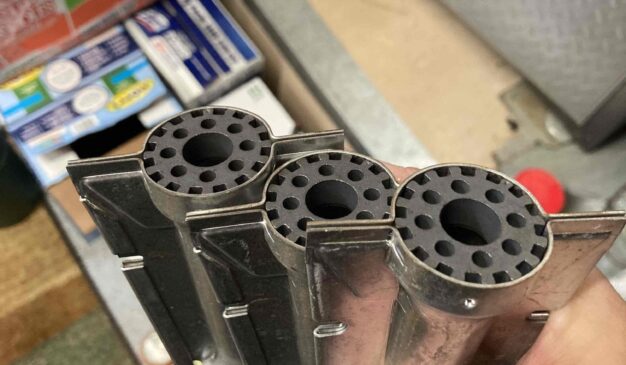
A homeowner in Kent reported that their carbon monoxide detector had gone off near the furnace, and they were worried about a gas leak. During the scheduled furnace tune-up, our technician inspected the heat exchanger and combustion process for any sign of a crack or exhaust leak.
Solution: We completed a full combustion safety check as part of the tune-up and confirmed the furnace was operating safely. We also walked the homeowner in Kent through exactly what we checked and why.
You will hear the furnace click, try to fire, and shut back off, sometimes more than once before it stays running.
A technician arrives within our 2-hour window and tests the thermostat connection. From there, we clean or test the flame sensor and ignitor, and confirm the furnace completes a full, safe ignition cycle every time.
3. Rattling, buzzing, or grinding noise from the furnace or blower
New or louder noise almost always means a mechanical part, like a capacitor or blower component, is starting to wear out.
The noise often gets a little worse each week, and it may only happen when the blower kicks on or ramps up.
A technician inspects the blower motor, capacitor, and moving parts. They can usually tell you during the visit whether something needs replacing now or can be monitored, with upfront pricing explained before any work begins.
4. The flame looks different, or a carbon monoxide detector goes off
A furnace flame should burn steady and blue. A flickering, yellow, or uneven flame, or any carbon monoxide alarm, is a safety issue and should never be ignored.
This is one of the more serious findings during a tune-up, and it is also one of the reasons an annual check matters even when the furnace seems to be heating fine.
We check the burner, flame sensor, venting, and heat exchanger for cracks, and confirm safe combustion before we leave.
5. It has been more than a year since a professional furnace check
If you cannot remember your last tune-up, that is a sign on its own. Furnace components wear gradually, and small issues are far less expensive to catch early than to repair after a breakdown in January.
Homeowners in our Peace of Mind Club have this handled automatically with an annual tune-up included, so it never becomes something to remember.
What does a furnace tune-up actually include?
A Pacific furnace tune-up follows our Precision Tune-Up approach: maintain the system, prevent small issues from becoming big ones, and extend the life of the equipment. The visit includes a filter check and replacement when needed, a safety and combustion check, thermostat testing, and an inspection of the blower, ignition system, and electrical components.
Every tune-up includes the same core checklist, whether your system is brand new or getting older. Our technicians follow a full top to bottom process, not a quick look at the thermostat.
That includes testing the flame sensor and ignitor, checking the heat exchanger and venting for damage, and inspecting the blower motor and capacitor. We also calibrate the thermostat and confirm the furnace shuts off and restarts correctly.
You will see what we are seeing and understand what it means for your system, not just a checklist with a signature at the bottom. You can see the full checklist on our furnace maintenance service page.
What we commonly find during a furnace tune-up, and what it means for your system
Based on our service records, we completed 9,828 furnace tune-ups across Western Washington between June 2025 and April 2026. Looking at what technicians actually find on those visits helps separate what is routine from what is worth planning for. Every technician we send is background-checked and NATE-certified, and walks you through what they find before doing anything.
Included as part of the tune-up
- Filter replacement. The most common item on every visit. A clogged filter restricts airflow and makes the whole system work harder.
- Thermostat check and calibration. We confirm the thermostat is reading and communicating with the furnace correctly.
- Flame sensor cleaning. A dirty flame sensor is a common reason furnaces shut off shortly after starting.
- Blower and capacitor inspection. We check for early wear before it turns into a no-heat call.
Items that turn into a separate repair conversation
- Ignitor replacement. When a hot surface ignitor is cracked or weakening, we quote it on the spot rather than replacing it automatically.
- Gas valve issues. Less common, but when found, this is always discussed with clear, no-surprise pricing before any work begins.
- Cracked heat exchanger. The most serious finding on a tune-up. This is a safety issue, and we walk you through your options clearly.
We do not blend these two lists together in the field. You will always know what is already covered by the visit and what is a separate decision, with pricing explained before we do any work.
Is furnace maintenance worth it?
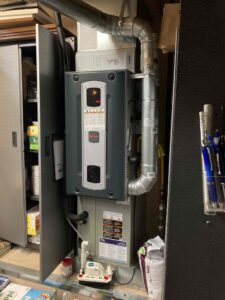
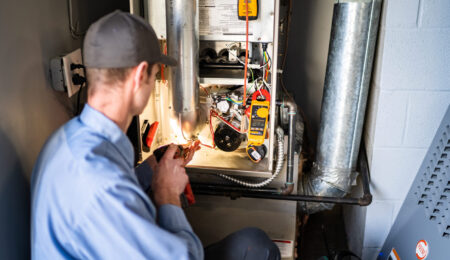
“A furnace we service in Puyallup, checked top to bottom as part of a Pacific Precision Tune-Up before winter.”
Pacific holds a 4.9 average rating across more than 6,000 Google reviews, and furnace tune-ups are one of the most common reasons Western Washington homeowners call us before winter. Yes, for most Western Washington homeowners a furnace tune-up is worth it because it catches small, inexpensive problems before they turn into a no-heat call in January. Our current base furnace tune-up is $199 for a la carte, non-club customers, and $179 per prepaid tune-up for active Peace of Mind Club members. Compare that to the cost and disruption of an emergency repair during the coldest week of the year.
If you would rather not think about scheduling it every year, the Peace of Mind Club can also be billed monthly, like a simple subscription, for $16 plus tax a month, with the same priority scheduling, reduced diagnostic fees, and 24/7 emergency support as our annual membership. When a technician finds and repairs something during the same visit, like an ignitor or a thermostat issue, the invoice total can run higher, up to $2,266 in our records for the most involved cases, though the base tune-up itself stays fixed at $199 or $179.
Dru in Tacoma put it this way:
“Service was thorough and very informative. Helped me to understand how the system worked and reprogrammed my thermostat to my specifications. Julius was courteous and a pleasure to work with.”
Dru in Tacoma
Every repair and installation we complete is backed by our 100% Money-Back Guarantee. Covered systems under our No Worry, No Breakdown Guarantee give homeowners one less thing to worry about heading into winter.
When should you schedule furnace maintenance in Western Washington?
The best time to schedule furnace maintenance is September or October, before the first cold snap and before appointment slots fill up. Based on our own scheduling records, furnace tune-up volume actually peaks in December, January, and February, which means many homeowners are booking after winter has already arrived rather than before.
Marine climate winters in Tacoma, Puyallup, Gig Harbor, and the rest of the South Sound tend to be damp and mild rather than brutally cold. That dampness is still hard on older furnaces and ductwork. Scheduling early also means you are not waiting in a queue with everyone else whose furnace failed on the first freezing night.
Peace of Mind Club members get priority scheduling and 24/7 emergency support, which matters most during the exact weeks when demand is highest.
Furnace maintenance is one piece of getting a home ready for the season. If your furnace is older or has needed repeated repairs, it is worth understanding furnace repair versus replacement costs before winter forces the decision for you. And if a tune-up turns up something that needs same-day attention, our furnace repair team handles that directly, with the same 2-hour arrival windows and upfront pricing.
Homeowners who want this handled automatically every year can join the Peace of Mind Club, which includes an annual tune-up along with priority scheduling and reduced diagnostic fees. You can also read more about our furnace services or see the full protection behind every visit on our guarantees page.
FAQ: Common Questions About Furnace Needs
-
-
A furnace tune-up includes a filter check and replacement, thermostat testing, flame sensor cleaning, and an inspection of the blower, capacitor, ignition system, heat exchanger, and venting. The technician checks that the furnace starts, runs, and shuts off safely before leaving.
-
-
Yes. A furnace that seems fine can still have a worn capacitor, a dirty flame sensor, or an aging ignitor that has not failed yet. Catching those during a routine tune-up is almost always less expensive and less disruptive than dealing with a no-heat call in the middle of winter.
-
-
September or October is the best window, before the first cold snap and before appointment slots fill up. Our own scheduling records show furnace tune-up demand actually peaks in December, January, and February, which means many homeowners end up booking during a cold spell instead of ahead of one.
-
-
-
-
Most furnace tune-ups take about 45 to 75 minutes, depending on the age and condition of the system and whether any additional checks are needed. Technicians arrive within a 2-hour window and walk you through what they found before leaving.
-
-
Nothing happens immediately in most cases, but small issues like a dirty flame sensor or a weakening ignitor tend to get worse instead of better. Skipping maintenance is one of the more common reasons we see furnaces fail on the coldest days, when demand for repairs is highest and wait times are longer.
-
-
Our current base furnace tune-up is $199 for a la carte, non-club customers, and $179 per prepaid tune-up for active Peace of Mind Club members. Membership can also be billed monthly for $16 plus tax, with the same benefits included. The final cost only goes up if a repair is found and approved during the same visit.
Still not sure if your system is ready for the season?
Tell us what your system is doing and we’ll help you figure out the right next step. Pacific Heating & Cooling has been diagnosing heating and cooling problems across Tacoma and the South Sound since 1984. NATE-certified technicians, 2-hour arrival windows, and upfront pricing before any work begins.