By Pacific Heating & Cooling | NATE-Certified Service Technicians | Updated September 2026
Every fall, homeowners across Tacoma start wondering whether their furnace will make it through another Western Washington winter, or whether that odd clicking sound from last February is about to turn into a no-heat call in January. A furnace tune-up checklist covers a full safety inspection of the heat exchanger and flame sensor, a check of the ignition system and gas connections, a carbon monoxide safety test, an inspection of the blower motor and electrical connections, and a filter and airflow check, all aimed at catching small problems before they become a mid-winter breakdown. Here is exactly what our technicians check during a Tacoma furnace tune-up, what we commonly find, and when it makes sense to get one scheduled.
What does a furnace tune-up actually include?
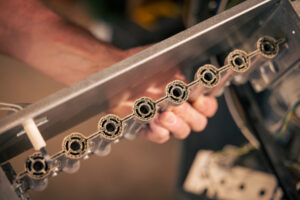
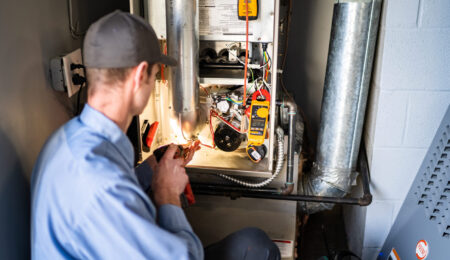
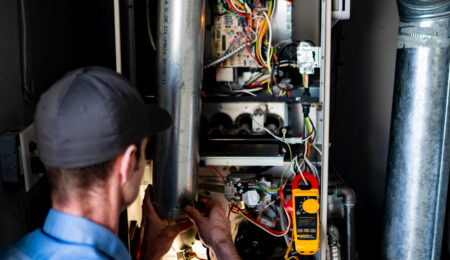
Checking the gas burner assembly is part of the ignition system safety check on every furnace tune-up.
A Pacific Heating & Cooling furnace tune-up includes a full safety inspection of the heat exchanger, a flame sensor cleaning, an ignition and gas connection check, a carbon monoxide safety test, a blower motor and electrical inspection, a filter check, and a full system cycle test from startup to shutdown. Based on our service records, we completed 10,032 furnace tune-ups across Western Washington homes over the past year.
This is what we call the Precision Tune-Up approach: Maintain, Prevent, Extend. We maintain the system’s performance, prevent the small issues that lead to a winter breakdown, and extend the life of the equipment you already own. You will see what we are seeing during the visit and understand what it means for your furnace, not just get handed a bill.
What our technicians check on every furnace tune-up
- Heat exchanger: Inspected for cracks, corrosion, or loose mounting bolts. This is one of the most important safety checks we perform.
- Flame sensor: Cleaned and tested so the furnace ignites reliably every time it cycles on.
- Ignition system and gas connections: Tested for safe, consistent startup.
- Carbon monoxide and combustion safety: Checked to confirm the system is operating safely.
- Blower motor and electrical connections: Inspected, with connections tightened as needed.
- Filter: Checked for size and condition, and replaced if it is restricting airflow.
- Thermostat and full system cycle: Tested to confirm the furnace starts, runs, and shuts off the way it should.
This visit typically takes about 45 minutes to an hour. Learn more on our heating maintenance page, or see how tune-ups fit into our furnace services overall.
What we commonly find, and what it means for your furnace
A tune-up is not just a formality. Across the 10,032 furnace tune-ups our technicians completed over the last year, filter replacement was noted in roughly 1 out of every 9 visits, which is why airflow is one of the first things we check. The most common sizes we see in Western Washington homes include 16x20x1, 20x20x1, and the thicker 4-inch filters like 16x25x4 and 20x25x4.
It helps to know what is included in every visit versus what turns into a separate, quoted repair. We never blend the two, so you always know what you are paying for before any work begins.
| Included in every tune-up | Turns into a separate repair conversation |
|---|---|
| Full heat exchanger and gas connection safety inspection | Hot surface ignitor replacement, if it is worn or cracked |
| Flame sensor cleaning | New filter, sized to your specific system |
| Carbon monoxide and combustion safety check | Inducer motor replacement, less common but higher cost |
| Blower motor and electrical inspection | Gas valve replacement, rare and always quoted first |
| Full system cycle test | Heat exchanger replacement, only if a crack is confirmed |
The tune-up itself runs $199 for non-club, a la carte customers, and $179 per visit for Peace of Mind Club members who prepay for their annual tune-up, consistent with the $179 to $199 range we see across thousands of completed visits in our service records. Many homeowners skip paying per visit altogether and join the Precision Tune-Up membership instead, which runs about $16 a month plus tax and includes the same tune-up and membership benefits. If your technician finds something like a worn ignitor or an aging inducer motor, that repair is priced and explained separately before any work happens. You can read more about what an inducer motor failure looks like if that is ever the finding.
Example From a Recent Service Visit
A homeowner in Tacoma scheduled a furnace tune-up in early fall, just to be ready before winter set in. During the ignition and electrical inspection, our technician found a hot surface ignitor that was worn enough to fail during the next cold snap, the kind of issue that usually shows up as a no-heat call in January.
Solution:
We explained what we found and why it mattered, then replaced the ignitor the same day so the furnace was ready for winter. The homeowner in Tacoma avoided an emergency no-heat call later in the season.
Not every finding is a repair. Our technicians also flag things worth watching, like a hairline mark near a heat exchanger bolt, and note them for the next visit rather than pushing an unnecessary repair. That is part of what makes a tune-up different from a repair call: the goal is information and prevention, not a sales conversation. If a furnace is showing more serious symptoms already, like short cycling, a burner that will not stay lit, or no heat at all, our common furnace problems guide walks through what those look like and what they typically mean.
Western Washington’s marine climate is part of why this matters. Many homes in Tacoma, Puyallup, and Gig Harbor are older, with furnaces that sit in crawl spaces or attics exposed to moisture for months at a time. That environment is harder on electrical connections, ignitors, and blower motors than a drier climate would be, which is exactly why a yearly inspection catches things a homeowner would not see just walking past the furnace closet.
Is a furnace tune-up worth it?
Yes. A furnace tune-up catches the issues that cause most winter no-heat calls, a worn ignitor, a dirty flame sensor, a filter restricting airflow, before they leave you without heat on the coldest night of the year. It is also one of the requirements for keeping many manufacturer warranties and Pacific’s No Worry, No Breakdown Guarantee active.
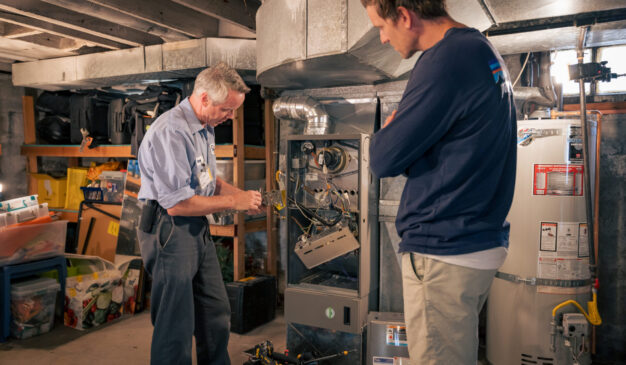
We do not diagnose your furnace and disappear. You will see what we are seeing and understand what it means for your system, then get clear options if anything needs attention. No guesswork, no pressure, just straightforward solutions. If you want the full details on what that guarantee covers, our guarantee and warranty page explains it. And if a tune-up ever turns into a bigger decision, our furnace repair vs. replacement guide can help you think it through.
When should you schedule a furnace tune-up in Tacoma?
Late summer and early fall is the best window to book. Based on our service records, furnace tune-up demand climbs steadily from September through February, with January and February our busiest months as the first hard cold snaps hit Western Washington homes. Scheduling in August or September means you are ahead of that rush, and ahead of any cold-weather surprises.
If you wait until your first cold night to think about your furnace, you are scheduling alongside every other Tacoma, Puyallup, and Lakewood homeowner having the same thought. Peace of Mind Club members get priority scheduling and an annual tune-up built into their membership, which is one of the easiest ways to stay ahead of that seasonal rush.
A tune-up in late summer also means your furnace gets checked while it is easy to schedule and easy to access, not during a cold snap when every technician in the South Sound is booked on emergency no-heat calls. Homeowners in University Place, Federal Way, and Auburn tend to see the same pattern: book early, and the visit is routine. Wait until January, and it can turn into a same-day scramble.
Ready to get your furnace checked before the cold weather sets in? Book a tune-up through our heating maintenance page or through your Peace of Mind Club membership, and we will walk you through everything we find. No Surprises. Just Solutions.
FAQ: Common Questions About What Goes Into a Furnace Tuneup
-
-
Based on our service records, most furnace tune-ups in the Tacoma area run from $179 to $199, depending on your membership status and system type. If your technician finds something like a worn ignitor or a filter that needs replacing, that repair is priced separately and explained before any work begins.
-
-
A typical furnace tune-up takes about 45 minutes to an hour. Your technician checks the heat exchanger, ignition system, electrical connections, airflow, and filter, then walks you through what they found before leaving.
-
-
Late summer through early fall, August or September, is the best time to schedule. Based on our service records, furnace tune-up demand climbs steadily from September through February, so booking early gets you on the schedule before the rush and before the first cold snap.
-
-
Changing your filter regularly is something every homeowner can and should do, and it helps your system run better between visits. A filter swap alone will not catch a cracked heat exchanger, a failing ignitor, or a carbon monoxide safety issue, which is why a full tune-up checks the whole system and not just the parts you can see.
-
-
A tune-up is a maintenance visit, not a repair call. If your furnace already will not turn on or is not producing heat, that calls for a diagnostic visit instead. If our technician finds a problem during a routine tune-up, we will explain it clearly and give you a straightforward quote before any repair work begins.
-
-
Yes. Checking for carbon monoxide risk and confirming your gas connections and heat exchanger are operating safely is a standard part of every furnace tune-up we perform. This safety check is one of the main reasons a professional tune-up matters, not just a performance check.
-
-
Still not sure if your system is ready for the season?
Tell us what your system is doing and we’ll help you figure out the right next step. Pacific Heating & Cooling has been diagnosing heating and cooling problems across Tacoma and the South Sound since 1984. NATE-certified technicians, 2-hour arrival windows, and upfront pricing before any work begins.