By Pacific Heating & Cooling | NATE-Certified Service Technicians | Updated September 2026
You want to stay ahead of a winter breakdown, but you are not sure how often your furnace actually needs a professional check. Most furnaces need one tune-up a year, and skipping it does not usually cause a sudden failure. Instead, small problems like a dirty flame sensor, a failing pressure switch, or a clogged filter go unnoticed until one of them causes a no-heat call in the coldest part of the year. Here is what a tune-up actually includes, what we find most often in Western Washington homes, and when to schedule yours before the cold season hits.
What does a furnace tune-up actually include?
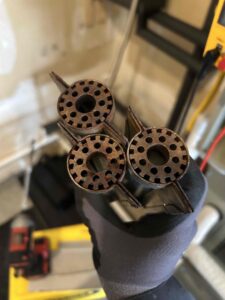
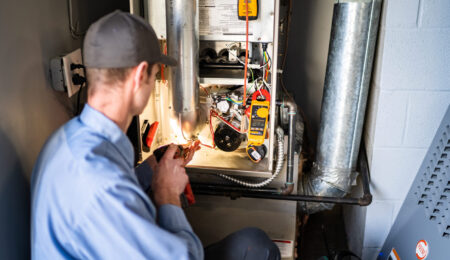
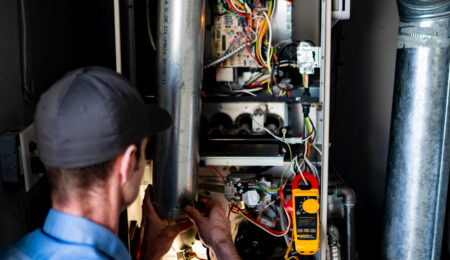
A closer look at burner orifices removed during a Pacific furnace tune-up.
A standard furnace tune-up covers the whole heating system, not just a filter change. Technicians inspect the heat exchanger, clean the flame sensor and igniter, and check gas pressure and burner flame. They also test every safety switch, inspect the blower motor and belts, and check carbon monoxide levels near the furnace before calling the visit complete.
This is the same Maintain, Prevent, Extend approach behind Pacific’s Precision Tune-Up: maintain the system’s current performance, prevent small issues from becoming breakdowns, and extend the life of equipment that is already an investment. It is a thorough visit, not a quick filter swap.
What a Pacific furnace tune-up checks
- Heat exchanger Inspected for cracks or corrosion, since a damaged heat exchanger is a safety issue, not just a performance one.
- Flame sensor and igniter Cleaned and tested so the burner lights reliably every time the thermostat calls for heat.
- Gas pressure and burner flame Checked and adjusted so the furnace burns efficiently and evenly.
- Safety switches Limit switch, pressure switch, and rollout switch tested to confirm the furnace shuts down safely if something goes wrong.
- Blower motor and belts Inspected for wear, noise, and proper airflow.
- Air filter Checked and replaced if needed, since a clogged filter restricts airflow and makes the whole system work harder.
- Electrical connections and capacitor Tightened and tested to prevent intermittent shutdowns.
- Carbon monoxide check Measured near the furnace and flue to confirm safe operation.
This checklist applies to a standard furnace maintenance visit, whether your system is brand new or original to the house.
In our service records from the past year, filter service is the single most common item addressed during a furnace tune-up, noted in more than 1,100 of the visits we completed. That is by design. A clean filter is the easiest way to protect the rest of the system, and it is checked on every single visit, no matter the furnace’s age or brand.
Our technicians are NATE-certified and background-checked, and every tune-up includes a walkthrough of what we found before we leave. You will see what we are seeing and understand what it means for your system, not just a checked box on an invoice.
Western Washington’s marine climate is part of why this matters. Furnaces here run through long, damp stretches of fall, winter, and early spring, often in older homes across Tacoma, Puyallup, and the surrounding South Sound where ductwork and equipment have been in place for decades. That kind of steady, extended use wears down flame sensors, pressure switches, and blower components over time. It is why an annual check matters more here than it might in a climate with a short heating season.
What we commonly find, and what it means for your system
Most furnace tune-ups do not turn into a repair. But when they do, the same handful of components tend to be responsible. Knowing the difference between what is included in the visit and what becomes a separate conversation helps you understand any estimate a technician hands you.
What’s included in every tune-up
Filter checks, flame sensor cleaning, tightening electrical connections, lubricating moving parts, testing safety switches, and checking carbon monoxide levels are all part of the standard visit. These do not cost extra. They are the “maintain” and “prevent” part of the Precision Tune-Up approach, and they are why routine maintenance catches problems while they are still minor.
What turns into a separate repair conversation
Across the more than 10,000 furnace tune-ups in our service records from Western Washington, a few parts stand out. Pressure switches, capacitors, flame sensors that need full replacement rather than cleaning, inducer motors, and gas valves are the parts that most often turn into a repair conversation. They show up in a small share of visits compared with routine filter and flame sensor service. But they are also the parts most likely to cause a no-heat call if a problem is missed.
Example From a Recent Service Visit
A homeowner in Bonney Lake called us because their furnace occasionally failed to produce heat overnight, the same problem they had dealt with the year before. During the tune-up, our technician traced it back to the same root cause: a flame sensor coated enough to keep the burner from staying lit reliably.
Solution: We cleaned the flame sensor as part of the tune-up. We also walked the homeowner through why the issue tends to come back without an annual cleaning, so they could plan ahead instead of getting caught by it again next winter.
Here is what Dru in Tacoma had to say about a recent maintenance visit:
“Service was thorough and very informative. Helped me to understand how the system worked and reprogrammed my thermostat to my specifications. Julius was courteous and a pleasure to work with.”
Dru in Tacoma
We see furnace tune-ups most often in Tacoma, Puyallup, Lakewood, Gig Harbor, and University Place, though we cover heating maintenance across the South Sound. With 6,000 or more Google reviews and a 4.9 average rating, that volume of repeat business is part of why we can speak to these patterns with real numbers instead of guesswork.
Is a furnace tune-up worth it?
Yes. Based on our service records, furnace tune-ups catch the same handful of issues, dirty flame sensors, failing pressure switches, worn capacitors, before they cause a breakdown. A tune-up typically costs far less than an emergency no-heat repair in the middle of winter, and it is required by many manufacturers to keep a warranty valid.
Based on more than 1,500 non-club furnace tune-up jobs in our service records, most homeowners pay between $159 and $315 for a standalone visit, with a typical cost around $199. That price includes the full inspection above, not just a filter swap. If something like a pressure switch or capacitor needs to be replaced, that is a separate, itemized conversation with clear pricing before any work begins. No surprises.
Pacific backs every repair and installation with a 100% Money-Back Guarantee, and our No Worry, No Breakdown Guarantee is part of the same commitment: if something we serviced fails, we make it right. If a tune-up turns up something more serious, like a cracked heat exchanger or a furnace nearing the end of its life, we will walk you through your options honestly. Our furnace repair vs. replacement guide covers how to think through that decision if it comes up.
The value is not just in avoiding a breakdown. A furnace that is dirty or slightly out of adjustment has to work harder to produce the same amount of heat, which shows up as a higher utility bill over a full heating season. Catching that during a tune-up, before it turns into months of wasted energy, is part of what makes the visit worth scheduling even in a year when nothing feels obviously wrong.
When should you schedule a furnace tune-up?
The best time to schedule a furnace tune-up is September or the first half of October, before Western Washington’s heating season begins and before technician schedules fill up. Based on our service records, furnace tune-up volume jumps from about 183 visits in August to nearly 1,500 in October, as homeowners wait until they need heat before calling.
Once your system has been running steadily for a few months, especially through December, January, and February, that same lead time is gone, and a no-heat call competes with everyone else’s no-heat call. Booking early also means a technician can address anything they find, like a part that is starting to wear out, before it fails on a cold morning.
Pacific has been serving Tacoma and the South Sound since 1984, and every tune-up includes 2-hour arrival windows and upfront pricing before any work begins. If staying ahead of scheduling matters to you, the Peace of Mind Club membership includes an annual tune-up along with priority scheduling, 24/7 emergency support, and reduced diagnostic fees. That way, you are not the one who has to remember to call every fall.
If your furnace has been acting up in ways that go beyond routine maintenance, our guide to common furnace problems covers the most frequent causes we see. Our furnace services page also has more on repair, replacement, and maintenance options.
Frequently Asked Questions
-
-
Most furnaces need one professional tune-up a year. Based on our service records, we complete the bulk of these visits between September and February, with volume peaking in January and February as Western Washington’s heating season is in full swing. Doing it annually, ideally before the season starts, keeps small issues from turning into no-heat calls.
-
-
Based on more than 1,500 non-club furnace tune-ups in our service records, most homeowners pay between $159 and $315, with a typical cost around $199. Club members get their annual tune-up included as part of membership, which also comes with priority scheduling and reduced diagnostic fees.
-
-
Skipping a tune-up rarely causes an immediate breakdown, but it lets small issues go unnoticed. In our service records, dirty flame sensors, failing pressure switches, and worn capacitors are the most common problems that turn into a no-heat call when they are not caught during routine maintenance.
-
-
It is a fair question, and the honest answer is that a tune-up should never end in pressure to buy something you do not need. During a Pacific tune-up, any part that needs replacing is a separate, itemized conversation with upfront pricing before we do anything, and most visits do not turn into a repair at all.
-
-
You can safely handle a few things yourself, like replacing the air filter and keeping the area around the furnace clear. Testing gas pressure, inspecting the heat exchanger for cracks, and checking carbon monoxide levels require training and equipment most homeowners do not have, which is why those steps are best left to a licensed technician.
-
-
Early fall is the best window, ideally September or the first half of October. Based on our service records, tune-up volume jumps from about 183 visits in August to nearly 1,500 in October, so booking before that rush usually means faster scheduling.
-
-
Many manufacturer warranties require documented annual maintenance to stay valid, so skipping tune-ups can put warranty coverage at risk if a covered part fails later. Keeping a yearly service record, which Pacific provides after every visit, is the simplest way to protect that coverage.
Still not sure if your system is ready for the season?
Tell us what your system is doing and we’ll help you figure out the right next step. Pacific Heating & Cooling has been diagnosing heating and cooling problems across Tacoma and the South Sound since 1984. NATE-certified technicians, 2-hour arrival windows, and upfront pricing before any work begins.