By Pacific Heating & Cooling | NATE-Certified Service Technicians | Updated September 2026
If your energy bills have been creeping up and your heating or cooling system seems to be working overtime just to keep your home comfortable, you are probably wondering whether the system itself is part of the problem. Regular HVAC maintenance lowers your energy bill by keeping the parts that move and condition air working the way they were designed to, clean coils, correct refrigerant charge, clear airflow, and healthy electrical components, so your system does not have to run longer or harder to reach the same temperature. Here is what a maintenance visit actually includes, what we commonly find in Western Washington homes, and when scheduling one makes the biggest difference for your bill.
What does regular HVAC maintenance actually include?
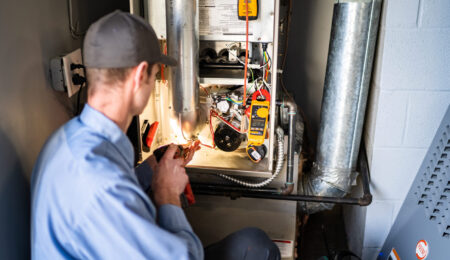
A Precision Tune-Up from Pacific covers a full inspection of your heating or cooling system. That means cleaning the outdoor coil, checking refrigerant charge, testing electrical components like capacitors and contactors, inspecting airflow and duct connections, and confirming your thermostat and safety controls are working correctly.
We built our tune-up around a simple framework: Maintain, Prevent, Extend. Maintain the performance your system already has. Prevent small issues from becoming expensive ones. Extend the life of equipment you have already paid for. Most visits take about 60 to 90 minutes, depending on your system type and how easy it is to access.
Every tune-up is completed by a NATE-certified, background-checked technician who walks you through what they checked and what they found before they leave. You will see what we’re seeing and know what it means for your system and your bill.
Cooling and heating systems wear differently, so the details of a visit shift depending on the season and the equipment. If you want a closer look at what a cooling-specific visit covers, our AC tune-up guide walks through exactly what we check and what we typically find on the cooling side.
What’s checked during a Precision Tune-Up
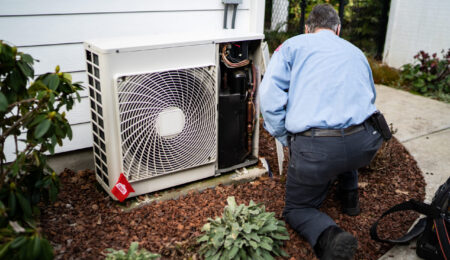
- Coils and condenser: Cleaned and inspected so the system does not have to work harder to move heat.
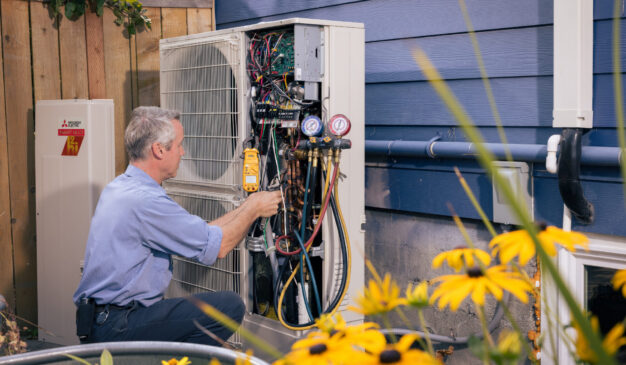
- Refrigerant charge: Checked against manufacturer specs, since low or high charge both reduce efficiency.
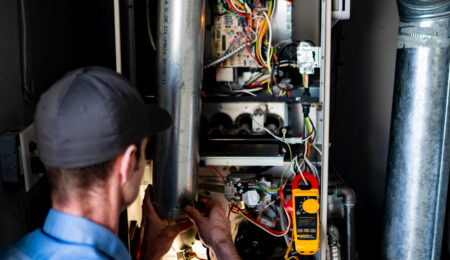
- Electrical components: Capacitors, contactors, and connections tested under load.
- Airflow and ductwork: Filters, blower operation, and accessible duct connections checked for restrictions.
- Controls and safety checks: Thermostat calibration and safety switches confirmed.
See our full cooling maintenance and heating maintenance services for system-specific details.
What we commonly find, and what it means for your system
Based on our service records, Pacific completed more than 17,800 maintenance and tune-up visits across Western Washington over the past two years, with the highest volume in Tacoma, Puyallup, Lakewood, Gig Harbor, and Auburn. That volume gives us a clear picture of what actually drives higher energy bills in local homes.
Some findings are part of the visit itself. Others turn into a separate repair conversation. Homeowners deserve to know the difference before any work begins.
| Included in your tune-up | Turns into a separate repair conversation |
|---|---|
| Cleaning the outdoor condenser coil | Replacing a weak or failing capacitor |
| Testing capacitor and contactor performance | Repairing a refrigerant leak |
| Checking refrigerant charge against spec | Sealing or repairing duct leaks |
| Tightening electrical connections | Replacing a worn contactor |
| Thermostat and safety control check | Correcting airflow restrictions in the duct system |
Example From a Recent Service Visit
A homeowner in Puyallup scheduled a routine cooling tune-up after noticing summer bills creeping up even though the system seemed to be running fine. During the inspection, our technician found a weakening capacitor and a condenser coil coated in more debris than normal, both of which force a system to pull more power to produce the same amount of cooling.
Solution: We cleaned the outdoor coil and replaced the capacitor before it failed completely. The system now runs the way it was designed to, without pulling extra power to compensate for restricted airflow and a struggling component.
Age plays a role too. Across the same two years of service records, about 35 percent of maintenance visits found a system old enough, generally 10 years or more, that efficiency and replacement became part of the conversation. An aging system is not automatically inefficient, but it is worth a closer look during your next tune-up.
Heat pumps carry their own considerations, since the same unit handles both your heating and cooling load throughout the year. A heat pump that is low on refrigerant or working against a dirty coil is not just running inefficiently for a few summer months, it is working harder every time it cycles on, in January and in July. If your home runs on a heat pump, keeping it maintained has a bigger year-round impact on your bill than a system that only runs part of the year.
Western Washington’s marine climate adds another layer. Older homes across Tacoma, Lakewood, and the South Sound often have ductwork that runs through crawl spaces exposed to moisture, and that moisture can affect insulation and seal integrity over time. A technician checking accessible duct connections during a tune-up is also checking for the kind of slow air loss that quietly inflates a bill without ever causing a breakdown.
Is regular maintenance worth it for lowering your energy bills?

No guesswork, no pressure. Just a clear explanation of what your system needs.
Yes. A system with clean coils, correct refrigerant charge, and healthy electrical components uses less energy to produce the same amount of heating or cooling. Catching a small issue, like a weakening capacitor or a dirty coil, before it fails helps your system avoid running inefficiently for months at a time
without you knowing it.
This is also why we back qualifying systems with our Quality assurance. If a covered system breaks down after a Precision Tune-Up, we make it right. Every repair and installation we complete is also backed by a 100% Money-Back Guarantee, so there is no pressure and no guesswork, just a clear answer about what your system needs.
Homeowners who join our Peace of Mind Club get annual tune-ups built into their membership along with priority scheduling and reduced diagnostic fees. It is one of the easiest ways to keep maintenance from slipping through the cracks, since the visit is already on the calendar instead of something you have to remember to book.
When should you schedule maintenance in Western Washington?
Fall and spring are the best windows to schedule maintenance, ideally before peak heating season in October and before peak cooling season in June. Booking ahead of high demand gets your system checked before it has to work its hardest, which is exactly when an inefficient system shows up on your bill.
Our service records show maintenance visits climb heading into October and again in the early months of the year, which lines up with Western Washington’s marine climate: cool, damp winters that push heating systems hard, and a short but increasingly warm cooling season. Homes with older systems or ductwork exposed to crawl space moisture tend to benefit the most from a pre-season check.
Scheduling is simple. We offer 2-hour arrival windows and upfront pricing before any work begins, so you know exactly what to expect from the moment you book. Most repairs identified during a tune-up are completed the same day.
Peak season fills up fast. Homeowners who wait until the first cold snap in October or the first stretch of 85 degree days in July often find booking windows tighter and any needed parts on backorder. Scheduling during the shoulder months means your technician has more time to be thorough, and you get ahead of the exact conditions that make an inefficient system work its hardest.
If your energy bills have been creeping up and you are not sure why, a maintenance visit is the easiest way to find out. Our technicians walk you through exactly what they find and what it means for your system before any work begins, so you can make a confident decision either way. Call (253) 248-6260 to schedule your tune-up. No Surprises. Just Solutions
FAQ: Common Questions about Maintenance and Energy Bills
-
-
Yes. Maintenance keeps the parts that move and cool or heat air working correctly, including clean coils, correct refrigerant charge, and healthy electrical components. When those parts are neglected, your system has to run longer and harder to reach the same temperature, which shows up directly on your energy bill.
-
-
Across more than 2,500 non-club maintenance visits in our service records, tune-up costs typically run from about $203 to $438, with most visits landing around $220. Club members receive their annual tune-up as part of their membership, so the cost is already built in.
-
-
Most homeowners notice a difference within the first full billing cycle after the visit, especially if the technician found and corrected something specific like a dirty coil or a weak capacitor. If your system was already running efficiently, the tune-up mainly protects against a future increase rather than creating a dramatic drop.
-
-
It is a fair question, and the honest answer is that maintenance only pays for itself if the technician is finding real, verifiable issues, not manufacturing them. During a tune-up, we show you what we’re seeing before recommending anything, and about a third of our maintenance visits over the past two years found a system old enough that efficiency was genuinely worth discussing. You always get to decide what happens next.
-
-
Changing your air filter regularly is something every homeowner can and should do on their own, and it does help airflow. Cleaning coils, testing electrical components under load, and checking refrigerant charge require training and equipment most homeowners do not have, and doing them incorrectly can cause more harm than good.
-
-
-
-
Fall and spring work best, ideally before peak heating season starts in October and before peak cooling season starts in June. Scheduling ahead of those windows means your system gets checked before it has to work its hardest, which is when inefficiency shows up most on your bill.
Still not sure if your system is ready for the season?
Tell us what your system is doing and we’ll help you figure out the right next step. Pacific Heating & Cooling has been diagnosing heating and cooling problems across Tacoma and the South Sound since 1984. NATE-certified technicians, 2-hour arrival windows, and upfront pricing before any work begins.