By Pacific Heating & Cooling | NATE-Certified Service Technicians | Updated October 2026
If you have noticed a water stain on the ceiling, a dripping hose bib, or a water bill that jumped for no clear reason, you may be wondering if it is worth calling a plumber now. Early plumbing leak detection catches the problem while the fix is still small, like a worn water heater flex line, a dripping relief valve, or a short section of pipe, before water reaches drywall, flooring, or your crawl space. Below, we walk you through what a water leak inspection includes, what we commonly find in South Sound homes, what repairs typically cost, and when to schedule one.
What does a plumbing leak inspection actually include?
A plumbing leak inspection checks every place water can escape: the water meter, the main shutoff, the water heater and its connections, supply lines and valves under sinks and toilets, hose bibs, and exposed pipes in the crawl space or garage. The plumber confirms whether a leak exists, pinpoints the source, and explains your options before any work begins.
Here is what plumbing leak testing looks like during a visit:
- Meter test. We shut off water at the main and watch the meter. If it keeps moving, the leak is between the meter and the house, usually in the underground service line.
- Water heater check. We look at the tank, the temperature and pressure relief valve, the flex supply lines, the expansion tank, and the shutoff valve.
- Fixtures and valves. We check faucets, supply lines, under-sink shutoffs, toilets, and shower valves for drips and slow seeps.
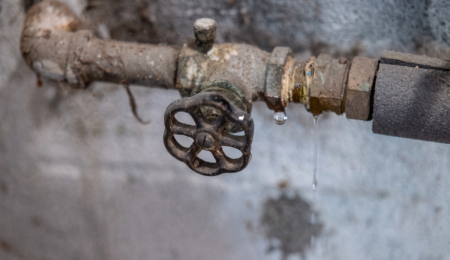
- Hose bibs. We check outdoor faucets for drips, worn packing, and freeze damage.
- Crawl space and exposed pipes. We look for standing water, corrosion, and pipe materials that tend to fail with age.
- Water pressure. We test pressure with a gauge, because pressure that runs too high puts strain on every connection in the house.
We think about this the same way we approach our Precision Tune-Up: Maintain, Prevent, Extend. Keep the system in good shape, catch small problems early, and help your pipes and water heater last longer. You get a 2-hour arrival window, and every plumber who comes to your home is background-checked.
What we commonly find, and what it means for your home
Based on our service records, we completed 68 plumber water leak detection visits across Western Washington between January and October 2026. Those visits took us to homes in Tacoma, Spanaway, Puyallup, Gig Harbor, DuPont, Maple Valley, Lakewood, and other South Sound communities.
Here is where the water was coming from:
- Water heaters and their connections (24 visits). Leaking tanks, worn flex lines, dripping relief valves, and failing expansion tanks.
- Fixtures, valves, toilets, and hose bibs (24 visits). Faucets, shower valves, toilet wax rings, drain parts, and 8 leaking outdoor hose bibs.
- Hidden supply lines (12 visits). Pipes inside walls, above ceilings, in crawl spaces, or underground. We found pinhole leaks in aging copper, failed fittings, and corroded galvanized steel, all handled through our leaky pipe repair service.
- No active plumbing leak found (8 visits). In these homes, the water came from another source, or a restoration company needed to open the area first.
Example From a Recent Service Visit
A homeowner in Renton called about an extremely high water bill but could not find any water inside the house. Our plumber shut off water at the home’s main shutoff and checked the meter, and it was still running. That meant the leak was in the service line between the meter and the house, not inside the home.
Solution:
We isolated the leak to the underground service line, so the homeowner in Renton knew exactly where repairs were needed. No walls or floors inside the home had to be opened to find it.
Items addressed as part of the visit (included)
The inspection itself covers finding the source. That includes the meter test, the pressure check, and a look at every fixture and connection tied to the problem. We send photos and video of what we find, so you see what we are seeing and know what it means.
If the fix is as simple as tightening a loose connection, we can usually take care of it on the spot. The visit has a $77 dispatch fee, and that fee is credited toward the repair if you choose to move forward.
Items that turn into a separate repair conversation (costs extra)
When a part needs to be replaced or a pipe needs to be repaired, we give you a clear price before any work begins. Across 23 leak repair invoices in our records, most jobs ran $950 to $1,470. The full range was about $500 to $3,700.
What moves a repair up or down that range:
- Access. A leak under a sink is simpler than one behind tile, inside a wall, or above HVAC equipment. Opening a wall to reach a pipe adds to the cost.
- Pipe material. Galvanized steel, older copper with pinhole leaks, and older plastic piping often need a longer section replaced.
- How many fixtures are involved. One faucet is a short visit. Two toilets and a shower valve take longer. When a faucet or toilet is worn past a simple repair, fixture replacement is often the longer-lasting fix.
Our repair prices cover the plumbing work. Drywall patching and water damage restoration are separate, and we will tell you that before we start. Plumbing repairs in our records carry a 1-year parts and labor warranty.
Is early plumbing leak detection worth it?
Yes, for most homes. An early water leak inspection usually finds the problem while it is still one worn part or a short section of pipe. Waiting lets water reach drywall, flooring, and crawl spaces. At that point, repairs often mean opening walls or tile, and restoration work adds time and cost.
Our own records show the pattern. The smaller repairs were things like replacing water heater flex lines, a dripping relief valve, a toilet wax ring, or a worn hose bib. The larger repairs were leaks that had time to spread or sat behind finished surfaces. Those included a shower valve that required tile removal, a pipe above HVAC equipment that required ductwork to be moved, and a kitchen drain that needed a partial repipe.
Water heaters are a good example. Replacing worn flex lines is a small job. Once the tank itself starts leaking, it cannot be repaired and has to be replaced. Catching a slow drip early gives you time to plan a replacement on your schedule, not in an emergency. When a replacement is needed, we handle permits and inspections for you.
Pacific has been taking care of South Sound homes since 1984, and we have earned more than 6,000 Google reviews with a 4.9 average rating. You can read what homeowners say on our testimonials page.
When should you schedule plumbing leak detection?
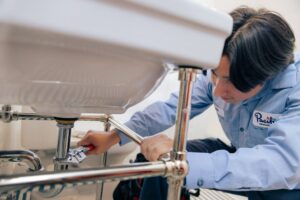
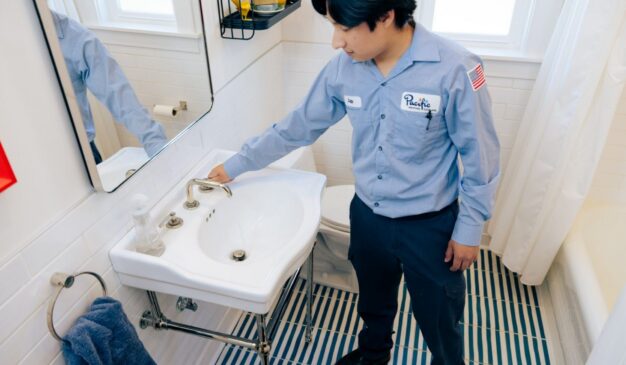
A Pacific plumber checks drain and supply connections under a bathroom sink, one of the most common places small leaks start.
Schedule a plumbing leak inspection once a year. In Western Washington, early fall is the best time, because it gets hose bibs, crawl space pipes, and water heater connections checked before the first freeze. Call sooner if your water bill jumps, your meter moves with everything turned off, or you see staining or dripping.
Our marine climate is mild, but cold snaps still happen. Hose bibs were behind 8 of our 68 leak visits this year, and an old or damaged outdoor faucet is much easier to replace with a frost-free one before freezing weather than after a pipe splits.
Your water utility may also be the first to notice. In our records, 5 leak visits started with a letter from the city, a call from the water utility, or an unusually high bill. In one Tacoma home, the utility estimated the leak at 35 to 40 gallons per hour. Regular plumbing maintenance and a little home plumbing maintenance between visits help you detect water leakage long before it reaches that point.
Not every drip is plumbing. If you see water near your furnace or air handler, it may be coming from a clogged AC condensate drain instead.
Plumbing maintenance checklist for homeowners
- Know your main shutoff. Find it now, so you can turn off water fast if a leak starts.
- Check your meter. Turn off every faucet and appliance, then watch the meter for 15 to 30 minutes. If it moves, call a plumber.
- Look under sinks. Check for damp cabinet floors, stains, or drips at the shutoff valves and supply lines.
- Check the water heater. Look for water around the base, rust at the connections, or a drip from the relief valve pipe.
- Watch your toilets. A toilet that runs, refills on its own, or rocks on the floor may be leaking.
- Prep hose bibs in fall. Disconnect garden hoses before the first freeze and look for drips at the faucet.
- Peek in the crawl space. Standing water or a musty smell is worth a closer look.
If anything on this list turns up a problem, we can find the source and walk you through your options.
If you have an active leak, turn off the main shutoff first. If water is near outlets or electrical equipment, stay clear of the area until the water is off. Then give us a call, and we will handle it from there.
Small plumbing preventive maintenance today is the easiest way to avoid a bigger repair later. Our Peace of Mind Club includes priority scheduling and 24/7 emergency support, and you can call us at (253) 248-6260 to book a plumbing leak inspection through our plumbing services team anywhere in our South Sound service area. No Surprises. Just Solutions.
Frequently Asked Questions
-
-
At Pacific, a leak detection visit starts with a $77 dispatch fee, and that fee is credited toward the repair if you move forward. If a repair is needed, you get a clear price before any work begins. Across 23 leak repair invoices in our records, most repairs ran $950 to $1,470, depending on access, pipe material, and how many fixtures were involved.
-
-
-
-
You can do a simple meter test. Turn off every faucet and water-using appliance, then watch your water meter for 15 to 30 minutes, and if it moves, water is going somewhere. You can also check under sinks, around the water heater, and at outdoor faucets. Finding the exact source behind a wall, under tile, or underground is where a plumber’s tools and experience help, and it keeps you from opening drywall in the wrong spot.
-
-
Often, yes. In our records, the lowest-cost repairs were small parts like water heater flex lines, relief valves, toilet wax rings, and hose bibs. The most expensive repairs were leaks that had time to spread or sat behind tile, drywall, or equipment. A small drip is usually the cheapest version of the problem you will ever have.
-
-
Once a year works well for most homes, and early fall is the best timing in Western Washington. That gets hose bibs, crawl space pipes, and water heater connections checked before the first freeze. Older homes with galvanized steel or aging copper pipes may benefit from a closer look sooner.
-
-
Find your main shutoff and check whether the meter still moves with all water turned off inside the house. If it stops when you close the main, the leak is likely inside the home. If it keeps moving, the leak is likely in the underground line between the meter and the house. Either way, a plumber can pinpoint the location and walk you through the repair options.
-
-
Not always. Many leaks are found at the water heater, under sinks, at toilets, or in the crawl space without opening anything. When a leak is behind a wall or ceiling, we explain why access is needed and give you the price before we start. Drywall patching and water damage restoration are separate from the plumbing repair, and we tell you that up front.
Still not sure if your system is ready for the season?
Tell us what your system is doing and we’ll help you figure out the right next step. Pacific Heating & Cooling has been diagnosing heating and cooling problems across Tacoma and the South Sound since 1984. NATE-certified technicians, 2-hour arrival windows, and upfront pricing before any work begins.