By Pacific Heating & Cooling | NATE-Certified Service Technicians | Updated September 2026
When you turn on your furnace for the first time this season and a musty or stale smell drifts out of the vents, it is easy to assume something has gone seriously wrong. In most cases, a musty smell from your vents means moisture has built up somewhere in the system, whether that is the ductwork, the evaporator coil, or the condensate drain line, usually from trapped humidity, dust, or a system that sat unused for months. It only becomes something to worry about right away if the smell is sharp, chemical, or like something burning instead of musty or stale. Here is what typically causes the smell, what you can check yourself, and when it is time to call for a diagnostic or duct cleaning.
The most common causes of a musty smell from your vents
A musty smell from your vents is almost always caused by trapped moisture, not something dangerous. The most common sources are a clogged condensate drain, mold or mildew on the evaporator coil, a neglected air filter, dusty ductwork that has not run in months, or in rare cases, pests that found their way into the vents.
Dust burning off when you first turn on the furnace
This is a light, dry, dusty smell in the first hour or two of the heating season. It happens because dust settles on the heat exchanger over the summer, and it burns off once the furnace starts running again.
You will notice it fading within an hour or two, with no standing water or dampness anywhere near the furnace. If it lingers past a day, that points to something else, and it is worth a diagnostic instead of waiting it out.
Mold or mildew on the evaporator coil or in the ductwork
Western Washington’s marine climate holds enough humidity that mold and mildew can grow on a coil or inside ductwork, especially after a summer of running the air conditioner and then sitting quiet through fall. This is one of several common furnace problems homeowners in Tacoma and Puyallup notice right around the first cold snap.
The smell is musty and damp, and it gets stronger, not weaker, once the system has been running for a while. A technician can inspect and clean the coil during a furnace maintenance visit, and recommend duct cleaning if growth has spread further into the ductwork itself.
A clogged or slow-draining condensate line
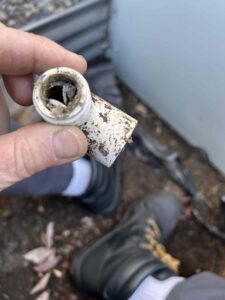
A blocked condensate line like this is one of the most common reasons water backs up into the system and a musty smell follows.
The condensate line carries moisture away from the coil. When it clogs or backs up, that water sits inside the system instead of draining outside, which is exactly the kind of moisture that grows a musty smell.
Look for a musty or moldy smell paired with standing water near the furnace, water staining, or a drain pan that will not empty.
Example From a Recent Service Visit
A homeowner in Puyallup called after noticing water near the side of the furnace along with a musty, moldy smell whenever the system ran. The condensate line was not draining properly while the air conditioner was running, though it drained fine when the furnace ran on its own, a sign the moisture was backing up into the system instead of draining outside.
Solution: Our technician cleared the blocked condensate line and confirmed proper drainage in both heating and cooling mode, resolving the smell and the water intrusion for this Puyallup home.
This kind of moisture check is part of what our technicians look at on every Precision Tune-Up visit, built around a simple approach: maintain, prevent, extend.
A dirty or overdue air filter
A filter loaded with dust, pet hair, and debris traps moisture and gives odor-causing growth somewhere to hold on. It is one of the simplest causes to fix and one of the easiest to check yourself.
You will usually notice a dusty or stale smell that improves within a day of a filter change. If you would rather not guess at sizing or rating, our air filtration options can help you find the right fit for your system.
Something got into the ductwork
Less common, but real. A rodent or pest can find its way into ductwork, especially in older homes or homes near crawl spaces, and leave behind debris that causes a persistent smell.
This kind of smell tends to be sharper and more unpleasant than a typical musty odor, sometimes paired with scratching sounds from inside the vents. Duct inspection and cleaning removes the debris, and a technician can help identify how the pest got in.
What a homeowner can do vs. what requires a technician
You can safely check and replace your air filter, look for standing water near the furnace, and run the fan for a few hours to see if a dusty startup smell clears on its own. Anything involving the evaporator coil, the condensate drain, or the inside of your ductwork needs a trained technician, since those areas are not easily reachable or safe to service on your own.
What you can check yourself
- Check the air filter. Replace it if it looks gray, clogged, or has not been changed in the last three months.
- Look for standing water. Check around the furnace and any visible ductwork for dampness or staining.
- Run the fan-only setting for a few hours after first turning on the heat to see if a dry, dusty startup smell clears on its own.
If the smell persists after these steps, it is time for a professional diagnostic rather than continuing to guess.
What a technician checks that you cannot: our NATE-certified, background-checked technicians inspect the evaporator coil, condensate drain, and blower compartment for moisture and growth, and they can run a duct inspection if the smell points to the ductwork itself. You will see what we are seeing and understand what it means before any work begins.
Musty smell or something more urgent? Here is the difference
When it is musty (usually fine to schedule normally)
- Damp, earthy, or dusty smell that stays about the same each time the system runs.
- Fades within a day or two of first turning on the heat for the season.
- No burning smell, smoke, or unusual sounds from the furnace itself.
When to turn the system off and call right away
- Sharp, chemical, or burning smell instead of musty or stale.
- A smell that smells like gas or comes with hissing or unusual noises.
- Visible smoke from a vent, register, or the furnace itself.
A musty or stale smell rarely falls into the second list. It is worth calling in either case, but the urgency is very different.
Signs you should call for a diagnostic
Most musty smells are easy to run down with the right inspection. We give every call a 2-hour arrival window, so you are not stuck waiting around all day to find out what is going on. Call for a diagnostic if you notice any of the following:
- The smell lasts more than a day or two after you first turn on the heat, instead of fading.
- You see standing water, staining, or dampness anywhere near the furnace or visible ductwork.
- The smell gets stronger every time the system runs instead of staying about the same.
- You or someone in the house has more allergy symptoms, coughing, or congestion indoors than usual.
- The smell already came back after a filter change or a previous duct cleaning.
- The smell is sharp, chemical, or like something burning rather than musty or stale.
What does a diagnostic visit or duct cleaning cost in Tacoma and Western Washington?
Based on 5,158 diagnostic visits in our service records, a standard call for a smell like this runs about $99 to $119, with most invoices landing near $131 once any immediate findings are addressed. When duct cleaning is the fix, based on 1,017 standalone duct cleaning jobs across Western Washington, cost typically runs from $743 to $1,208, with most homes landing between $794 and $857.
What drives that range: how many vents and returns the system has, whether the furnace sits in an attic or crawl space that takes longer to access, and whether a dryer vent cleaning is added at the same visit. Peace of Mind Club members also receive reduced diagnostic fees, which narrows the low end further. Every quote comes with upfront pricing before any work begins, so you know the cost before you decide anything. Most repairs are completed the same day.
Stacy in Gig Harbor put it this way:
“Our heat pump smelled so musty I couldn’t stand it. Our air smells so clean now!! I can’t recommend him enough!”
Stacy in Gig Harbor
Every repair is backed by our 100% money-back guarantee, so you are covered if something is not right after the visit. For the full rundown of what a seasonal tune-up covers beyond just odor, see our HVAC maintenance guide for Tacoma homeowners.
Frequently Asked Questions
-
-
A musty or stale smell on its own usually is not dangerous. It typically points to trapped moisture from a clogged condensate drain, a dirty coil, or ductwork that has not run in a while. If the smell is sharp, chemical, or like something burning instead of musty, turn the system off and call for a diagnostic, since that can point to an electrical or heat exchanger issue.
-
-
A short-lived dusty smell in the first hour of the heating season is usually just dust burning off the heat exchanger after months of sitting unused. It should fade within an hour or two. If the smell is damp or musty instead of dry and dusty, or it lasts more than a day, that points to moisture somewhere in the system instead.
-
-
You can replace your air filter and wipe down visible vent covers, and that solves the problem in some cases. But the moisture causing most musty smells is inside the ductwork, the evaporator coil, or the condensate drain, areas that need a technician to inspect and clean safely and effectively.
-
-
Based on our service records, a standard diagnostic visit runs about $99 to $119. If duct cleaning is the fix, cost typically runs from $743 to $1,208 across 1,017 standalone duct cleaning jobs in our records, with most homes landing between $794 and $857 depending on the number of vents and how the furnace is accessed.
-
-
If the smell fades within a day or two of first running your heat, it is reasonable to wait and see. If it lasts longer, gets stronger, or comes with standing water or allergy symptoms, it is worth scheduling a diagnostic so the moisture does not sit in your system and ductwork longer than necessary.
-
-
Not always. It can mean mold or mildew on the evaporator coil or inside the ductwork, but it can also mean a clogged condensate drain, a dirty filter, or simple dust burning off at startup. A technician can pinpoint which one it is instead of guessing.
-
-
Sometimes. If the smell is coming from a dirty, overdue filter, a fresh one often clears it up within a day. If you already have a clean filter in place and the smell persists, the cause is likely somewhere else in the system, like the coil or condensate drain, and a diagnostic is the next step.
Still not sure what’s causing the problem?
Tell us what your system is doing and we’ll help you figure out the right next step. Pacific Heating & Cooling has been diagnosing heating and cooling problems across Tacoma and the South Sound since 1984. NATE-certified technicians, 2-hour arrival windows, and upfront pricing before any work begins.
Schedule Online
(253) 248-6260