By Pacific Heating & Cooling | Certified Service Plumbers | Updated August 2026
If your toilet keeps running long after you flush, or refills on its own for no reason, the constant trickle is more than annoying, and it is quietly wasting water the whole time. A toilet that keeps running is almost always caused by one of three things: a worn flapper that no longer seals the bottom of the tank, a float set too high so water spills into the overflow tube, or a fill valve that will not shut off. Below, we walk you through how to tell which one you are dealing with, what you can safely fix yourself, and when it is worth calling a plumber.
What are the most common causes of a running toilet?
A toilet keeps running when water can move from the tank into the bowl without stopping. In most homes, that comes down to a worn flapper, a float set too high, a fill valve that will not close, a flush chain that is out of adjustment, or mineral buildup on the parts that are supposed to seal. Here is how each one shows up.
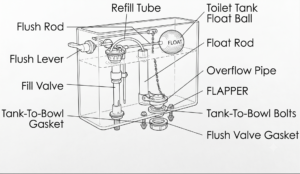
The main parts inside a toilet tank. A worn flapper, a high float, or a faulty fill valve is usually why a toilet keeps running.
A worn or warped flapper
The flapper is the rubber seal at the bottom of the tank that lifts when you flush and drops back to hold water in. Over time it hardens, warps, or wears out,
so it no longer seals.
You will usually hear water trickling into the bowl between flushes, and the tank may refill on its own every few minutes. A worn flapper is the single most common reason a toilet keeps running. The fix is a simple flapper replacement, and a technician will also check that the seat it rests on is smooth and clean.
The float is set too high
The float tells the fill valve when to stop adding water. If it sits too high, water rises above the overflow tube and drains into the bowl continuously.
The clue here is water flowing down the overflow tube even though the tank looks full. Lowering the float so the water level sits about an inch below the top of the overflow tube usually solves it. On older toilets, the float or its arm can be bent or waterlogged and may need to be replaced.
A fill valve that will not shut off
The fill valve refills the tank after each flush. When it wears out, it can fail to close all the way, so water keeps running and you often hear a steady hiss.
If you have already adjusted the float and the toilet still runs, the fill valve is the likely culprit. A technician replaces the fill valve assembly and confirms the tank fills to the right level and shuts off cleanly.
A flush chain that is too short, too long, or tangled
The small chain connects the flush handle to the flapper. If it is too short or tangled, it can hold the flapper slightly open. If it is too long, it can slip under the flapper and break the seal.
You may notice the toilet runs only sometimes, or stops when you jiggle the handle. Adjusting or replacing the chain so it has a little slack, but not too much, is a quick fix.
Mineral buildup on the flush valve seat
Western Washington has its share of hard water, and mineral deposits can build up on the surface where the flapper seals. Even a good flapper cannot seal against a rough, crusted seat.
This shows up as a toilet that keeps running even after a new flapper is installed. A technician cleans or replaces the flush valve seat so the seal holds. If hard water is affecting your fixtures, it can affect other plumbing too, including your water heater and other fixtures.
What can you fix yourself, and what needs a plumber?
Some running toilet fixes are homeowner-friendly. Others are better left to a professional so the repair holds and no new leak appears. Here is a simple way to split it.
What a homeowner can safely try first:
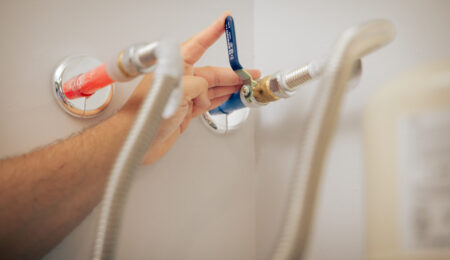
- Turn the shutoff valve behind the toilet clockwise to stop the water and quiet things down while you decide what to do.
- Lift the tank lid and check whether water is spilling into the overflow tube, which points to the float or fill valve.
- Check the flush chain for tangles or slack and adjust it so the flapper closes fully.
- Swap in a new flapper, which is an inexpensive part sold at any hardware store.
What is better handled by a technician:
If the toilet still runs after a new flapper, if the fill valve needs replacing, if the flush valve seat is corroded, or if you see water on the floor around the base, it is time to call. A professional replaces worn internal parts, checks the supply line and shutoff valve, and confirms the whole toilet is sealing and refilling the way it should. We do not just diagnose the issue. We help you understand it, so you know exactly what was wrong and what we did. Pacific Heating & Cooling has served homeowners across Tacoma and the South Sound since 1984, and every repair is backed by our upfront pricing before any work begins.
Signs you should call for toilet repair
A running toilet is not usually an emergency, but a few signs mean it is worth having a plumber take a look sooner rather than later:
- The toilet keeps running even after you have replaced the flapper.
- Water trickles into the bowl around the clock and never fully stops.
- The tank refills on its own every few minutes when no one has flushed, sometimes called phantom flushing.
- You hear a steady hiss from the tank that will not go away.
- Your water bill jumped with no change in how much water you are using.
- You have to hold or jiggle the handle every single time to make it stop.
Any one of these points to a part that is no longer doing its job. The good news is these are common, well-understood repairs. Our background-checked technicians arrive in a 2-hour window, so you are not waiting around all day.
What does it cost to fix a running toilet in Western Washington?
Most running toilet repairs are straightforward and affordable. Across the Western Washington market, a common flapper or fill valve replacement typically runs from about $100 to $350, while more involved repairs, such as a full flush valve assembly or a corroded shutoff valve, can run higher. The final number depends on which parts have failed and how old the toilet is.
A few things drive the range. A simple flapper is a small part and a quick fix. A worn fill valve or flush valve assembly involves more parts and labor. Older toilets sometimes need several parts replaced at once, and hard-water buildup can add a step. Because a running toilet can also point to a shutoff valve or supply line that needs attention, a technician checks the whole toilet, not just the one obvious part.
Whatever the repair turns out to be, you will get clear pricing before any work begins. That is the point of our no-surprise approach: you approve the price first, then we get to work. Most running toilet repairs are completed the same day. Every repair is also backed by our 100% money-back guarantee, so the fix is done right or we make it right.
A quick way to slow the water while you wait
- Shut off the supply. Turn the small valve behind the toilet clockwise until it stops.
- Check the overflow tube. Water flowing down it means the float or fill valve is the issue.
- Note what you see. The more you can tell us, the faster we can plan the right fix.
Want ongoing priority service and reduced fees? Ask about the Peace of Mind Club.
When does it make sense to replace the toilet instead of repairing it?
If your toilet is more than 20 to 25 years old, needs repairs again and again, runs constantly, or clogs often, replacing it is often the better long-term solution. A newer toilet also uses far less water, which lowers your bill month after month. This is a decision, not a push. We will walk you through the numbers so you can choose what makes sense for your home.
Water use is the biggest reason homeowners upgrade. Toilets made before 1994 can use anywhere from 3.5 to 7 gallons per flush. Since 1994, toilets have been required to use no more than 1.6 gallons per flush, and today’s high-efficiency models use 1.28 gallons or less. For a busy household, that difference can add up to thousands of gallons a year and shows up as real savings on your water bill.
Some water utilities in Western Washington offer rebates for high-efficiency, WaterSense-labeled toilets, so it is worth checking with your local water provider before you buy. If a replacement turns out to be the right call, we can also walk you through financing options so the cost is easy to plan for.
Not all toilets flush the same, either. Some clog more often simply because of how they are designed. A wider trapway, a fully glazed trap, and a larger flush valve move waste through more reliably, so a well-designed modern toilet often clogs less than an older or bargain model. If clogs are a regular frustration in your home, the design of the toilet itself may be the reason, and a better-built replacement can quietly solve it.
FAQ: Common Toilet Problems
-
-
A common running toilet repair, such as a new flapper or fill valve, typically runs from about $100 to $350 in the Western Washington market. More involved repairs, like a full flush valve assembly or a corroded shutoff valve, can cost more. You will get clear, upfront pricing before any work begins, so there are no surprises.
-
-
A running toilet is rarely an emergency, but it should not be ignored. It can waste hundreds of gallons of water a day and drive up your bill. If you need to stop it right away, turn the shutoff valve behind the toilet clockwise, then schedule a repair when it is convenient.
-
-
-
-
That is often called phantom flushing, and it usually means a small amount of water is slowly leaking from the tank into the bowl. As the water level drops, the fill valve kicks on to top it off. The most common cause is a flapper that no longer seals, or mineral buildup on the seat it rests against.
-
-
A steadily running toilet can waste anywhere from a few hundred to over a thousand gallons of water a day, depending on how bad the leak is. That adds up quickly on your water bill. Fixing it promptly is usually an easy, low-cost repair that pays for itself.
-
-
No. A running toilet is caused by a worn or misadjusted part, and those do not repair themselves. Sometimes jiggling the handle stops it temporarily, but the underlying part still needs to be adjusted or replaced to stop the water for good.
-
-
Still not sure what’s causing the problem?
Tell us what your system is doing and we’ll help you figure out the right next step. Pacific Heating & Cooling has been diagnosing heating and cooling problems across Tacoma and the South Sound since 1984. NATE-certified technicians, 2-hour arrival windows, and upfront pricing before any work begins.