By Pacific Heating & Cooling | NATE-Certified Service Technicians | Updated October 2026
If your bedroom feels chilly while the living room stays warm, or the upstairs turns stuffy every afternoon, you are dealing with uneven heating and cooling in your house. In most homes, it means air is not reaching every room equally, usually because of a dirty filter, closed dampers or blocked vents, leaky or disconnected ductwork, a duct layout that struggles to reach far rooms, or blower and zoning settings that need adjusting. Below, we explain how to spot each cause, what you can safely check yourself, and what a fix typically costs around Tacoma.
What causes uneven heating and cooling in a house?
Uneven heating and cooling in a house almost always comes down to airflow. The most common causes are restricted airflow from filters, dampers, or blocked vents, ducts that are leaking or disconnected, long duct runs to far rooms, blower settings, zoning problems, and heat loss through insulation or windows. Most can be found in a single diagnostic visit.
Based on our service records, we looked at 74 service calls over the past two years where homeowners in Western Washington reported some rooms running hotter or colder than others. The causes below are grouped by type, starting with the ones our technicians check first. Many homes had more than one cause at the same time.
1. Restricted airflow: dirty filters, closed dampers, and blocked vents
What it is: Something is choking the air before it reaches your rooms.
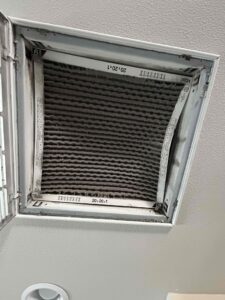
A filter this clogged chokes airflow to the whole house, and the farthest rooms are usually the first to feel it.
How to recognize it: Air from the vents feels weak everywhere, but the rooms farthest from the furnace suffer most. You may notice the problem got worse gradually, or right after rearranging furniture. A filter that looks gray or packed with dust is a strong clue.
Common solution: We replace or clean the filter, open any manual dampers that were partly closed, and check that supply and return vents are clear. Then we measure the temperature coming out of each room’s vent to confirm the air is balanced.
Example From a Recent Service Visit
A homeowner in Gig Harbor called because several rooms were not cooling like the rest of the house. Our technician found an extremely clogged 1-inch filter, three of eight supply dampers partly closed, and the other five not fully open.
Solution:
We removed the restriction and opened every damper fully. After that, every room in this Gig Harbor home measured a healthy, even temperature drop at the vent.
2. Leaky, disconnected, or crushed ductwork
What it is: A duct that has come apart, been flattened, or is leaking air into the attic or crawlspace instead of your room.
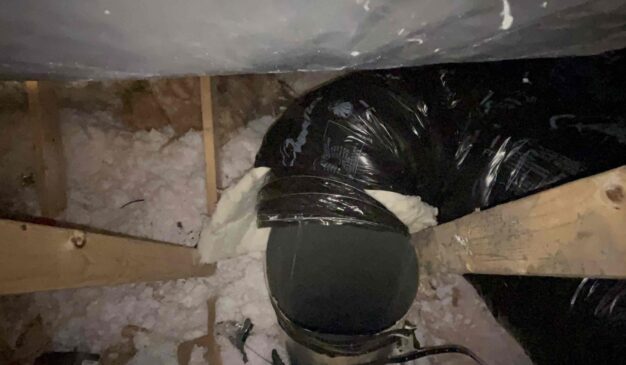
How to recognize it: One room or one wing stays uncomfortable no matter how you set the thermostat. A single vent may blow little or no air. On one recent call in Puyallup, one vent blew cold air while every other vent blew warm. The cause was a single duct run that had come loose.
Common solution: We inspect the ducts in the attic or crawlspace, then reconnect, reseal, or replace damaged sections. For widespread leaks, we may recommend professional duct sealing, which seals leaks from the inside without tearing into walls.
3. Duct layout and long runs to far rooms
What it is: The ductwork itself is working, but it was never designed to deliver equal air to every room.
How to recognize it: The rooms farthest from the furnace, bonus rooms over garages, and finished basements are consistently a few degrees off. This is common in older Tacoma and Lakewood homes and in houses with one central return. It was the most common individual finding in our records, often with no broken part at all. Since 1984, we have worked in just about every style of South Sound home, from older ramblers and split-levels to newer two-story builds.
Common solution: Options range from adjusting dampers and adding a return to installing a ductless mini split for the problem room. We walk you through what each option would change, so you can decide what is worth it.
4. Blower speed or a dirty blower
What it is: The fan that pushes air through your home is set too low or coated in dust, so it can’t push air all the way to the far ends of the duct system.
How to recognize it: Rooms near the furnace feel fine, but upstairs rooms and rooms at the end of long duct runs lag behind. The gap often grows in summer, because cooled air is heavier and harder to push upstairs. You may also notice the problem started after a new furnace or AC was installed, if the blower speed was never adjusted for your home’s ductwork.
Common solution: We check the blower speed setting against what your system and ductwork need, and clean the blower wheel if it’s dirty. Our NATE-certified technicians check the temperature at the vents nearest the furnace and farthest from it, before and after, so you can see the gap close in numbers, not just feel it. If air is weak at every vent, not just the far ones, our guide to [weak airflow from vents] covers the other causes to rule out.
5. Zoning system problems
What it is: In homes with zones, motorized dampers and sensors decide which areas get air. When one sticks or is wired wrong, a zone goes without.
How to recognize it: One floor or area ignores its thermostat, or two zones seem to swap. We have even found zone damper wires installed in reverse.
Common solution: We test each zone damper, sensor, and the zone control panel, then repair or reprogram whatever is not responding.
6. Heat loss through insulation, windows, and bonus rooms
What it is: The air is arriving, but the room loses heat (or gains it) faster than the system can keep up.
How to recognize it: The room has more windows or outside walls, sits over a garage, or is partly below grade. It feels drafty in winter and hot on sunny afternoons.
Common solution: We confirm the HVAC side is delivering good air, then explain whether insulation, window treatments, or a dedicated heating and cooling option for that room makes more sense. Western Washington’s damp, mild climate makes these rooms most noticeable in the shoulder seasons.
What can you check before calling a technician?
You can safely check four things yourself: the air filter, whether every vent is open and clear, your thermostat fan setting, and whether interior doors stay closed. Anything inside the ductwork, attic, crawlspace, or the furnace itself should be left to a technician.
Homeowner actions
- Check the filter. If it looks gray or you cannot see light through it, replace it. In our records, a clogged filter played a role in several uneven temperature calls.
- Open and clear every vent. Move furniture, rugs, and curtains off supply vents and return grilles. Blocked vents showed up in several of the homes we visited.
- Try the fan on “On.” Running the fan continuously mixes air between floors and can even out a few degrees of difference.
- Leave doors open. Closed doors can trap air in rooms that do not have their own return.
Technician actions
A proper diagnosis goes beyond feeling the vents. Our technicians measure how hard the system is working to push air, check the temperature at each room’s vent, and confirm how much air the blower is actually moving. We inspect ducts in the attic or crawlspace, check damper positions, and test zone controls.
We don’t just diagnose the issue. We help you understand it. You will see what we are seeing and know what it means before any work begins. That approach is a big part of why South Sound homeowners have left more than 7,000 Google reviews with a 4.9 average.
Signs you should call for an airflow diagnostic
- One room stays several degrees warmer or colder than the rest of the house, day after day.
- A vent blows weak air, no air, or cold air while the others blow warm.
- Your upstairs gets hot every afternoon and the system runs almost constantly to keep up.
- You replaced the filter and opened every vent, and nothing changed.
- Heating or cooling bills went up with no change in how you use the system.
- You hear whistling at vents or rattling in the ducts after a cable, internet, or remodel crew worked in the attic or crawlspace.
That last one is more common than you might think. In our records, we have found ducts crushed after a cable installation and duct runs that were never connected at all. Our 2-hour arrival windows make it easy to fit a visit into your day.
What does fixing uneven heating and cooling in a house cost in Tacoma?
Finding the cause of uneven heating and cooling in a house starts with a diagnostic visit, which is $119, or $99 for Peace of Mind Club members. Small fixes like reconnecting a duct or opening dampers are often handled on the same visit. Whole-home duct sealing, which seals leaks from inside the ductwork, typically runs about $1,995.
Based on 58 paid diagnostic visits for uneven temperature and airflow complaints in our service records, most visits ran $109 to $131 including tax. That covers a full airflow check, not just a quick look at the thermostat. You get clear pricing for any repair before work begins, so there are no surprises.
What drives the cost from there is what we find:
- Filter, vent, or damper fixes: Often resolved during the diagnostic with little or no added cost.
- Reconnecting or repairing a duct: On the handful of visits where we reconnected a loose duct or rewired a zone panel on the spot, the total stayed under $350.
- Whole-home duct sealing: Across 27 duct sealing jobs, the standard price was typically $1,995.
- A dedicated system for one room: When a room simply cannot be reached well by the existing ducts, a ductless mini split is quoted separately after we look at the space.
Simple fixes like a filter, a closed damper, or a loose duct run are usually completed the same day. Larger duct repairs and duct sealing are scheduled as a follow-up visit, and every repair and installation is backed by our 100% Money-Back Guarantee.
If uneven rooms are part of a bigger heating problem, our guide to common furnace problems covers the other issues we see most often. In summer, our post on why your AC is not cooling walks through cooling-side causes. You can also read about our duct cleaning service if dust and debris are part of the picture.
Pacific Heating & Cooling has been helping families across Tacoma, Puyallup, Gig Harbor, Lakewood, and University Place since 1984. If some rooms in your home never feel quite right, schedule a heating diagnostic or call (253) 248-6260, and we will walk you through exactly what is going on. Peace of Mind Club members also get reduced diagnostic fees and priority scheduling through our membership plan. No Surprises. Just Solutions.
Frequently Asked Questions
-
-
A small difference is normal because warm air rises and upstairs rooms sit under the roof. Our technicians commonly see second floors run 5 to 10 degrees warmer on hot afternoons. If the gap is bigger than that, or it shows up in winter too, it usually points to an airflow problem worth checking.
-
-
Uneven heat distribution makes some rooms uncomfortable, and it often makes the whole system work harder. People turn the thermostat up or down to fix one room, so the system runs longer, energy bills climb, and parts wear faster. Fixing the airflow problem usually improves comfort and efficiency at the same time.
-
-
It sounds logical, but it usually does not work and can make things worse. Closing vents builds pressure inside the ducts, which can push more air out of duct leaks and make the blower work harder. Blocked or closed vents showed up in several of the uneven temperature calls in our records, so we recommend keeping every vent open.
-
-
It depends on how leaky your ducts are, which is why we test before recommending it. On the duct sealing jobs in our records, measured duct leakage dropped by a median of 84 percent. Whole-home duct sealing, which seals leaks from inside the ductwork, typically runs about $1,995.
-
-
A diagnostic visit is $119, or $99 for Peace of Mind Club members. Across 58 paid diagnostic visits for uneven temperature and airflow complaints, most ran $109 to $131 including tax. You get clear pricing for any repair before work begins.
-
-
Uneven rooms are rarely an emergency, so you can schedule at a time that works for you. Book sooner if a vent suddenly stops blowing air, one vent blows cold while others blow warm, or the problem started after someone worked in your attic or crawlspace. Those usually mean a duct has come loose or been crushed.
-
-
Usually not. Out of 74 uneven temperature calls in our records, system size was a factor in only about one, while airflow, ductwork, and settings caused most of the rest. A bigger system pushes more air through the same ducts, so the room that was short on air often stays short.
Still not sure what’s causing the problem?
Tell us what your system is doing and we’ll help you figure out the right next step. Pacific Heating & Cooling has been diagnosing heating and cooling problems across Tacoma and the South Sound since 1984. NATE-certified technicians, 2-hour arrival windows, and upfront pricing before any work begins.