By Pacific Heating & Cooling | NATE-Certified Service Technicians | Updated October 2026
Your heating bill jumped this winter, but your thermostat setting, your schedule, and the people in your home haven’t changed. Most of the time, the answer to why your heating bill is so high is that the system is quietly leaning on its most expensive heat source: thermostat settings that call for backup heat too soon, a heat pump that has stopped running, low refrigerant, a heat pump that can’t defrost, or restricted airflow. Here is how to recognize each one, what you can safely check yourself, and what a diagnostic visit costs in Tacoma and across Western Washington.
Why is my heating bill so high? The most common causes
Based on our service records, we completed 77 diagnostic visits across Western Washington where the homeowner called specifically about a high heating bill. In about 4 out of 5, we traced the cause to the heating system. The most common findings were thermostat settings (23 visits), a heat pump that wasn’t running (17), low refrigerant (15), and airflow problems (13).
These visits ran from late 2024 through 2026 in Tacoma, Auburn, Olympia, Puyallup, Lakewood, Gig Harbor, and nearby South Sound communities. Most of the homes, 66 of the 77, had a heat pump. That matters, because a heat pump with electric backup heat is efficient when everything works and expensive when something doesn’t. Some visits turned up more than one issue, so the totals below add up to more than 77.
1. Thermostat settings that call for backup heat too soon
What it is: Most heat pumps have a backup heat source, either electric heat strips or a gas furnace, and the thermostat decides when it turns on.
How to recognize it: “Aux heat” or “Emergency heat” shows on the thermostat often, even on mild days. The bill jumped after a new thermostat or new system was installed. Your system is set to a “comfort” mode you never chose.
Common solution: This was the single most common finding in our high-bill visits. Our NATE-certified technicians review the settings that control backup heat: how far the temperature can drop before it kicks in, the outdoor temperature where the heat pump hands off, and how often backup heat can cycle. In several homes, the thermostat had simply been left on emergency heat, which runs only the electric heat strips.
Example From a Recent Service Visit
A homeowner in Olympia called after their electric bill roughly tripled once they started using the heat. Our technician found the heat pump itself was healthy, with correct refrigerant pressures. The problem was the thermostat: backup heat was set to come on at the slightest temperature drop, it could cycle up to nine times an hour, and the outdoor temperature sensor had never been connected.
Solution:
We adjusted the backup heat settings so the heat pump carries more of the load, reduced the backup heat cycles, and connected the outdoor sensor. The Olympia system was running normally and more efficiently before we left.
2. A heat pump that stopped running, so backup heat does all the work
What it is: When the outdoor unit stops running, the house still gets warm from backup heat, so the problem is easy to miss until the bill arrives.
How to recognize it: The outdoor unit is silent, or its fan isn’t spinning, while the heat is on. Aux heat runs most of the day. The trouble started after a power outage or storm.
Common solution: We found this in 17 high-bill visits. Causes included tripped breakers, blown high-voltage fuses in the outdoor disconnect, failed capacitors (the part that helps the motors start), outdoor fan motor problems, and control board faults. Simple ones like a fuse or breaker are often handled in the same visit. With 2-hour arrival windows, you won’t spend the day waiting to find out. Learn more about how these systems work on our heat pump services page.
3. Low refrigerant
What it is: Refrigerant carries heat from the outdoor air into your home. When it’s low, the heat pump works harder and backup heat fills the gap.
How to recognize it: Longer run times, air that feels lukewarm instead of warm, and heat pump lockouts or error codes on the thermostat.
Common solution: Low refrigerant showed up in 15 visits. Our technician measures pressures and checks for leaks, then walks you through your options: balancing the refrigerant, finding and repairing the leak, or, on older systems, talking about replacement. In 5 of our high-bill visits, the system was past its expected lifespan, which on its own makes a system less efficient. You can read more in our guide to common heat pump problems.
4. A heat pump that can’t defrost
What it is: In cold, damp weather the outdoor coil collects frost, and a defrost cycle melts it off. If the sensor that triggers defrost fails, ice keeps building.
How to recognize it: Thick ice covers the outdoor unit and doesn’t clear. The heat pump locks out and the system stays on aux heat.
Common solution: We found this in 7 visits, usually a failed defrost coil sensor. Western Washington winters, with long stretches of damp weather in the 30s, keep defrost cycles busy. The fix is replacing the sensor. If the part needs to be ordered, we set the system to run safely on backup heat until we return.
5. Airflow and duct problems
What it is: Your system needs air to move freely. Anything that blocks or leaks that air makes it run longer for the same comfort.
How to recognize it: Some rooms never warm up, the filter is gray and packed, or you hear air rushing in the crawl space.
Common solution: Airflow issues came up in 13 visits. We found heavily clogged filters, a torn duct run blowing heat into a crawl space, a crushed main duct under a manufactured home, and poorly insulated attic ducts. Many older South Sound homes have ducts in crawl spaces and attics, where damage goes unnoticed for years. Air duct sealing can help when leaks are the issue.
6. Something outside the heating system
What it is: Not every high bill comes from the furnace or heat pump.
How to recognize it: The system heats normally and runs a normal amount, but usage is still up.
Common solution: In 8 visits, the cause was elsewhere: space heaters left running, a water heater problem, a hot water pipe leak keeping a tankless heater on, or a gas leak at the meter or a gas line. We’ll tell you plainly when your heating system isn’t the cause. If you ever smell gas, leave the home and call PSE’s emergency line from outside. For gas furnace issues specifically, see our post on common furnace problems.
How to lower heating costs: what you can check vs. what needs a technician
The easiest ways to save money on your heating bill are free: make sure the thermostat isn’t on emergency heat, change a dirty filter, keep the outdoor unit clear, avoid big overnight setbacks with a heat pump, and compare this year’s usage to last year’s. If those check out and the bill is still high, a diagnostic will find what you can’t see.
What you can safely check
- Thermostat mode and setbacks. Confirm it’s set to Heat, not Emergency Heat. With a heat pump, keep overnight setbacks small, around 2 to 3 degrees. Big morning recoveries often trigger backup heat.
- The air filter. Our technicians found packed filters on many high-bill visits. Check yours monthly in winter, and more often if you have pets.
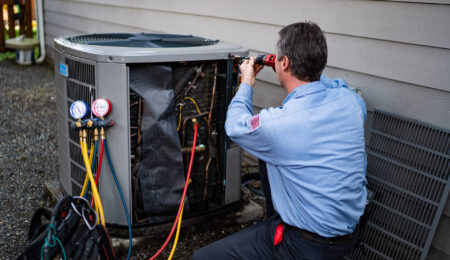
- The outdoor unit. While the heat is on, the fan should be spinning. Light frost that clears is normal. Thick ice that stays is not. Don’t chip at the ice, since that can damage the coil.
- Your usage, not just the dollars. Compare kilowatt-hours or therms to the same month last year. Rates change, and so do cold snaps. Also look for space heaters or new appliances.
What a technician should handle
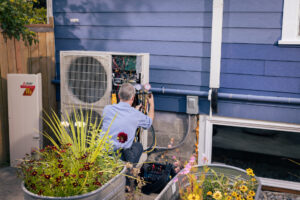
Pacific technicians are trained on the full range of heating and cooling equipment, not just furnaces.
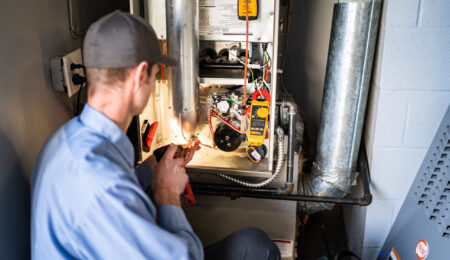
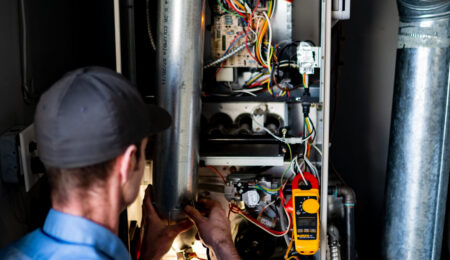
Refrigerant, electrical parts, and defrost controls need proper tools and training. If a breaker or fuse keeps tripping, resetting it again isn’t the fix, because something is causing it. A thorough diagnostic includes refrigerant pressures, electrical tests, defrost sensor readings, airflow measurements, a review of your thermostat’s run history, and gas pressure and leak checks on furnaces. We don’t just diagnose the issue. We help you understand it. It’s part of why Pacific has earned more than 7,000 Google reviews with a 4.9 average. Regular heating maintenance also catches many of these problems before they show up on a bill.
Signs you should call for a heating diagnostic
- “Aux heat” or “Emergency heat” displays most of the day, even when it’s in the 40s outside
- The outdoor heat pump unit is silent, or its fan isn’t spinning, while the heat is on
- Thick ice covers the outdoor unit and doesn’t melt off
- The system runs nearly nonstop, but the house sits a degree or two below the setting
- Air from the vents feels lukewarm instead of warm
- The bill jumped right after a power outage, a storm, or a new thermostat
Every repair and installation is backed by our 100% Money-Back Guarantee, so you can make a decision with confidence.
What does it cost to find out why your heating bill is so high?
Based on 50 high-bill diagnostic invoices in our service records, most visits ran $109 to $131 including tax. That covers a full system check to find the cause. Our heating diagnostic is $119, or $99 for Peace of Mind Club members, plus tax.
The diagnostic covers the whole picture: thermostat settings, heat pump and backup heat operation, refrigerant pressures, electrical parts, airflow, and gas safety on furnaces. Many high-bill causes, like a thermostat setting or a tripped breaker, are corrected during that visit. If a repair is needed, you’ll see the price upfront before any work begins.
Repair costs depend on what we find. The table below shows standard prices for repairs that commonly come up on high-bill visits.
| Repair | Standard price (Club member price) |
|---|---|
| High-voltage fuse | $53 ($45) |
| Capacitor replacement | $207 to $270 ($177 to $230) |
| Defrost sensor | $339 ($288) |
| Refrigerant balance (R-410A) | $529 ($450) |
What drives the spread: the type of part, the refrigerant your system uses, whether a leak needs to be found and repaired first, and whether parts have to be ordered. Older systems that use R-22 refrigerant cost more to recharge, which is often when a heating repair conversation turns into a repair vs. replace conversation. Most repairs are completed the same day.
Heading off the next high bill: our Precision Tune-Up in 3 steps
- 1. Thorough cleaning. We clean key components and check the filter, so air moves freely and your system doesn’t run longer than it needs to.
- 2. Performance testing. We measure refrigerant pressures, airflow, and heat output, and review your thermostat and backup heat settings, the most common cause we found on high-bill visits.
- 3. Safety inspection. We check electrical connections and, on gas furnaces, gas pressure, venting, and the heat exchanger.
A heating Precision Tune-Up is $199 plus tax. Annual tune-ups are included with the Peace of Mind Club, along with member pricing on repairs and priority scheduling.
A higher heating bill with no change at home usually has a clear cause, and most of the time we can find it in one visit. If your bill has climbed and you’re not sure why, schedule a heating diagnostic at (253) 248-6260 and we’ll walk you through what we find. No Surprises. Just Solutions.
Frequently Asked Questions
-
-
A sudden jump usually means backup heat is doing work the heat pump should be doing. In our high-bill visits, the most common reasons were thermostat settings that bring on backup heat too soon, a heat pump that stopped running because of a tripped breaker, blown fuse, or failed part, and low refrigerant. Check whether your thermostat shows “Aux heat” or “Emergency heat” most of the day, since that is a strong clue.
-
-
-
-
It is not usually a safety emergency, but it is worth checking soon, because the extra cost adds up every week of heating season. A heat pump stuck on backup heat or running low on refrigerant can also wear out faster. The one exception is a gas smell: if you smell gas, leave the home and call PSE’s emergency line from outside right away.
-
-
-
-
Start with the free checks: make sure the thermostat is not on emergency heat, change the filter, confirm the outdoor fan spins when the heat is on, and compare your kilowatt-hours or therms to last year. If those all look normal, a diagnostic is worth it, because problems like low refrigerant or a failed defrost sensor are not visible to a homeowner. In some of our visits the cause turned out to be outside the HVAC system, like space heaters or a water heater issue, and we tell homeowners that plainly.
-
-
Not always. With a heat pump, a big overnight setback can force backup heat to run in the morning to catch up, which can cancel out the savings. A small setback of about 2 to 3 degrees is usually the better balance between comfort and cost.
-
-
Still not sure what’s causing the problem?
Tell us what your system is doing and we’ll help you figure out the right next step. Pacific Heating & Cooling has been diagnosing heating and cooling problems across Tacoma and the South Sound since 1984. NATE-certified technicians, 2-hour arrival windows, and upfront pricing before any work begins.