By Pacific Heating & Cooling | NATE-Certified Service Technicians | Updated October 2026
If your heat pump runs all year to heat and cool your home, you want to know it will keep doing that without a surprise breakdown in January or July. Heat pump maintenance is a professional tune-up that cleans the indoor and outdoor coils, clears the condensate drain, replaces the filter, tests electrical parts like the capacitor, checks refrigerant pressures, and confirms the defrost system works, and it should be done twice a year, once before heating season and once before cooling season. A single-system tune-up in the Tacoma area costs $199 at standard price, and seasonal promotions can lower that. Below is the full heat pump maintenance checklist, what we commonly find, what it costs, and how your heat pump should behave in winter.
What does heat pump maintenance actually include?
A heat pump tune-up is a top-to-bottom cleaning and inspection of both the indoor air handler and the outdoor unit. The technician cleans the coils, flushes the drain, replaces a standard filter, tests the capacitor and electrical connections, checks refrigerant pressures, tests backup heat strips, and runs the system in heating, cooling, and defrost to confirm everything works within range.
At Pacific, we call this our Precision Tune-Up, and it follows three goals: Maintain, Prevent, Extend. Maintain the efficiency you paid for. Prevent the small issues that lead to breakdowns. Extend the life of your equipment. Every visit is done by a NATE-certified, background-checked technician, and you get a 2-hour arrival window so you are not waiting around all day.
Our heat pump maintenance checklist
Here is what our technicians check and clean during a heat pump inspection, based on the service notes from our own visits.
Indoor air handler
- Replace a standard 1-inch pleated filter, or inspect the media filter you already have
- Clean the indoor (evaporator) coil so air moves through it freely
- Flush the condensate drain and check the drain pan for buildup
- Inspect the blower, control board, and wiring connections
- Test the backup heat strips that kick in on the coldest days
Outdoor heat pump unit
- Wash the outdoor coil and clear leaves, dirt, and debris
- Test the capacitor, which gives the motors the jolt they need to start
- Inspect the contactor, defrost board, and temperature sensors
- Check refrigerant pressures in both heating and cooling mode
- Tighten electrical connections and look for wear or corrosion
Whole system
- Cycle the system through heating, cooling, and a defrost cycle
- Check that your thermostat reads the room temperature accurately
- Record every reading on a service checklist you can keep
This visit usually takes about an hour per system. When we are done, we walk you through what we saw. You’ll see what we’re seeing and know what it means.
What we commonly find, and what it means for your system
Based on our service records, we completed more than 15,000 heat pump maintenance visits across Western Washington over the past two years, from Tacoma and Gig Harbor to Puyallup, Lakewood, Spanaway, and Olympia. Most of those visits end the same way: the system is cleaned, tested, and running within range. When we do find something, it usually falls into one of two groups.
Included in your heat pump tune-up
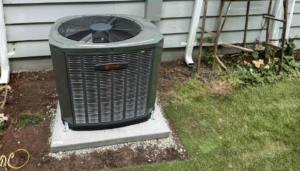
Pacific Heating & Cooling completed this Trane AC add-on in Tacoma, WA in June 2025.
- Dirty filters. We replace a standard 1-inch pleated filter at no extra charge. We see heavily loaded filters often, and a clogged filter is one of the most common reasons a heat pump works harder than it should.
- Dirty coils. Dust on the indoor coil and leaves or grime on the outdoor coil both restrict airflow. Heat pump cleaning is part of every visit.
- Slow or clogged drains. Our marine climate means a lot of moisture and organic growth in drain lines. We flush the drain every visit.
- Thermostat and defrost settings. If the thermostat reads a few degrees off, or the defrost settings are not ideal for our cold snaps, we adjust them as part of the tune-up.
Items that become a separate repair conversation
- Weak or failed capacitors. In a sample of 700 recent heat pump tune-up invoices, about 1 in 20 included a capacitor replacement. A weak capacitor can still start the system today but fail on a cold morning, so we test every one.
- Algaecide for the drain. About 1 in 6 visits in that same sample added an algaecide tablet to help keep the drain clear between visits. It is optional and low cost.
- Filter upgrades. If your system uses a 4-inch media filter, that replacement is priced separately.
- Older equipment concerns. On systems near the end of their life, we will tell you what we see and give you clear answers, with no pressure to decide that day.
Before any extra work happens, you see the price upfront and decide. Nothing is added without your approval. Our repairs are backed by our 100% Money-Back Guarantee.
Example From a Recent Service Visit
A homeowner in Lakewood called after a week of snow and ice. Their heat pump had been making unusual noises and seemed to shut off without coming back on. When our technician arrived, the unit started normally and refrigerant pressures checked out within range.
Solution:
We ran the heat pump through a full defrost cycle, confirmed the defrost settings were set for longer cycles during cold weather, replaced the filter, and completed a full tune-up. The Lakewood homeowner left with a system ready for the rest of winter and a clear explanation of what the noises during defrost mean.
Most homeowners who call us about a heat pump that “froze up” in winter are actually seeing a normal defrost cycle. If you are seeing something that does not match the winter section below, our guide to common heat pump problems covers the most frequent causes.
Is heat pump maintenance worth the cost?
Yes, for most homes. A heat pump runs nearly year-round in Western Washington, so it builds up wear faster than an AC that only runs in summer. A tune-up costs $199 or less and catches small issues like a weak capacitor or clogged drain before they turn into a no-heat call on the coldest night of the year.
Many manufacturers also expect proof of regular professional maintenance to keep warranty coverage in good standing. Your service checklist from each visit gives you that record. Clean coils and a correct refrigerant charge also help your heat pump use less electricity to deliver the same comfort.
Families across the South Sound have trusted us with their heating and cooling since 1984, and our 7,000+ Google reviews average 4.9 stars. That trust comes from doing the small things right, visit after visit.
What does a heat pump tune-up cost in Tacoma?
Based on 187 non-club, single-system heat pump tune-up invoices from the past two years, most visits run $199 to $220, including tax and the standard filter.
| Service | Typical cost |
|---|---|
| Precision Tune-Up, one heat pump system (standard price) | $199 |
| Tune-up with our current promotion | $129 |
| Most non-club visits, total invoice with tax | $199 to $220 |
| Peace of Mind Club, one system, both seasonal tune-ups | $358 per year |
| Capacitor replacement, only if needed (separate repair) | $194 to $233 |
| 4-inch media filter, only if your system uses one | $64 to $119 |
A heat pump maintenance plan
About 9 out of 10 heat pump tune-ups we completed in the past two years were for Peace of Mind Club members. The Club covers both seasonal visits, and we call you to schedule them so you do not have to remember. Members also get priority scheduling, 24/7 emergency service with no extra charge for nights, weekends, or holidays, reduced diagnostic fees, and 15% off repairs. You can see the full details on our Peace of Mind Club page, and the No Worry, No Breakdown Guarantee explains the added protection that comes with regular maintenance.
When should you schedule heat pump maintenance?
Schedule heat pump maintenance twice a year: once in early fall before heating season and once in spring before cooling season. In Western Washington, September through November and March through May are the best windows. Booking early gets you more appointment choices before the first cold snap or heat wave fills the schedule.
Our technicians complete heat pump tune-ups every month of the year, and demand climbs fast once the weather turns. If you are searching for heat pump maintenance near me in Tacoma, Puyallup, or Olympia, early fall is the time to get on the calendar. You can also learn more about our heat pump service in Tacoma and the South Sound.
How often should a heat pump be serviced?
Twice a year is the right rhythm for a heat pump. A furnace or AC only works one season, so once a year covers it. A heat pump does both jobs, which means it runs most of the year in our mild, damp climate. One visit before each season keeps both modes in shape. If your home also has a gas furnace as backup, both pieces of equipment are checked during the heating visit. You can read more about our heating maintenance visits.
How does a heat pump work in winter?
In winter, a heat pump pulls heat from the outdoor air and moves it inside, even when it feels cold out. As temperatures drop, the outdoor coil can collect frost. When that happens, the system briefly switches into defrost mode to melt it off. On the coldest days, backup heat strips inside the air handler help keep up. This is why we test both the defrost system and the heat strips at every heating tune-up.
Heat pump defrost: what is normal
A normal defrost cycle lasts a few minutes. You may notice the outdoor fan stop, a whooshing sound, and steam rising from the unit. That steam is the frost melting, not smoke. A light layer of frost that clears on its own is normal. A thick block of ice that does not clear is not.
What to do if your heat pump freezes up in winter
If your heat pump is covered in solid ice and stays that way for more than an hour or two, here are safe steps you can take:
- Check that your filter is clean and that indoor vents are open
- Clear snow, ice, and leaves from around and on top of the outdoor unit by hand
- Make sure gutters are not dripping water directly onto the unit
- Switch the thermostat to emergency heat to keep the home warm while you call for service
Never chip at ice with a tool or pour boiling water on the coil. Both can damage the thin metal fins. A heat pump that keeps icing over usually points to an airflow problem, a low refrigerant charge, or a defrost part that is not doing its job. The good news is we can pinpoint that during a visit, then walk you through your options.
Should you cover your heat pump in winter?
No. Do not wrap or fully cover your heat pump in winter. Unlike an AC, it is running and needs open airflow all season. A cover can trap moisture and block the defrost process. Instead, keep about two feet of clear space around the unit and brush off heavy snow after a storm.
Your heat pump works hard for your home in every season. A Precision Tune-Up twice a year, or a Peace of Mind Club membership that schedules it for you, keeps it running the way it should. Call (253) 248-6260 or book online, and we will handle it for you. No Surprises. Just Solutions.
Frequently Asked Questions
-
-
-
-
A heat pump should be serviced twice a year, once in early fall before heating season and once in spring before cooling season. Because a heat pump both heats and cools, it runs most of the year in Western Washington. One visit per season keeps both modes running efficiently and catches small issues early.
-
-
It is a fair question, and a running system is exactly when maintenance makes the most sense. In a sample of 700 of our recent heat pump tune-ups, about 1 in 20 found a capacitor that needed replacing, a part that often still works until it fails on a cold morning. A tune-up also keeps coils and drains clean so the system uses less energy, and you always see the price for any extra work before you decide.
-
-
Yes, there are a few things you can safely do: change the filter, keep leaves and snow cleared from the outdoor unit, and gently rinse the outdoor coil with a garden hose with the power off. What you cannot do at home is test the capacitor, check refrigerant pressures, inspect the defrost board, or test the backup heat strips. Those checks need a trained technician and the right tools.
-
-
That is almost always a normal defrost cycle. When frost builds up on the outdoor coil, the heat pump briefly reverses to melt it, so the fan stops, you hear a whoosh, and steam rises from the unit for a few minutes. If the unit stays covered in thick ice for more than an hour or two, that is when to call for service.
-
-
First, check that your filter is clean, clear snow and debris from around the outdoor unit by hand, and make sure no gutter is dripping onto it. Switch your thermostat to emergency heat to keep the home warm, and never chip at the ice or pour hot water on the coil. If the ice does not clear, schedule a service visit so a technician can find the cause, which is often airflow, refrigerant, or a defrost part.
-
-
Still not sure if your system is ready for the season?
Tell us what your system is doing and we’ll help you figure out the right next step. Pacific Heating & Cooling has been diagnosing heating and cooling problems across Tacoma and the South Sound since 1984. NATE-certified technicians, 2-hour arrival windows, and upfront pricing before any work begins.