By Pacific Heating & Cooling | NATE-Certified Service Technicians | Updated September 2026
Your furnace either will not turn on at all, or it is running but no warm air is coming out, and you want a real number before you decide what to do next. Based on our service records, no-heat repair costs across Western Washington typically range from $85 for a simple thermostat fix to $800 or more for a blower motor or control board replacement, with most repairs landing well under $500. Here is what drives that range, the typical cost for each of the most common causes, and how to know when a repair no longer makes sense.
What drives the cost of a no-heat repair?
The cost of a no-heat repair depends mainly on which part failed, whether that part is still under warranty, and how much labor the fix requires. A dead thermostat battery can cost nothing to fix. A control board or blower motor replacement runs several hundred dollars because of the part cost and the time it takes to install and test it correctly.
System age matters too. Newer heating systems often still carry manufacturer warranties on major components like control boards and inducer motors, which can cut your part cost significantly. Older systems, especially ones 12 years or older, are more likely to need a full-price replacement part with no warranty coverage.
Access and diagnosis time also play a role. A furnace in an easy-to-reach closet takes less time to service than one tucked in a crawl space or attic. Every no-heat visit starts with a diagnostic to confirm the actual cause, since guessing at a fix risks paying for a part that was never the problem. Pacific Heating & Cooling has been diagnosing heating problems across Tacoma and the South Sound since 1984, and every repair estimate is presented in writing before any work begins.
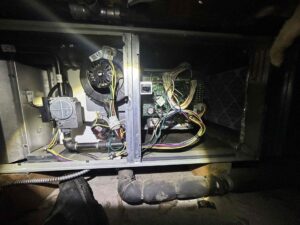
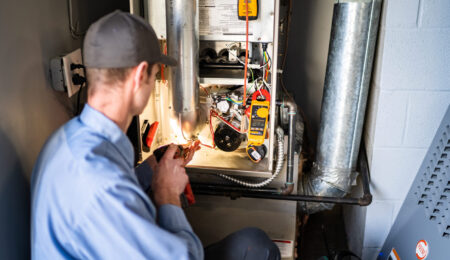
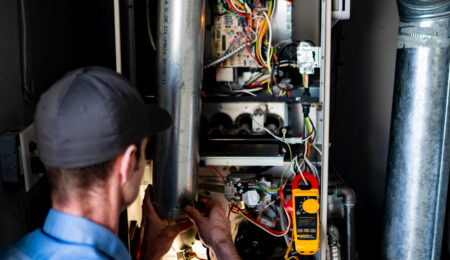
We check the whole system before we recommend a repair, not just the first thing we find. This is what that looks like from the inside.
Typical cost ranges for no-heat repairs in Western Washington
Based on our service records, the most common cause of a no-heat call is a failed thermostat or control module, showing up in about 16 percent of no-heat visits, with a typical repair cost of $85 to $320. The table below ranks the most common causes we see, from most frequent to least frequent, along with the typical cost range for each.
| Cause (share of no-heat calls) | Typical Repair Cost |
|---|---|
| Thermostat or control module failure (about 16%) Blank displays, dead batteries, or a failed smart thermostat or wall control that will not communicate with the furnace. |
$85 to $320 Often warranty-covered on newer systems |
| Control board failure (about 9%) The board that manages ignition sequencing and safety checks fails outright. |
$540 to $600 in parts, plus diagnostic |
| Electrical supply issues (about 9%) Burned disconnects, bad whips, failed fan relays, or a tripped breaker. |
$80 to $390, plus diagnostic |
| Gas valve, pilot assembly, or thermocouple (about 6%) Most common on older gas furnaces and wall furnaces. |
$350 to $475, plus diagnostic |
| Inducer motor failure (about 5%) The motor that pulls combustion gases out of the furnace stops working. |
Around $250 under warranty, $650 to $800 at full retail |
| Heat pump stuck in defrost or emergency heat (about 4%) Usually a failed defrost control board. |
$370 to $460, plus diagnostic |
| Limit switch or high-temp limit trip (about 4%) Often tied to restricted airflow from a dirty filter or closed vents. |
$250 to $290, plus diagnostic |
| Blower motor failure (about 3%) The motor that pushes warm air through your ducts fails. |
$720 to $800, plus diagnostic |
| Pressure switch failure (about 3%) Often paired with a weak inducer motor. |
$325 to $400, plus diagnostic |
| Dirty or failed flame sensor (about 3%) Often resolved at no extra cost during a tune-up cleaning. |
About $237 as a standalone repair |
| Cracked heat exchanger (about 2%, but the highest cost) A safety-related crack in the component that separates combustion gases from your home’s air. |
$1,700 or more, even at partial warranty pricing |
Example From a Recent Service Visit
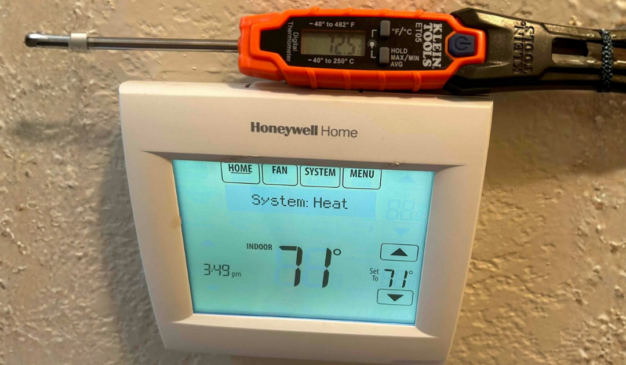
A homeowner in Gig Harbor called after their furnace stopped producing heat overnight, with the wall thermostat showing a blank display. Our technician found a failed control module that had stopped communicating with the furnace, one of the most common no-heat causes we see across Western Washington.
Solution: We replaced the control module, confirmed the furnace cycled correctly through a full heating cycle, and restored heat to the home the same day.
Most no-heat repairs across Tacoma, Puyallup, Lakewood, Gig Harbor, and Olympia fall into the first four or five rows of that table. The cracked heat exchanger is rare, but it is the one repair where cost alone is usually not the deciding factor, since a cracked exchanger is also a safety issue. More on that in the section below.
What the diagnostic visit looks like
A no-heat diagnostic visit generally takes 60 to 90 minutes, and we check your system top to bottom rather than stopping at the first thing we find. Our technician arrives within your scheduled 2-hour window, confirms the thermostat and power supply first, then walks through the ignition sequence, safety switches, and airflow to isolate the actual cause.
You will see what we are seeing and know what it means before any repair begins. Once we know what failed, we walk you through the repair options and the cost in writing, so there are no surprises when the invoice arrives. Most no-heat repairs are completed the same day, since our technicians carry the most commonly needed parts on the truck.
Every repair Pacific completes is backed by our 100% Money-Back Guarantee, and NATE-certified technicians handle every visit. If your system is a Peace of Mind Club member, your diagnostic fee is reduced and you get priority scheduling during high-demand cold snaps.
Repair vs. replace, when does it make sense?
Repair almost always makes sense if your furnace is under 10 years old or the repair cost is less than half of what a new system would cost. Replacement becomes worth considering once a furnace is 15 years or older, needs frequent repairs, or the failure is both expensive and a safety concern, like a cracked heat exchanger.
The general rule we use with homeowners is straightforward: if a repair costs more than half of what a comparable new system would cost, replacement is usually the better long-term value, especially on a furnace that is already past 12 to 15 years old. A cracked heat exchanger is the clearest example in this post. Even at partial warranty pricing it runs $1,700 or more, and it typically shows up on furnaces that are already near the end of their expected lifespan.
This decision is never about pressure. We will walk you through your options honestly, whether that means a straightforward repair or a conversation about furnace installation and replacement. If cost is a concern either way, financing options can spread the investment out. For a deeper look at how to weigh this decision, see our full guide on furnace repair vs. replacement.
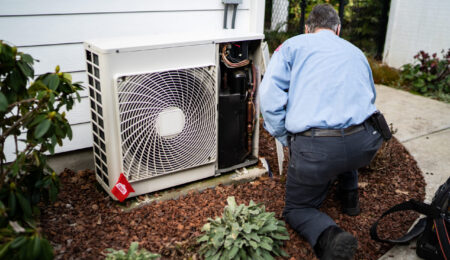
If your no-heat problem turns out to be one of several issues happening at once, our guide to common furnace problems covers the broader picture beyond cost alone. And if you are dealing with a heat pump stuck in defrost or emergency heat mode specifically, our heat pump service team handles that diagnosis as part of the same no-heat visit.
FAQ: Common Questions About No-Heat Repair Costs
-
-
Costs vary widely based on what failed. In our service records, no-heat repairs typically run from $85 for a simple thermostat fix to $800 or more for a blower motor or control board issue, with most repairs landing under $500. The exact cost depends on the part, your system’s age, and whether the part is still under warranty.
-
-
-
-
Not usually. A blower that runs without producing heat often points to a gas valve, pilot assembly, or ignition problem rather than a major mechanical failure. In our records, these repairs typically run $350 to $475 including parts and labor for the valve and pilot assembly.
-
-
A few safe checks are worth trying first: confirm the thermostat is set to heat and has working batteries, check that the furnace switch and breaker are on, and make sure your air filter is not clogged. Beyond that, opening the furnace cabinet or testing gas or electrical components yourself is not something we recommend, since it can be unsafe and can affect warranty coverage.
-
-
No. The diagnostic visit is how we find the actual cause instead of guessing, and you will see the price for any repair in writing before we do the work. Peace of Mind Club members get a reduced diagnostic fee, and every repair is backed by our 100% Money-Back Guarantee either way.
-
-
If the repair cost is more than half of what a new system would cost, or if your furnace is 15 years or older and has needed repeated repairs, replacement usually makes more sense financially. A cracked heat exchanger is one of the clearest examples, since the repair cost is high and the furnace is often near the end of its expected life anyway.
-
-
It depends on your system’s age and coverage. Many control boards, inducer motors, and other major components carry manufacturer warranties for the first several years, which can significantly reduce your part cost, and we check your system’s warranty status as part of the diagnostic visit.
Still not sure if the repair is worth it?
Tell us what your system is doing and we’ll help you figure out the right next step. Pacific Heating & Cooling has been diagnosing heating and cooling problems across Tacoma and the South Sound since 1984. NATE-certified technicians, 2-hour arrival windows, and upfront pricing before any work begins.