By Pacific Heating & Cooling | NATE-Certified Service Technicians | Updated August 2026
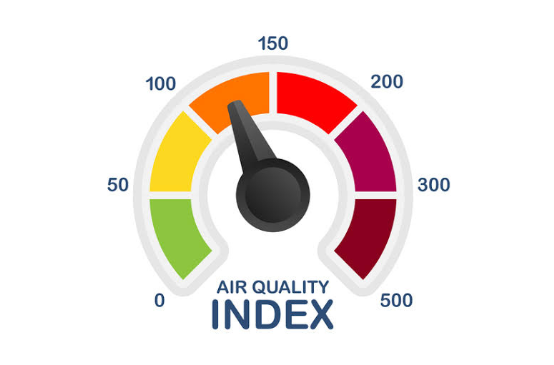
Outdoor air quality becomes a problem for your home when smoke or pollution pushes the Air Quality Index into the orange or red range, which means fine particle pollution, or PM2.5, is high. In our region that usually comes from wildfire smoke drifting in from fires east of the Cascades, like those near Spokane, which can settle over Pierce County and the South Sound.
PM2.5 is made of tiny bits of soot and ash, small enough that a standard filter does not catch them and small enough to reach deep into the lungs. Because you cannot always see it, it helps to know what the outdoor air is doing. You can check current conditions on the Washington State Department of Ecology air quality map.
How does poor air quality impact your home?
When the air outside turns, it lands on the two systems most Western Washington homes rely on, a heat pump and a furnace. Here is what it does to each.
Your heat pump
- It runs year round, heating in winter and cooling in summer, so it takes this hit in every season.
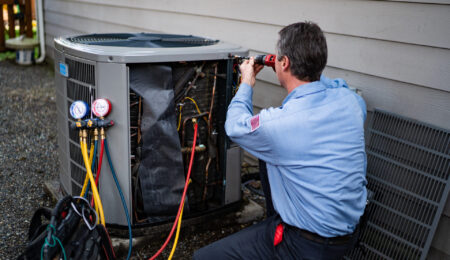
- The outdoor unit pulls air across its coil, and fine particles and ash settle on the coil and fins, acting like a blanket that slows how well the unit moves heat.
- That means longer run times and higher energy use to reach the temperature you set.
- The indoor filter loads up fast, so you may notice weaker airflow, longer cycles, or a system that struggles to keep up.
Your furnace
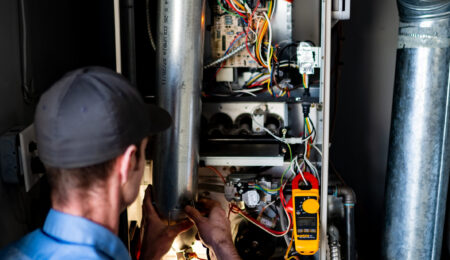
- The filter clogs in days instead of months, which chokes airflow and makes the blower work harder.
- Restricted airflow can make the furnace shut off early to protect itself.
- Fine particles that slip past the filter settle on the blower and other internal parts.
- You may notice weak airflow, a dusty smell when the heat first kicks on, or more frequent cycling.
What it can lead to
None of this is an emergency, but through a smoky season it adds up in ways you will feel and pay for.
- Higher energy bills. A coated coil and a clogged filter make the system run longer to reach the same temperature.
- Earlier repairs. Long run times and restricted airflow put extra wear on the blower, motor, and other parts.
- Weaker, uneven comfort. Airflow drops as the filter loads up, so some rooms never quite catch up.
- Dirtier indoor air. The same system moves that air through your home, so a lingering smoky smell can hang on.
Left alone, that extra strain shortens the life of your equipment and makes your home less comfortable when you need it most. Caught early, it is usually a simple fix.
What we recommend
For most homes, two steps handle it: a maintenance tune-up and the right filter. If a lingering smoky smell is the bigger issue, an air scrubber can help on top of those. .
Start with a tune-up
Across more than 17,000 heating and cooling maintenance visits in our recent service records, the filter is the part our technicians touch most, and it is the first thing to suffer when air quality drops
A tune-up clears the buildup poor air quality leaves behind and confirms your system is moving air the way it should. As part of a standard visit we:
- Clean the heat pump’s outdoor coil and inspect the blower for buildup
- Replace your air filter and check that air pulls through it, not around it
- Confirm airflow, refrigerant, and your fan setting so you can run continuous filtration during smoke events
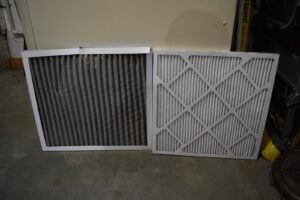
A used HVAC air filter loaded with gray dust and fine particles next to a clean pleated replacement filter, the kind of buildup wildfire smoke can leave behind.
Our NATE-certified technicians have serviced heat pumps and furnaces across Western Washington since 1984, with upfront pricing before any work begins. Keep your system ahead of the season with cooling maintenance or heating maintenance.
Upgrade your filter
Stepping up to a MERV 11 or MERV 13 filter captures far more of the fine particles smoke is made of than a standard 1-inch filter. Across 5,056 cooling tune-ups, the two upgrade filters we install most are the Aprilaire 4-inch MERV 11, installed 654 times, and the Aprilaire 4-inch MERV 13, installed 436 times. Give us a call or ask your technician at your next appointment if this upgrade is right for your system.
Benefits of an Aprilaire Filte
- Integrates with your central forced-air system to clean air across every room
- Captures fine particles (PM2.5) like microscopic smoke, dust, and pollen that typically bypass standard 1-inch filters
- Prevents buildup on sensitive HVAC coils and motors, keeping the system operating at peak energy efficiency and reducing breakdowns
- Last 6 to 12 months, depending on the filter type, your home’s air quality, and system use
Consider adding an air scrubber
An air scrubber, sometimes called a whole-home air purifier, is a small device we install inside your ductwork that actively treats the air as it passes through, using light-based technology to help break down odors and some airborne contaminants. A filter traps particles, while an air scrubber works on the air itself, so it is most useful for the lingering smoky smell that a filter alone does not clear. It works alongside your filter, not instead of it, so a MERV 11 or MERV 13 filter is still what captures the fine smoke particles. We can tell you whether one is a good fit for your home. See our whole-home air filtration options for the right match.
Benefits of an AirScrubber:
- Installs within your existing system
- Uses ActivePure® Technology to reduce VOC gases, smoke, and odors in the air without the use of ozone
- Protects your heating and cooling system from potential buildup and breakdowns
- Helps eliminate odors from pets, cooking, and smoke
If air quality is affecting your system, give us a call
In Western Washington, wildfire smoke season usually runs from mid-summer into early fall, often driven by fires east of the Cascades. The smart time to get your system ready is late spring or early summer, before the air turns and before demand peaks. Our maintenance visits are busiest in the warm months, so booking earlier means shorter waits and 2-hour arrival windows that fit your schedule. Members of our Peace of Mind Club get annual tune-ups and priority scheduling to stay ahead of it. Don’t also forget to stay updated on other reasons of a homes bad air quality to start making your home feel fresh.
Have your filter checked and upgraded, ask about a coil cleaning for your heat pump, and schedule a tune-up so your system is ready to run clean all season. You will know what to expect and what to do next. That is the point.
FAQ: Common Questions about Wildfire Smoke
-
-
It is real, though it is usually wear rather than sudden damage. During a smoke event your filter clogs in days, airflow drops, and fine particles settle on the blower and on a heat pump’s outdoor coil. That makes the system work harder and run longer, which adds wear over time. A filter change and a tune-up clear most of it.
-
-
They are affected in different ways. A heat pump runs year round and has an outdoor coil that collects ash and fine particles, which lowers efficiency. A furnace pulls air through a filter that clogs fast and can make the blower strain. Both come down to airflow, so a clean filter and coil help either system.
-
-
-
-
-
-
-
-
-
-
Yes. Set your thermostat fan to on so the blower keeps running even when the system is not heating or cooling. That keeps air moving through your filter all day, which pulls more smoke particles out of the air in your home. Keep the system on recirculate rather than pulling in outdoor air.
Still not sure if your system is ready for the season?
Tell us what your system is doing and we’ll help you figure out the right next step. Pacific Heating & Cooling has been diagnosing heating and cooling problems across Tacoma and the South Sound since 1984. NATE-certified technicians, 2-hour arrival windows, and upfront pricing before any work begins.