By Pacific Heating & Cooling | NATE-Certified Service Technicians | Updated August 2026
The most common causes of poor indoor air quality
Poor indoor air quality usually traces back to four things: dirty or leaky ductwork that circulates dust, air filters that are too basic or overdue for changing, excess humidity that feeds musty odors and mold, and weak ventilation that traps stale air inside. Most homes in our area deal with more than one of these at the same time. The good news is that each one has a clear cause and a straightforward solution.
Dirty or leaky ductwork
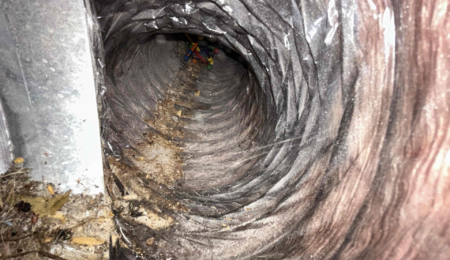
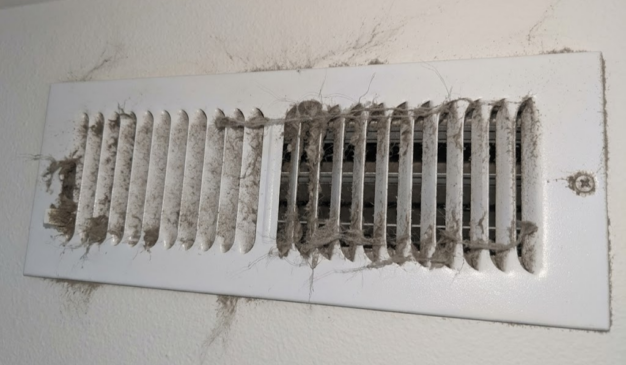
Ducts collect dust, pet hair, and remodel debris over the years, then push it back into your rooms every time the system runs. You would notice it as dust that returns quickly after cleaning, or visible buildup around the supply vents. The usual fix is a professional duct cleaning, and sealing any leaky sections so the ducts stop pulling in dust from attics and crawlspaces.
Based on 1,435 duct cleaning jobs across Western Washington, the most common things our technicians find inside home ducts are pet hair, drywall and remodel dust, and lint that has drifted in from the laundry area. When we do this work, we walk you through what we find and keep the space tidy from start to finish. That is part of the reason Pacific has earned more than 6,000 Google reviews at a 4.9 average rating.
Example From a Recent Service Visit
A homeowner in Puyallup called because dust kept settling on furniture within a day of cleaning, and a family member’s allergies were noticeably worse at home than anywhere else. When we opened the ducts, we found heavy dust and pet hair buildup that the filter alone could never keep up with.
Solution:
We cleaned the full duct system, checked the return for leaks, and left the vents and grilles clean in Puyallup. The dust problem eased once the ducts were no longer recirculating years of buildup.
Air filters that are too basic or overdue
A filter that is clogged lets fine dust and allergens pass straight through into your air. You would notice more dust on surfaces and, sometimes, weaker airflow from the vents. The fix is usually a filter on the right schedule, and often a step up to a higher-efficiency filter that captures smaller particles.
Across 5,056 cooling tune-ups in our service records, the single most common item our technicians replace is the air filter, as part of the service we move we include a thicker media filter for better everyday capture. You can compare options on our air filtration solutions page.
Excess humidity, moisture, and musty odors
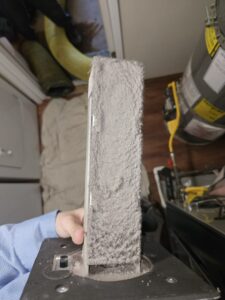
A pleated air filter pulled during a recent service visit. Once a filter loads up with dust like this, it stops trapping particles and starts restricting airflow.
Our marine climate keeps indoor humidity high, and that moisture is what feeds musty smells and mold growth in ducts and around coils. The signs are a damp or musty odor when the system runs and rooms that feel stuffy. The solution ranges from clearing the condensate drain to adding humidity control, depending on what we measure.
During routine tune-ups, our technicians can add an algaecide tablet to the condensate drain line as an extra service, it more than 1,500 times a season to keep that moisture from turning into clogs and odors. Here is what Stacy in Gig Harbor had to say after a recent visit:
“Our heat pump smelled so musty I couldn’t stand it. Our air smells so clean now! I can’t recommend it enough.”
Stacy in Gig Harbor
Poor ventilation and stale air
Newer homes are built tight to save energy, which is great for your bills but can trap stale air, cooking odors, and everyday pollutants inside. Older Western Washington homes have the opposite issue, pulling unfiltered air in through gaps. Either way, the solution is better controlled ventilation and, in some homes, added filtration so the air actually gets cleaned as it moves.
Neglected system or dirty blower
A blower that’s overdue for service can stir dust into every room it serves, undoing the benefit of even a clean filter. Regular tune-ups catch this before it becomes a whole-house air quality problem — our Precision Tune-Up takes 60 to 90 minutes and follows a simple philosophy: maintain, prevent, extend.
Clogged condensate drain
A clogged condensate drain does more than risk water damage — trapped moisture is a direct contributor to the same musty odors and mold growth covered above, so it’s worth treating as its own item to check, not just a side effect of humidity.
No whole-home air cleaner
Standard filters catch larger particles, but a whole-home air cleaner (sometimes called an air scrubber) targets the finer particles and allergens a filter alone misses. We’ve installed or serviced these in more than 100 job summaries across Western Washington. As one Tacoma customer, Beverly, put it: “Steve was kind and helpful. Got my Air Scrubber working again so my allergies will go away.”
Clogged dryer vent
A clogged dryer vent restricts airflow throughout the system it’s connected to and is an easy thing to overlook. We’ve completed 104 dryer vent cleaning jobs recently, typically running around $300, and recommend annual cleaning. Deborah, a customer in Spanaway, had this done as part of a broader air quality visit.
What you can handle yourself vs. what needs a technician
Some air quality steps are simple homeowner maintenance. Others need tools and training to do safely and correctly. Here is a clear line between the two.
What you can do yourself:
- Change your air filter on schedule, usually every 1 to 3 months depending on the filter type and whether you have pets.
- Run bathroom and kitchen exhaust fans while cooking or showering to move moisture out.
- Keep indoor humidity in a comfortable range, around 40 to 50 percent, with a dehumidifier if needed.
- Vacuum and dust vent covers and nearby surfaces so buildup does not get pulled back into the system.
What a technician should handle:
Duct cleaning, duct sealing, humidity measurement, and airflow testing all call for a trained technician. We do not recommend opening or disassembling ductwork yourself, since it is easy to damage seals and hard to clean thoroughly without professional equipment. When we come out, our NATE-certified technicians inspect the full system, measure what is actually happening, and show you what they find before recommending anything. You can also seal leaky ducts through our air duct sealing service.
Signs you should call for an indoor air quality assessment
Call for an assessment when the everyday signs of poor indoor air quality stop going away on their own. These are the specific symptoms that point to a system issue rather than normal household dust.
- Dust resettles on surfaces within a day of cleaning.
- A stale or musty smell every time the furnace or AC turns on.
- Allergy or asthma symptoms that ease when you leave the house.
- Rooms that feel humid or stuffy even while the system is running.
- Visible dust or debris blowing out of the supply vents.
- More than five to seven years since your ducts were last cleaned.
If a few of these sound familiar, a professional look will tell you what is driving it. We serve Tacoma, Puyallup, Lakewood, Gig Harbor, Olympia, University Place, Federal Way, and the surrounding South Sound, and we arrive within a 2-hour window with upfront pricing before any work begins.
What does improving indoor air quality cost in Tacoma and Western Washington?
Based on 1,435 duct cleaning jobs across Western Washington, costs ranged from $99 to $4,108, with a typical job around $775. Simple filter upgrades cost far less, while whole-home work like duct sealing sits at the higher end. What you pay depends on the size of your home and which issue we actually find, so we give you a clear price before we start.
Here is what tends to move the number up or down:
| Service | What affects the price |
|---|---|
| Air filter upgrade | Filter type and thickness, how often it needs changing. |
| Duct cleaning | Number of vents, attic or crawlspace access, dryer vent add-on. $725 per furnace ($675 for Peace of Mind Club members); recommended every 5 to 7 years |
| Duct sealing | Amount of accessible ductwork and where the leaks are. $1,995–$2,445 |
| Added filtration | Type of system and whether it ties into existing equipment. |
Peace of Mind Club members receive duct cleaning at a reduced rate, along with priority scheduling and annual tune-ups that catch filter and moisture issues early. You can see how that works on our Peace of Mind Club page. Every recommendation is backed by our No Worry, No Breakdown Guarantee and our 100% Money-Back Guarantee, so there is no risk in getting a clear answer first.
You can also book a seasonal tune-up through our cooling maintenance service, or start with a full air duct cleaning in Tacoma. Most duct cleanings are completed in a single visit.
FAQ: Common Questions of Poor Indoor Air Quality
-
-
The clearest signs are dust that resettles within a day of cleaning, a stale or musty smell when the system runs, and allergy symptoms that ease when you leave the house. If a few of those sound familiar, it usually points to your ductwork, filtration, or humidity. A professional assessment tells you which one it is.
-
-
Based on 1,435 duct cleaning jobs across Western Washington, costs ranged from $99 to $4,108, with a typical job around $775. Filter upgrades cost far less, and whole-home work like duct sealing sits higher. You get a clear price before any work begins, with no surprises.
-
-
Poor air quality does not cause illness on its own, but dust, mold spores, and high humidity can worsen allergies, asthma, and general congestion. Many homeowners notice their symptoms improve at home once dust and moisture sources are addressed. If symptoms are severe, check with a doctor as well.
-
-
A higher-efficiency filter helps capture more dust and allergens, and it is often the easiest first step. But a filter cannot clean dust that is already living in your ducts or control excess humidity. If the problem continues after upgrading your filter, the cause is usually in the ductwork or moisture, not the filter.
-
-
Older homes tend to pull in unfiltered outside air through gaps, while newer, tighter homes can trap stale air and moisture inside. Our marine climate adds humidity to both. The right solution depends on your home, which is why we measure airflow and humidity before recommending anything.
-
-
Duct cleaning has a mixed reputation because results vary by home and provider, but when ducts genuinely have years of dust, pet hair, or debris buildup, cleaning them makes a real, noticeable difference — several of our Tacoma customers have described exactly that after service.
-
-
Surface dust near vents can be vacuumed, but ducts running through walls, attics, or crawlspaces need professional equipment to clean properly and safely. A DIY attempt with a shop vac typically only reaches the first foot or two of ductwork.
Still not sure what’s causing the problem?
Tell us what your system is doing and we’ll help you figure out the right next step. Pacific Heating & Cooling has been diagnosing heating and cooling problems across Tacoma and the South Sound since 1984. NATE-certified technicians, 2-hour arrival windows, and upfront pricing before any work begins.