By Pacific Heating & Cooling | NATE-Certified Service Technicians | Updated October 2026
If you hold your hand up to a vent and feel only a faint push of air, or a vent that used to blow strong has suddenly gone quiet, your system is telling you something is getting in the way of the air. Weak airflow from vents in a house is most often caused by a clogged or overly restrictive air filter, a disconnected or damaged duct, a frozen indoor coil, or a blower motor that is wearing out, and the fix ranges from a simple filter change to a duct repair or motor replacement. Below, we cover how to tell these causes apart, what you can safely check yourself, when it is time to call, and what repairs typically cost across Tacoma and Western Washington.
What causes weak airflow from vents in your house?
Weak airflow from vents is usually caused by duct problems, a frozen indoor coil, a failing blower, or a restricted filter. Based on our service records, across 106 diagnostic visits where homeowners reported weak airflow, ducts came up most often (22 visits), followed by frozen coils or low refrigerant (20), blower problems (15), and restricted filters (11).
1. A dirty, stacked, or overly restrictive air filter
What it is: The filter is so loaded with dust, or so dense, that the blower cannot pull enough air through it.
How to recognize it: Airflow is weak at every vent, not just one. In cooling season, you may see frost on the indoor coil or refrigerant line.
Common solution: Our NATE-certified technicians measure how hard the system is working to move air, then fit a filter rated for your equipment. A common cause of poor airflow is using a filter that is too restrictive for the system, or having more than one filter in the same air path.
Example From a Recent Service Visit
A homeowner in Fox Island called because their heat pump system was barely moving air and the indoor coil was icing up. Our technician found old electronic air cleaner prefilters still installed, a 4-inch high-efficiency filter behind them, and two more filters in the return vents.
Solution:
We removed the extra filters and cycled the system in Fox Island without issue. We also recommended a full maintenance visit so the rest of the system could be checked.
2. Disconnected, crushed, or leaking ducts
What it is: A duct has fallen off, split, or is leaking into the crawl space or attic.
How to recognize it: A vent that used to blow well suddenly gets little or no air, often after crawl space, attic, or insulation work. If certain rooms have always run warmer or colder than the rest, that’s usually a layout issue. Our guide to [uneven heating and cooling in a house] covers it
Common solution: We inspect the crawl space or attic, reconnect and seal loose runs, our professional duct sealing may be the long-term solution for you.
3. A frozen indoor coil
What it is: Ice builds up on the indoor coil and blocks air from passing through it.
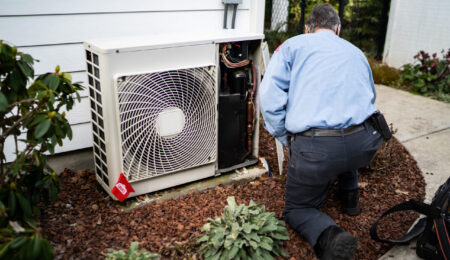
How to recognize it: Your AC fan is running but barely any air comes out, and what does come out is not cold. You may see frost on the copper line outside. Our post on frozen AC coil repair covers this in detail.
Common solution: We thaw the coil, then find the reason it froze. That might be a filter, a blower issue, or a refrigerant leak. You will see clear pricing for the repair before any work begins.
4. A failing blower motor or dirty blower wheel
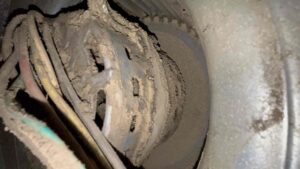
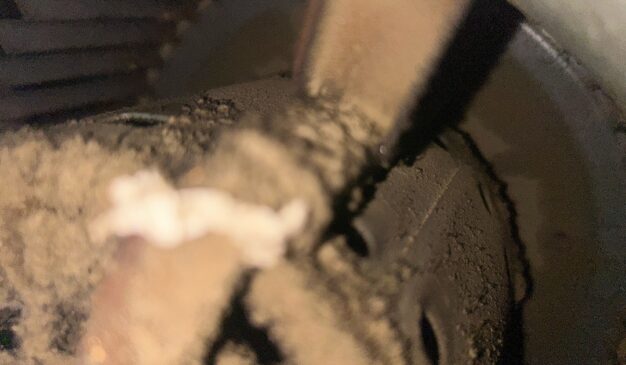
A blower motor buried in dust runs hotter and moves less air. This is the kind of buildup a technician checks for inside the system.
What it is: The fan that pushes air through your ducts is weak, set to the wrong speed, or caked with dust.
How to recognize it: Air is weak everywhere, and you may hear humming, a labored start, or a louder sound than usual.
Common solution: We test the motor, check the speed setting against manufacturer specs, and inspect the blower wheel. Cleaning, a speed correction, or a new motor usually follows, and it is backed by our 100% Money-Back Guarantee.
If the house also will not cool down, our guide on why your AC is not cooling walks through every major cause.
What a homeowner can do vs. what requires a technician
What you can safely check
- Check the filter. If it looks gray or clogged, replace it. Make sure there is only one filter in the air path unless your system was designed for more.
- Open and clear every vent. Closing vents does not save energy. It raises pressure in the system. Move furniture and rugs off floor registers.
- Look for ice. If you see frost on the indoor coil or the outdoor copper line, turn cooling off at the thermostat and set the fan to On so the ice can melt before a technician arrives.
- Check the thermostat fan setting. Confirm the system is set to Cool or Heat and the fan is on Auto or On, not off.
What a technician should handle
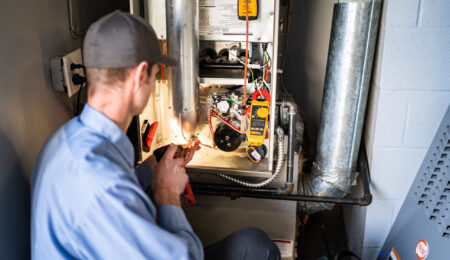
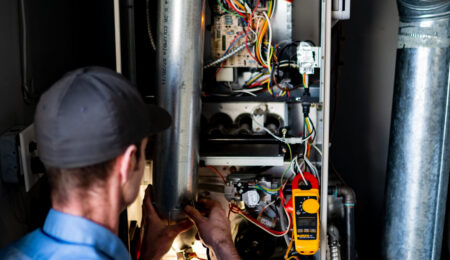
Refrigerant, electrical parts, blower motors, and crawl space ducts need proper tools and training. A NATE-certified technician measures airflow and pressure, checks coil temperatures, and inspects ducts you cannot reach. You will see what we are seeing and know what it means before any work begins.
That clear, no-pressure approach is a big part of why we have more than 7,000 Google reviews with a 4.9 average. Hector in Tacoma put it this way:
“Sean is an expert technician who helped us immediately upon arrival. He is Very thorough and well versed in HVAC diagnostics. We can’t thank him enough for getting our central air up and running again! Especially before the temps rise again this week (mid 90’s). We Will continue to recommend Pacific heating to all family and friends!”
Hector in Tacoma
Signs you should call for an airflow diagnostic
Call for a diagnostic if weak airflow continues after you replace the filter and open every vent, or if it comes with ice, noise, or warm air. These need to be measured, not guessed at.
- The AC fan is running but almost no air is coming out of the vents.
- You see frost or ice on the indoor coil or the outdoor copper line.
- One room suddenly lost airflow after crawl space, attic, or insulation work.
- The blower hums, sounds labored, or is much louder than normal.
- Airflow feels weak and the air is warm when it should be cold, or cold when it should be warm.
- Your thermostat shows an airflow or limit error code.
We offer 2-hour arrival windows across Tacoma, Puyallup, Lakewood, Gig Harbor, and Olympia. Peace of Mind Club members also get 24/7 emergency support and priority scheduling.
What does it cost to fix weak airflow from vents in Tacoma?
Based on 106 airflow diagnostic visits in our service records, most repairs completed on the first visit run $119 to $269, plus a $119 diagnostic ($99 for Peace of Mind Club members). Filter replacements and duct reconnects sit at the low end. Refrigerant leaks and blower motors cost more.
The spread comes down to what is blocking the air. A frozen coil from a refrigerant leak needs the leak found and repaired. A failing blower motor often needs the correct part ordered for your equipment.
| Service | What we see in our records |
|---|---|
| Airflow diagnostic | $119, or $99 for Club members |
| Replacement filter | $21 to $140, depending on size and type |
| Duct reconnect or repair | $158 to $317, depending on access and number of runs |
| Replacing a damaged duct run | Around $780 for non-Club customers |
| Most first-visit repairs | $119 to $269 |
Regular AC maintenance catches dirty filters, blower buildup, and low refrigerant before they turn into weak airflow. You get upfront pricing before any work begins, with no surprises on the invoice. Most repairs are completed the same day.
We don’t just diagnose the issue. We help you understand it. If your vents have gone quiet, our cooling repair team can find the cause with an airflow diagnostic and walk you through your options before any work begins. Call (253) 248-6260 or schedule online. No Surprises. Just Solutions.
Frequently Asked Questions
-
-
The most common reason is a frozen indoor coil, where ice blocks the air from passing through. A badly clogged filter, a failed blower motor, or a disconnected main duct can cause the same thing. Turn cooling off, set the fan to On so any ice can melt, and schedule a diagnostic so the cause can be found.
-
-
If air is weak at every vent, the problem is usually inside the system, such as a dirty filter, a dirty blower wheel, or a coil that is starting to ice up. If only one or two rooms are weak, it usually points to a loose duct or a duct layout that does not reach those rooms well. Checking the filter first is the easiest place to start.
-
-
In our service records, most airflow repairs completed on the first visit run $119 to $269, plus a $119 diagnostic, or $99 for Peace of Mind Club members. Filter replacements and duct reconnects are at the low end. Replacing a damaged duct run costs around $780 for non-Club customers, and refrigerant leaks and blower motor replacements also cost more. You see the price before any work begins.
-
-
Weak airflow alone is usually not an emergency, but it should not be ignored for long. If you see ice on the coil or copper lines, hear the blower humming or straining, or smell burning, turn the system off and call. Running a system that cannot move air can lead to a frozen coil or an overheated motor.
-
-
We do not recommend it. Closing vents raises pressure inside the ductwork instead of sending more air to the open rooms, and it makes the blower work harder. Keep every vent open and clear, and ask a technician about dampers or balancing if some rooms get too much air.
-
-
Sometimes, but not always. In our service records, many weak airflow calls were solved with a filter change, a reconnected duct, or a blower speed correction. Ask the technician to show you their measurements and findings, and get a second opinion if the recommendation does not match what you are seeing.
-
-
Start with the basics: use the right filter for your system, change it on schedule, and keep every vent open and clear of furniture. Annual maintenance keeps the blower wheel and coil clean, which protects airflow over time. For rooms that have always been weak, a technician can check the duct layout and suggest balancing, a return, or a ductless option.
Still not sure what’s causing the problem?
Tell us what your system is doing and we’ll help you figure out the right next step. Pacific Heating & Cooling has been diagnosing heating and cooling problems across Tacoma and the South Sound since 1984. NATE-certified technicians, 2-hour arrival windows, and upfront pricing before any work begins.